
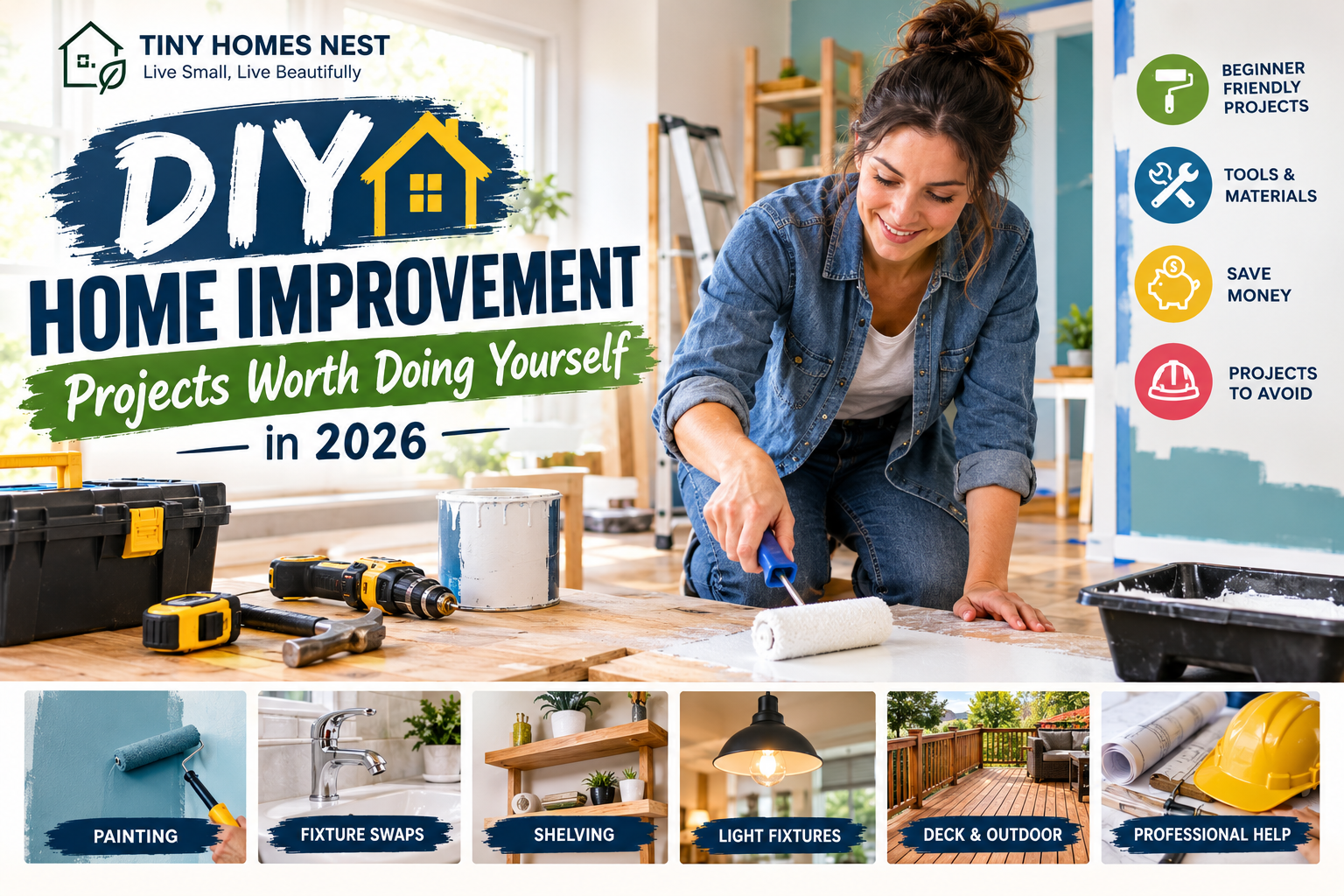
DIY Home Improvement: Projects Worth Doing Yourself in 2026
DIY Home Improvement: Projects Worth Doing Yourself in 2026
By Emily Hartman, Founder & Lead Editor at Tiny Homes Nest. Tiny home owner since 2019.
Every home improvement project falls somewhere on a spectrum between a weekend anyone can handle and a job that genuinely requires a license. This guide breaks down which DIY home improvement projects are worth tackling yourself in 2026, which ones belong to a professional and what it actually takes to get started, so you can save real money without taking on real risk. The line between a smart DIY project and an expensive mistake usually comes down to honest self-assessment rather than skill level alone.
Quick answer: DIY home improvement genuinely saves money on projects like painting, basic fixture swaps and cosmetic updates, where labor commonly makes up 40 to 70 percent of a professional quote. Projects involving electrical panels, gas lines, structural changes or roofing carry real safety and code risk that make hiring a licensed professional the right call regardless of how confident a YouTube tutorial makes it look. Knowing which category a project falls into before you buy a single tool saves both money and potential frustration.
What Counts as DIY Home Improvement? Quick Answer
DIY home improvement covers any project a homeowner completes without hiring a licensed contractor, ranging from a five-minute fixture swap to a genuinely complex weekend build.
The category splits cleanly into two groups once you look past the marketing language. Cosmetic and low-risk mechanical projects, painting, caulking, installing shelving, swapping a faucet, generally require only basic tools and a reasonable tolerance for trial and error. Projects touching electrical panels, gas lines, load-bearing structure or anything requiring a permit sit in a different category entirely, where the actual skill required matters less than the licensing and code compliance a professional brings to the job. Confusing these two categories is where most DIY home improvement mistakes actually happen, not a lack of manual skill. A confident first-time DIYer can genuinely handle most projects in the first category with a bit of patience, while even an experienced handyman without the right license takes on real legal and safety exposure in the second. The projects worth doing yourself and the projects worth hiring out rarely overlap with how difficult a project merely looks on the surface.
Best DIY Home Improvement Projects for Beginners
A handful of projects consistently deliver real value with minimal risk, making them the natural starting point for anyone new to DIY home improvement.
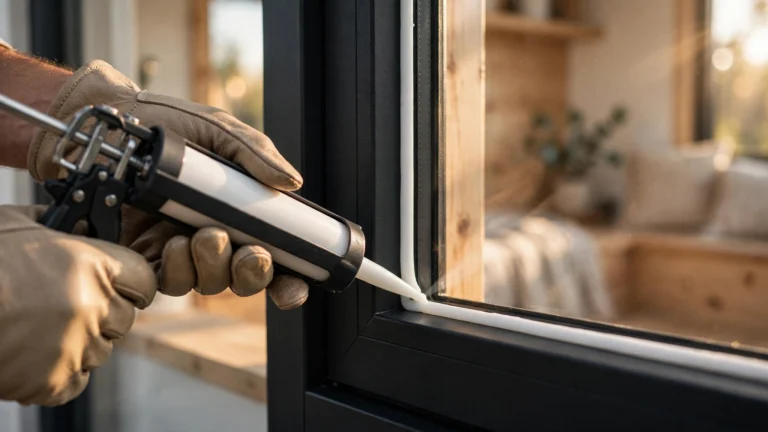
Painting a room remains the single most approachable project, requiring only basic tools and patience. It delivers one of the most visible transformations for the money of anything on this list. Installing a new faucet or showerhead typically takes under an hour with basic tools and no specialized plumbing knowledge. Re-caulking around a tub or sink prevents water damage and costs under $10 in materials. Installing floating shelves or basic storage solutions requires only a stud finder, a level and a drill. Swapping light fixtures is genuinely beginner-friendly once the breaker is confirmed off, though anything beyond a simple fixture swap crosses into work better left to an electrician. Installing a smart thermostat or other plug-and-play smart home device also belongs firmly in this beginner tier, since most connect through existing wiring without any rewiring required. Our smart home cost guide breaks down which devices genuinely install without professional help and which ones benefit from hardwiring by someone experienced.
DIY Home Improvement Projects to Avoid
Certain projects carry consequences serious enough that the potential savings rarely justify the actual risk, regardless of how straightforward a tutorial makes them look.
Electrical panel work sits at the top of this list, since improper work here creates a genuine fire risk and typically violates code requirements that a home inspection will catch during any future sale. Gas line work carries an explosion risk that no amount of online research fully mitigates. Most jurisdictions require a licensed plumber by law regardless of a homeowner’s confidence. Structural changes, removing or altering a load-bearing wall, demand an engineer’s assessment before any demolition begins, since a mistake here can compromise an entire home’s structural integrity rather than just one room. Roofing work carries a fall risk serious enough that OSHA maintains specific fall protection standards for professionals working above six feet, a standard that applies for good reason regardless of whether the person on the ladder is licensed. HVAC work involving refrigerant specifically requires EPA Section 608 certification by law, making this one of the few home projects where DIY work is not just risky but genuinely illegal without the proper credential. A rough rule worth keeping in mind: if a mistake could burn down the house, flood a room or cause someone to fall from height, the project belongs to a licensed professional regardless of how the online tutorials frame it. Insurance also enters the picture here in a way many homeowners overlook. Damage caused by unlicensed electrical or gas work sometimes falls outside standard homeowner’s insurance coverage entirely, turning an already risky project into a potentially uninsured one.
Essential DIY Home Improvement Tools
A relatively modest tool investment covers the vast majority of beginner and intermediate DIY home improvement projects.
A solid starter toolkit, hammer, screwdriver set, cordless drill, level, tape measure, stud finder and utility knife, typically costs $150 to $300 and covers most projects on the beginner list above. Renting specialized tools for a single project, a tile saw or a heavy-duty drain snake, for example, almost always costs less than buying equipment you will use once or twice a year. Quality matters more than quantity when building a toolkit. A mid-range cordless drill that lasts a decade outperforms a cheap one that fails halfway through your first real project, even though the cheap option looks like the better deal on the store shelf. Building a toolkit gradually, adding specific tools as specific projects demand them, generally serves a beginner better than buying an expansive kit upfront filled with tools that may sit unused for years. Storage matters too once a toolkit grows beyond the basics, since a disorganized pile of tools costs real time on every future project searching for the right one.
Budget DIY Home Improvement Ideas
Some of the highest-impact, lowest-cost home improvements barely register as construction projects at all, which is exactly why they get overlooked.
Fresh paint on trim, cabinets or a single accent wall delivers outsized visual impact for the cost of a few cans of paint. Updating cabinet or door hardware, swapping dated knobs and pulls for current styles, transforms a kitchen’s feel for under $100 in most cases. Weatherstripping doors and windows costs under $50 and genuinely reduces energy bills, tying directly into the same building envelope concepts covered in our home insulation cost guide. Deep-cleaning grout, refinishing a single piece of furniture or pressure-washing exterior siding all deliver real visual improvement without touching a single wall. Peel-and-stick vinyl flooring in a small space, a closet or a laundry room, is one of the more forgiving flooring projects for a first-time DIYer, since mistakes are far cheaper to correct than with nailed-down materials. None of these projects require a contractor, a permit or specialized training, which makes them an ideal starting point for anyone building confidence before tackling a larger renovation.
DIY Home Improvement Apps and Resources
The right resources shorten the learning curve on a new project considerably, turning an intimidating job into a manageable weekend.
Manufacturer-specific apps and project guides from major retailers typically include measurement calculators and step-by-step instructions tailored to the exact products they sell. Video platforms remain the most useful free resource for visual learners, since watching a technique performed start to finish catches details a written guide often misses. A basic measuring and planning app on your phone eliminates the guesswork of estimating material quantities before a trip to the store, preventing the common DIY mistake of running short on materials mid-project. Local hardware stores also frequently offer free or low-cost workshops on specific skills, tiling, basic electrical, drywall repair, which combine hands-on practice with expert guidance in a way no app or video fully replicates. Books remain genuinely useful for foundational skills too, since a well-organized reference covers troubleshooting scenarios a single video tutorial rarely anticipates.
How Much Can DIY Actually Save You?
The real savings from DIY home improvement come almost entirely from skipping labor cost, which varies enormously depending on which project you are actually comparing.
Across the cost guides on this site, labor commonly makes up 40 to 70 percent of a professional quote, meaning a genuinely DIY-friendly project can save roughly that same percentage off the total. A $500 professional faucet installation might cost $50 to $100 in parts alone if handled yourself. A $3,000 professional painting job might cost $300 to $500 in materials. The math shifts considerably once a project requires specialized tools, permits or a skill level beyond genuine beginner territory, since rental costs, wasted materials from mistakes and the value of your own time all cut into theoretical savings. Being honest about your actual skill level before starting, rather than assuming a tutorial makes any project achievable, is what separates real savings from an expensive lesson. A failed DIY attempt that ends in hiring a professional anyway typically costs more than simply hiring one from the start, since the professional now has to undo any mistakes before even beginning the original job.
Frequently Asked Questions
What DIY home improvement projects are best for beginners?
Painting, faucet and showerhead swaps, re-caulking, installing shelving and swapping light fixtures with the breaker off are all genuinely beginner-friendly projects requiring only basic tools.
What home improvement projects should I never DIY?
Electrical panel work, gas line work, structural changes to load-bearing walls, roofing and any HVAC work involving refrigerant should go to a licensed professional due to serious safety and legal requirements.
How much does a basic DIY tool kit cost?
A solid starter toolkit covering hammer, drill, level, tape measure, stud finder and utility knife typically costs $150 to $300 and handles the majority of beginner and intermediate projects.
How much money can DIY home improvement actually save?
Savings vary by project. Labor commonly makes up 40 to 70 percent of a professional quote, meaning a genuinely DIY-friendly project can save roughly that percentage of the total cost. Projects requiring rented equipment or a specialized skill save considerably less once those extra costs are factored in.
Is it illegal to do your own electrical or gas work?
Requirements vary by state and municipality. Many jurisdictions require licensed professionals for gas line work by law. Unpermitted electrical work can also create both safety risk and issues during a future home sale.
What tools do I need to start doing DIY home improvement?
A basic kit including a hammer, screwdriver set, cordless drill, level, tape measure, stud finder and utility knife covers most beginner projects, with specialized tools better rented for one-time use.
DIY home improvement rewards honest self-assessment more than raw enthusiasm, since the projects that genuinely save money are rarely the ones that make for the most dramatic before-and-after photos. Start with a genuinely beginner-friendly project, build real skill and confidence, then decide project by project whether the next job belongs to you or to a licensed professional. The homeowners who get the most value out of DIY over the long run tend to be the ones who know exactly where their own skill ends, not the ones who attempt everything regardless of scope.
Have a specific project in mind? Drop it in the comments and our team will help you think through whether it is a genuine DIY job. Browse our full Home Improvement collection for more room-by-room and project-by-project cost guides as they go live.
Emily Hartman is the founder and lead editor at Tiny Homes Nest. After downsizing into a 340-square-foot home in 2019, she spent years working through zoning rules, financing options and real renovation costs firsthand. That experience is what she now turns into practical, no-fluff guides for buyers and downsizers.





One Comment