Roof Replacement Cost Guide: Materials, Sizes and Pricing for 2026
By Emily Hartman, Founder & Lead Editor at Tiny Homes Nest. Tiny home owner since 2019.
A roof replacement is one of the few home improvement projects where the material you choose can swing the total price by $40,000 or more on the exact same house. This guide breaks down real 2026 roof replacement cost by material, size and roof type, so you can tell a fair quote from an inflated one before a single tarp goes up. Every figure below reflects fully installed cost, materials, labor and tear-off together, not just the price of shingles sitting on a pallet. Roof replacement rarely feels optional once it becomes necessary, which makes understanding these numbers ahead of time worth far more than scrambling to compare quotes after a leak already started.
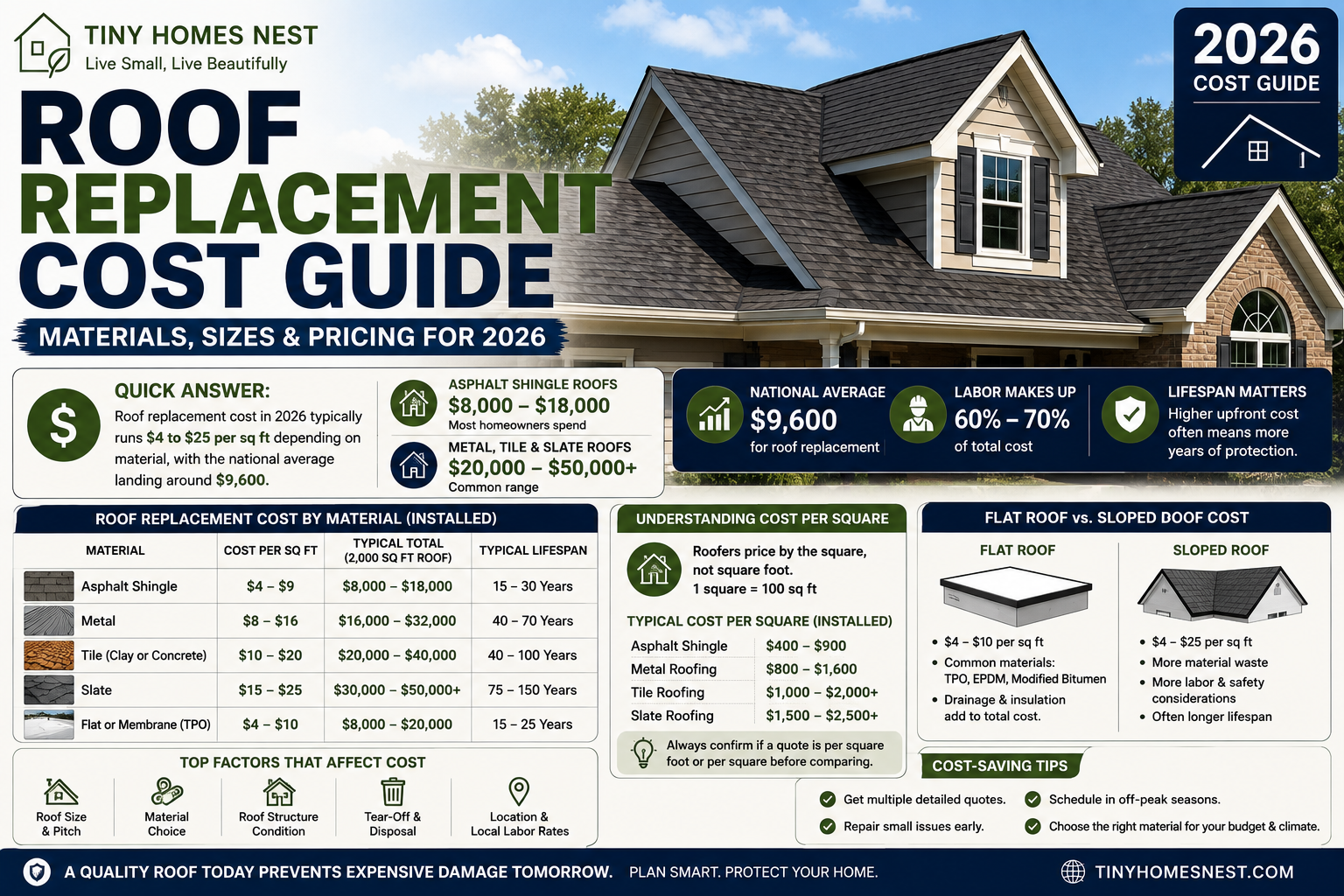
Quick answer: Roof replacement cost in 2026 typically runs $4 to $25 per square foot depending on material, with the national average landing around $9,600. Most homeowners replacing a standard asphalt shingle roof spend $8,000 to $18,000, while metal, tile and slate roofs regularly run $20,000 to $50,000 or more.
How Much Does Roof Replacement Cost in 2026? Quick Answer
The national average roof replacement cost sits around $9,600, though the real range stretches from about $5,500 for a small, simple asphalt shingle roof to well past $50,000 for a large, premium material installation.
Material choice moves the price more than any other single factor. Asphalt shingles remain the most common material by a wide margin, chosen by roughly half of homeowners in recent industry surveys. They balance cost and durability better than any premium alternative, which explains their dominance. Roof size, pitch, structural condition and how many layers of old roofing need removal all shift the final number as well, sometimes by thousands of dollars even before material cost enters the picture. Hidden damage discovered once the old roof comes off is one of the most common reasons a final bill runs higher than the original estimate, so a healthy contingency fund is worth building into any roof budget from the start.
Roof Replacement Cost by Material
Every roofing material trades upfront cost against lifespan. The gap between the cheapest and most expensive options is larger in roofing than in almost any other home improvement category.
| Material | Cost Per Sq Ft Installed | Typical Total (2,000 sq ft roof) | Typical Lifespan |
|---|---|---|---|
| Asphalt shingle | $4 to $9 | $8,000 to $18,000 | 15 to 30 years |
| Metal | $8 to $16 | $16,000 to $32,000 | 40 to 70 years |
| Tile (clay or concrete) | $10 to $20 | $20,000 to $40,000 | 40 to 100 years |
| Slate | $15 to $25 | $30,000 to $50,000+ | 75 to 150 years |
| Flat or membrane (TPO) | $4 to $10 | $8,000 to $20,000 | 15 to 25 years |
Asphalt shingles win on upfront cost. Their shorter lifespan means the true cost per year of use is not always as different from metal as the sticker price suggests, though. Tile and slate sit at the far premium end largely because of weight. Most homes need structural reinforcement before either material can go on, which adds cost well beyond the roofing material itself. A roofer or structural engineer should confirm your home can actually support tile or slate before you fall in love with either look, since retrofitting a roof structure to handle the added weight can erase any long-term savings the material’s lifespan would otherwise deliver.
Understanding Roof Replacement Cost Per Square
Roofers price jobs by the square, a unit equal to 100 square feet, which trips up almost every first-time buyer comparing quotes.
A 2,000 square foot roof equals 20 squares. Material and labor costs are typically quoted per square rather than per square foot in a professional bid. Asphalt shingles generally run $400 to $900 per square installed. Metal roofing runs roughly $800 to $1,600 per square. Tile can reach $1,000 to $2,000 per square or more. Always confirm whether a quote is priced per square foot or per square before comparing two bids. Mixing up the two units can make a quote look dramatically cheaper or more expensive than it actually is. This single misunderstanding is one of the most common ways homeowners misjudge a bid during the shopping process.
Roof pitch adds another layer of complexity to this math. A steep roof has more actual surface area than its footprint suggests, so a 2,000 square foot home does not necessarily mean a 20 square roof once pitch is factored in.
Flat Roof vs. Sloped Roof Replacement Cost
Flat and low-slope roofs are priced and installed differently enough from standard sloped roofs that they deserve separate consideration entirely.
Flat roof replacement, typically using TPO, EPDM rubber or modified bitumen, generally costs $4,000 to $16,000 depending on size and material grade. Flat roofs use fundamentally different materials than sloped shingle or metal roofs, since standing water rather than runoff is the main design challenge. Sloped roofs shed water naturally and support a wider range of materials, from asphalt shingles to tile. They require more complex framing, though. Steep pitches also demand considerably more labor time and safety equipment. Neither style is universally cheaper. The right choice usually comes down to the home’s existing structure rather than a straightforward cost comparison.
Mobile Home and RV Roof Replacement Cost
Mobile, manufactured and RV roofs follow a different cost structure entirely, since the roofing systems themselves differ from standard residential construction.
A mobile or manufactured home roof-over, adding a new metal or rubber roofing system over the existing roof rather than a full tear-off, typically runs $1,500 to $4,000 depending on size. A full tear-off and replacement generally costs $4,000 to $10,000. RV roofs use membrane systems, usually rubber or fiberglass, that age differently than a house roof. Resealing or recoating an RV roof typically costs $300 to $1,500. A full membrane replacement on a larger RV can run $3,000 to $10,000 or more. Catching a small RV roof leak early is one of the few home improvement categories where a cheap fix genuinely prevents an expensive one, since water intrusion into the walls and floor structure of an RV is far more costly to repair than the roof itself. An annual inspection, checking seams and seals around vents and skylights specifically, catches most problems long before they become a structural issue.
What Drives Labor Cost on a Roof Replacement
Labor typically makes up 50 to 60 percent of total roof replacement cost. Safety requirements are a bigger part of that number than most homeowners realize.
Tear-off and disposal of the old roof averages around $50 per square, climbing to $150 per square when removing heavier materials like concrete tile or multiple layers of old asphalt shingles. Steeper roofs require additional safety equipment, harnesses, anchors and sometimes scaffolding, under OSHA’s fall protection standards for residential construction, which apply whenever workers are six feet or more above a lower level. That safety requirement is not optional overhead a contractor can skip to lower a bid. A quote that seems unusually cheap on a steep or complex roof is worth questioning specifically on this point. Reputable roofing companies carry liability insurance and workers’ compensation coverage that also factors into the labor rate. Asking to see proof of both before signing a contract protects you as the homeowner just as much as it protects the crew on your roof.
Roof Vent Replacement Cost
Not every roofing project is a full replacement. Roof vents are one of the most common smaller repairs that come up during or after a larger roofing job.
Individual roof vent replacement typically costs $150 to $450 per vent, including materials and labor, depending on vent type and roof accessibility. Bundling vent replacement into a full roof replacement is almost always cheaper than paying for it separately later, since the labor and access costs are already covered by the larger job. A roofer already on site for a full tear-off can typically swap a vent in a fraction of the time a standalone service call would take, since the scaffolding and roof access setup is already in place.
How Roof Replacement Cost Varies by Region
Location shifts roof replacement cost nearly as much as material choice does, mostly through labor rates and local building code requirements.
States with frequent severe weather, hurricane zones along the Gulf Coast and hail-prone regions in the Midwest among them, often carry stricter roofing codes that require higher wind ratings or impact-resistant materials. Both of those requirements add cost. Coastal and high-cost-of-living states generally see labor rates run meaningfully higher than the national average. States with more moderate climates and lower labor costs often land toward the bottom of the ranges in this guide instead. Always get quotes from local roofers rather than relying purely on a national average, since regional material availability and code requirements can shift a quote significantly from the numbers in this guide. Insurance requirements add another regional wrinkle in hail and hurricane-prone areas, where some carriers now require impact-resistant shingles or a specific wind rating before they will issue or renew a policy.
How to Use a Roof Replacement Cost Calculator
Online roof replacement cost calculators are a reasonable starting point, though roof condition is nearly impossible to estimate accurately without an in-person inspection.
Enter your home’s footprint and roof pitch if the calculator asks for it, since pitch affects total roofing square footage more than most homeowners expect. Treat any calculator output as a planning range rather than a firm number. Get at least three in-person, itemized quotes before committing to a contractor. A written quote should specify material, number of squares, tear-off and disposal, underlayment and any structural repairs separately. That level of detail lets you compare bids on equal terms rather than guessing what a lump-sum number actually includes. Ask each contractor directly what happens if they find rotted decking once the old roof comes off, since that single question reveals how a bid handles the most common source of mid-project cost increases.
Frequently Asked Questions
How much does roof replacement cost on average?
The national average roof replacement cost is around $9,600, with most homeowners spending $8,000 to $18,000 for a standard asphalt shingle roof. Premium materials like metal, tile or slate regularly cost $20,000 to $50,000 or more.
How much does a metal roof replacement cost?
Metal roof replacement typically costs $8 to $16 per square foot installed. That works out to roughly $16,000 to $32,000 for a 2,000 square foot roof. Metal costs more upfront than asphalt shingles. It generally lasts two to three times as long, though.
What does roof replacement cost per square mean?
A square equals 100 square feet, the standard unit roofers use for pricing. A 2,000 square foot roof equals 20 squares. Confirming whether a quote is priced per square or per square foot prevents a major misunderstanding when comparing bids.
How much does a flat roof replacement cost?
Flat roof replacement typically costs $4,000 to $16,000 depending on size and material, using systems like TPO, EPDM rubber or modified bitumen rather than standard shingles.
How much does it cost to replace a mobile home roof?
A mobile home roof-over typically costs $1,500 to $4,000, while a full tear-off and replacement generally runs $4,000 to $10,000. The lower cost compared to standard homes reflects the smaller roof size involved.
Why do steep roofs cost more to replace?
Steep roofs require additional safety equipment under OSHA fall protection standards, take longer to work on safely and often have more actual surface area than a flatter roof with the same home footprint. All three factors add labor cost.
Roof replacement cost comes down to a genuine trade-off between upfront price and long-term durability, not a simple cheap-versus-expensive decision. Compare materials by cost per year of expected lifespan, not just the total quote. Get multiple itemized bids before you commit to a contractor. The lowest number on paper is rarely the best value once tear-off, safety practices and warranty coverage are all factored into the real comparison.
Have a specific roof size or material in mind? Drop it in the comments and our team will help you think through the real numbers. Browse our full Home Improvement collection for more room-by-room and project-by-project cost guides as they go live.