Drywall Cost Per Square Foot: What You Will Really Pay in 2026
Drywall Cost Per Square Foot: What You Will Really Pay in 2026
Drywall is one of those line items that looks small on a renovation budget until the quote arrives. A single sheet costs about the price of a pizza, yet a whole room can run well over a thousand dollars once hanging, taping, sanding and finishing are counted. Knowing the drywall cost per square foot before you collect bids is the fastest way to tell a fair quote from an inflated one.
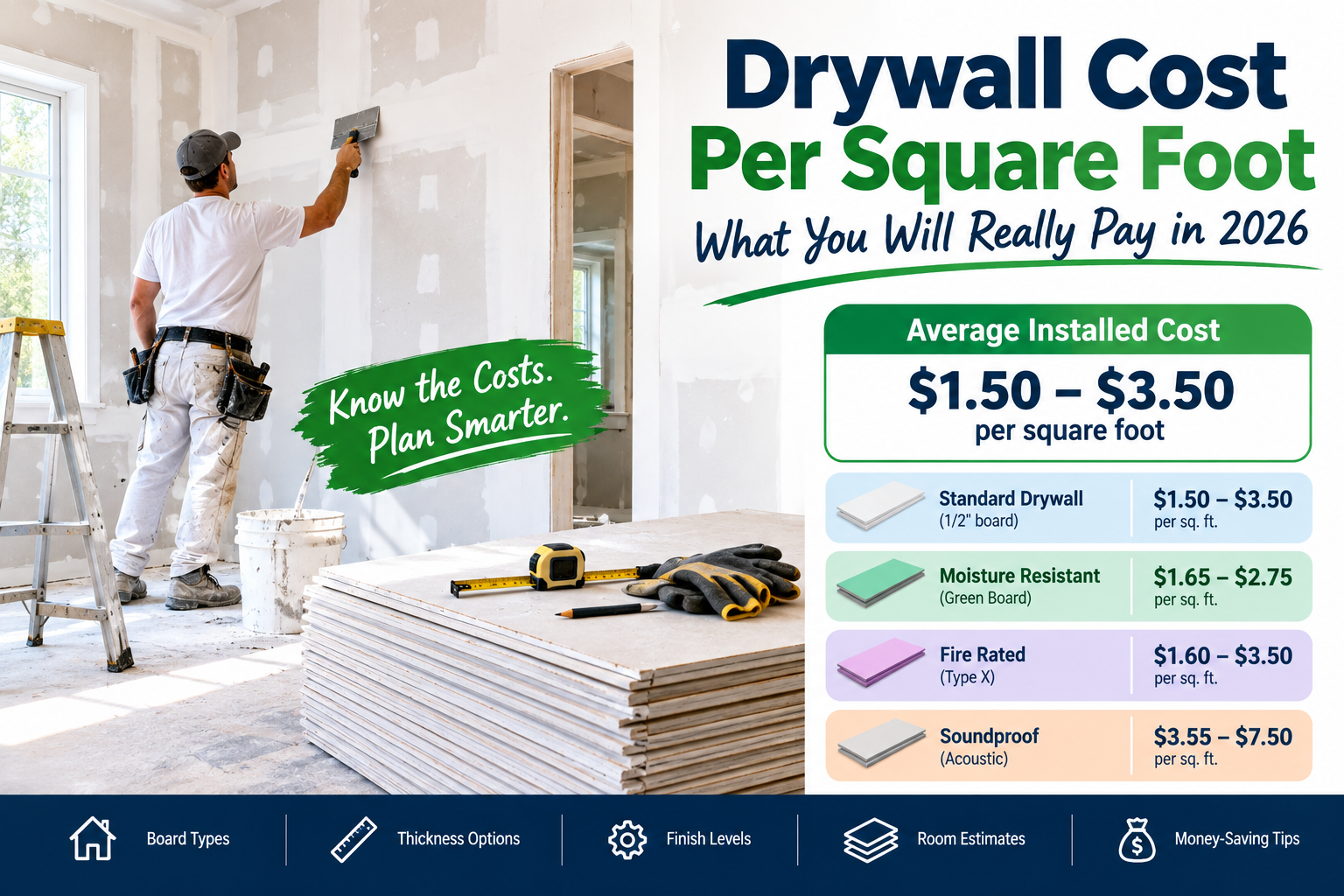
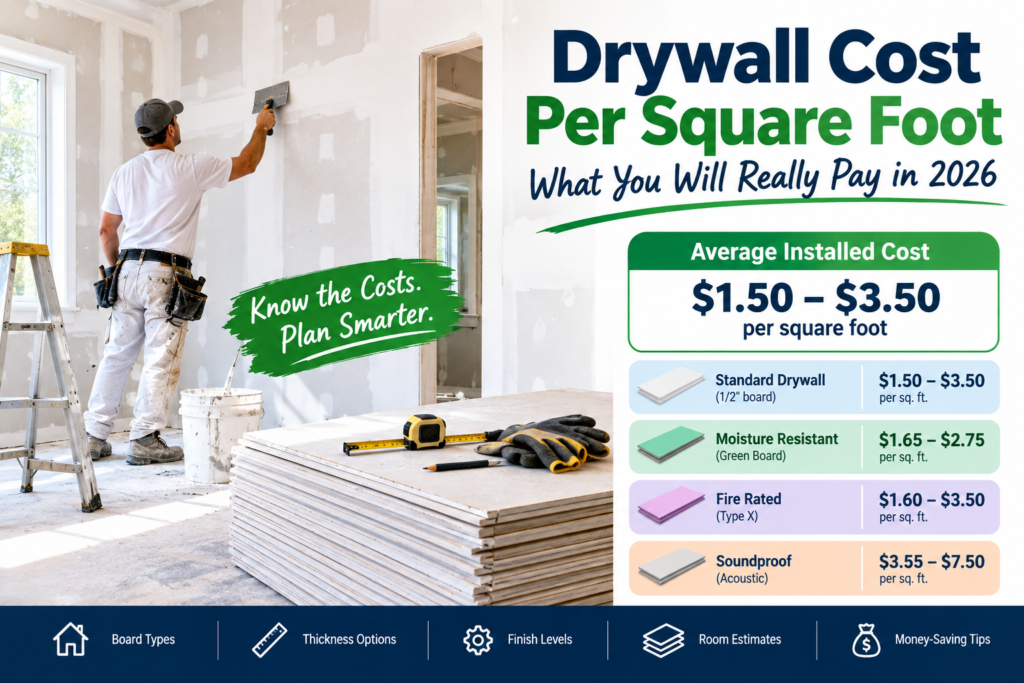
Most homeowners pay between $1.50 and $3.50 per square foot for drywall installed and finished. That range is wide for good reason, since thickness, board type, finish level, ceiling height and local labor rates all push the number up or down. This guide breaks down what sits behind that range, what common rooms cost, which specialty boards add the most and where you can trim the bill without cutting corners.
What Is the Average Drywall Cost Per Square Foot?
For a standard half inch sheet hung, taped, mudded and sanded, the typical installed price lands between $1.50 and $3.50 per square foot. Simple jobs in an open, empty room sit near the low end. Small rooms with lots of cuts, tall ceilings or a high finish level sit near the top.
The price covers more than the board itself. Material is usually the smaller share of the bill and labor commonly makes up 50 to 70 percent of the total. That surprises many people who assume the sheets are the main expense. In reality the real cost is the skilled work of hanging the panels straight, taping the seams and applying joint compound in thin, sanded coats.
Here is how the typical installed cost breaks down at a glance:
- Material only: roughly $0.30 to $0.60 per square foot for standard half inch board
- Hanging only: roughly $0.15 to $0.80 per square foot depending on the contractor and region
- Taping and mudding: roughly $0.40 to $1.00 per square foot
- Sanding, priming and finishing: roughly $0.10 to $1.50 per square foot depending on finish level
- Full installed cost: $1.50 to $3.50 per square foot for a standard job
Two quotes with the same total can hide very different scopes, so always ask whether the number includes taping, sanding, cleanup and hauling away scraps.
For another current cost reference, you can also review Fixr’s drywall installation cost guide.
How Much Does Drywall Cost Per Sheet?
Most walls are covered with 4 by 8 foot sheets, which equal 32 square feet each. That makes the math simple: divide the total square footage by 32 to estimate the number of sheets, then add about 10 percent for waste and cuts.
A standard half inch sheet typically costs $10 to $20 as a material purchase. Thicker or specialty sheets cost more. Once you add labor, an installed sheet commonly lands between roughly $48 and $100 for standard thicknesses, though fire rated and specialty boards can climb well beyond that.
Buying sheets yourself can shave a little off a contractor quote but only if the contractor agrees to it. Many pros prefer to supply their own board because they buy in volume and know exactly what they need.
How Much Does Drywall Cost by Thickness?
Thickness changes both the price and the job it suits. The common options are:
- One quarter inch: the thinnest option, used mostly for curved walls or to cover an existing surface. Material runs about $0.24 to $0.32 per square foot.
- Three eighths inch: an older standard that appears mainly in repair work and some mobile homes. Material runs about $0.27 to $0.34 per square foot.
- One half inch: the everyday choice for interior walls and the one most quotes assume. Material runs about $0.30 to $0.37 per square foot.
- Five eighths inch: thicker and heavier, used on ceilings and where building codes or sound control call for it. Material runs about $0.34 to $0.41 per square foot.
The gap in material price is small. The bigger difference shows up in labor, because heavier five eighths sheets are harder to lift and hold in place, especially overhead.
Moisture Resistant Drywall Cost
Moisture resistant board, often called green board or purple board, is built for bathrooms, laundry rooms and other damp spaces. Its core and paper facing resist mold and swelling better than standard board.
Installed, moisture resistant drywall usually costs about $1.65 to $2.75 per square foot, which is only a modest step above standard. Material alone typically runs $0.40 to $0.70 per square foot. For a bathroom ceiling or a shower surround backer area, that small premium is cheap insurance against a repair you would otherwise do in a few years.
One caution: moisture resistant board is not waterproof. It handles humidity well but should not replace a proper cement board backer where water hits the wall directly. If you are planning a bathroom project, the numbers in our bathroom remodel cost guide show how this fits into a full budget.
Soundproof Drywall Cost
Soundproof drywall is built with a layered core that damps vibration and blocks noise between rooms. It is popular for home offices, media rooms, nurseries and shared walls.
This is the most expensive common drywall type by a wide margin. Installed soundproof drywall typically costs about $3.55 to $7.50 per square foot. Material alone can run roughly $0.95 to $2.25 per square foot and the panels are heavy enough that labor climbs as well.
For many homeowners a full soundproof wall is overkill. Adding a second layer of standard board with a damping compound between the layers or sealing gaps around outlets and doors, can reduce noise at a lower cost. A pro can tell you which approach fits your wall and your goal.
Fire Rated Drywall Cost
Fire rated drywall, often sold as Type X, contains glass fibers that help the board hold up longer in a fire. Many building codes require it for garage walls shared with living space and for ceilings under certain rooms.
Installed, fire rated drywall usually costs about $1.60 to $3.50 per square foot. Material alone is often close to standard board, at around $0.34 to $0.42 per square foot. The main extra expense is that code compliance often calls for five eighths inch board, which adds weight and labor.
Always check local code before you decide. Using the wrong board in a garage wall can cause problems at inspection or when you sell the home.
How Drywall Finish Levels Change the Price
Finish level is the most overlooked factor in a drywall quote. It describes how much taping and joint compound work is done after the sheets are hung, from Level 0 with no finishing at all to Level 5 with a full skim coat.
- Level 0: sheets hung with no taping or finishing. Useful for temporary walls or hidden spaces.
- Level 1 and 2: tape embedded in compound with minimal smoothing. Common in garages and areas that will be tiled.
- Level 3: a standard base for textured walls and heavy wallcoverings.
- Level 4: the usual standard for flat painted walls in most living spaces.
- Level 5: a thin skim coat over the entire surface for the smoothest look, especially under glossy paint or strong side lighting.
Moving from a basic finish up to Level 5 can raise the installed cost from near $1.50 toward $3.50 per square foot. If your walls will be painted a flat color in normal light, Level 4 is usually the sweet spot. Paying for Level 5 in a hallway or closet rarely shows. Our house painting cost guide explains how wall prep and paint finish work together.
How Much Is Drywall for a Whole Room?
Per square foot figures only help once you know how many square feet you are covering. Here is a quick way to estimate a standard bedroom.
A 12 by 12 foot room with 8 foot ceilings has four walls totaling about 384 square feet and a ceiling of 144 square feet. That comes to about 528 square feet of surface. Divide by 32 and you need roughly 17 sheets or about 19 once you add a 10 percent waste allowance.
At the typical installed range of $1.50 to $3.50 per square foot, that room costs roughly $790 to $1,850. Doors and windows reduce the true area slightly but contractors usually price on the full surface or by the sheet, so do not expect a big discount for openings.
A few other quick benchmarks help with planning:
- A 1,000 square foot area: about 32 sheets before waste or roughly 35 with waste
- A basement finishing project: often thousands of square feet of board, so even small per square foot differences add up quickly
- A single wall or small patch job: most contractors apply a minimum service fee, which can make small jobs cost more per square foot than large ones
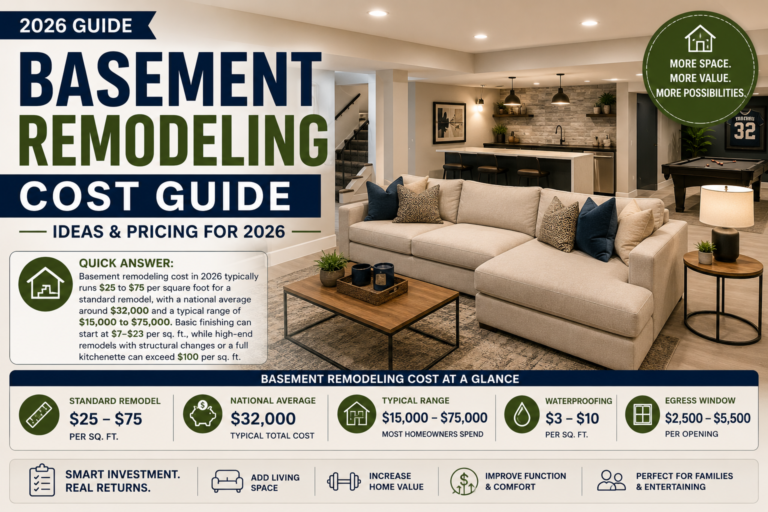
If you are finishing a basement, see our basement remodeling cost guide for how drywall fits into the full project budget.
What Affects Drywall Cost the Most?
Several factors explain why one quote is $1.50 and another is $3.50 for what looks like the same wall.
- Ceiling height: walls above 8 feet need extra sheets, scaffolding or lifts and more labor time.
- Ceilings versus walls: overhead work is harder and slower, so it usually costs more per square foot.
- Room layout: many corners, arches, soffits and angled walls increase cuts and waste.
- Texture and finish: knockdown or orange peel texture adds a step, while a smooth Level 5 finish adds several.
- Project size: large open areas are cheaper per square foot than small rooms with many cuts.
- Local labor rates: costs run higher in big metro areas and lower in rural regions.
- Removal of old drywall: tearing out damaged board commonly adds about $0.50 to $1.00 per square foot.
- Access and cleanup: stairs, tight entries and debris hauling can add time and fees.
Drywall Repair and Replacement Costs
Not every job is a new build. Repairs follow different math. Small holes, cracks and dents are usually quoted as a flat fee instead of by the square foot, since the setup time matters as much as the patch itself. Larger water damage or tear outs are priced like a mini installation.
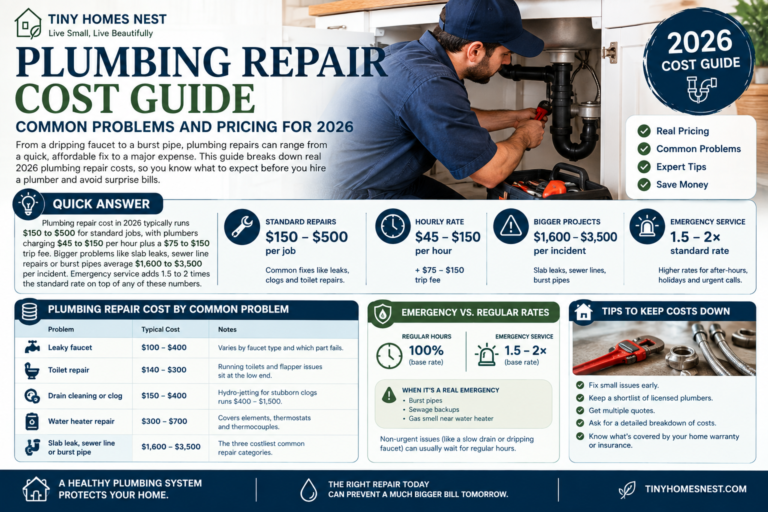
Replacing damaged drywall completely, including removal and a new finished surface, commonly runs about $2.00 to $4.50 per square foot. If the damage came from a leak, fix the source first. New drywall over an active leak will fail again and the repeat cost will far exceed the original repair. For larger plumbing related repairs, our plumbing repair cost guide shows what to expect before the wall is closed back up.
DIY Drywall Versus Hiring a Pro
Hanging drywall yourself saves the labor portion of the bill, which is often more than half the total. Done well on a small, simple room, that can mean real savings. Done poorly, it shows up under paint for years.
Hanging is the easy part. The skill is in taping and mudding, where seams, screw dimples and corners need smooth, feathered coats with patience between sanding passes. First timers often underestimate the time involved and the mess from sanding dust.
A sensible compromise for many homeowners is to hang the sheets themselves and hire a finisher for taping, mudding and sanding. That keeps the visible quality high while saving on the simplest part of the labor. Our DIY home improvement guide covers which projects are realistic to take on yourself.
How to Save Money on Drywall
You can lower the total without hurting the result:
- Get three written quotes that list scope, finish level and who supplies materials.
- Match the board to the room. Use standard board in dry spaces and pay for moisture resistant or fire rated only where it is needed.
- Choose the right finish level. Level 4 is plenty for most painted walls.
- Order accurately. Measure carefully and add only about 10 percent for waste so you do not overbuy.
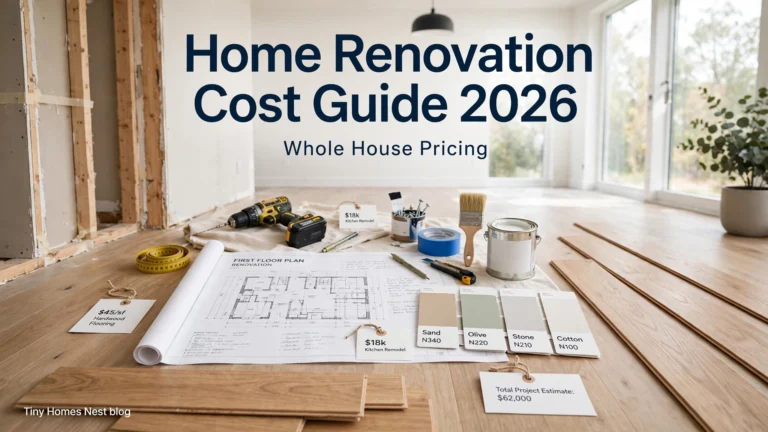
- Bundle the work. Pricing drywall as part of a larger renovation can lower the per square foot labor rate. The home renovation cost guide helps you plan what to combine.
- Schedule off season. Contractors are often more flexible in slower months.
- Protect finished work. Cover floors and furniture before sanding so cleanup does not add to the invoice.
Frequently Asked Questions About Drywall Cost
What is the average cost of drywall per square foot?
The average installed cost of drywall is between $1.50 and $3.50 per square foot for a standard half inch sheet that is hung, taped, mudded and sanded. Labor makes up roughly 50 to 70 percent of that total.
How much does a sheet of drywall cost?
A standard 4 by 8 foot half inch sheet typically costs $10 to $20 for the material alone. Installed and finished, a sheet commonly costs about $48 to $100 depending on thickness and local labor rates.
How much does it cost to drywall a room?
A typical 12 by 12 foot bedroom with 8 foot ceilings has about 528 square feet of surface. At $1.50 to $3.50 per square foot, drywalling that room costs roughly $790 to $1,850.
How many sheets of drywall do I need?
Divide your total surface area in square feet by 32 since each 4 by 8 sheet covers 32 square feet. Then add about 10 percent for waste. A 1,000 square foot area needs about 35 sheets.
Is moisture resistant drywall worth the extra cost?
Yes for bathrooms and laundry rooms. It typically adds only a small amount per square foot and helps resist mold and swelling in humid spaces. It is not waterproof though so it should not replace cement board where water hits the wall directly.
Why is soundproof drywall so expensive?
Soundproof drywall uses a layered core that damps vibration and it is heavier than standard board. Installed cost typically runs $3.55 to $7.50 per square foot because of both the material and the extra labor needed to handle the panels.
Final Thoughts on Drywall Costs
The drywall cost per square foot comes down to a few clear choices: the board type, the finish level and who does the work. For most homes a standard half inch board with a Level 4 finish lands between $1.50 and $3.50 per square foot installed. Spend extra only where the room calls for it, such as moisture resistant board in a bathroom or fire rated board in a garage wall.
Measure your space, divide by 32 for the sheet count and compare at least three written quotes. With the numbers above you can spot an unrealistic bid quickly and plan your budget with confidence.