

Home Renovation Cost Guide: Whole House Pricing for 2026
By Emily Hartman, Founder & Lead Editor at Tiny Homes Nest. Tiny home owner since 2019.
Whole house renovation cost is really a scope question disguised as a square footage question. This guide breaks down real 2026 home renovation cost by project depth, room type and specialty space, so you can budget realistically before a single wall comes down. Every figure below reflects fully installed cost, materials and labor together, not a rough per-square-foot number pulled from a single contractor’s quote. Two homes with identical square footage can land tens of thousands of dollars apart in final cost, which is exactly why understanding scope matters more than memorizing a single average.
Quick answer: Home renovation cost in 2026 typically runs $15 to $200 or more per square foot depending on scope, with a national average around $52,275 for a whole-home project on a 1,250 to 1,600 square foot house. Most homeowners spend $19,500 to $88,400, while a full gut renovation on a larger home can exceed $250,000.
How Much Does Home Renovation Cost in 2026? Quick Answer
Home renovation cost depends far more on how deep the work goes than on how big the house is, which is why two similarly sized homes can carry wildly different price tags.
The national average for a whole-home renovation sits around $52,275 for a house between 1,250 and 1,600 square feet, with most projects falling between $19,500 and $88,400. A cosmetic refresh, paint, flooring, fixtures and hardware with no layout or system changes, typically runs $15 to $40 per square foot. A mid-range renovation touching the kitchen, one or two bathrooms and flooring generally costs $40 to $130 per square foot. A full gut renovation down to the studs runs $60 to $200 per square foot or more, depending on how much structural work the demolition uncovers once walls actually come open. Most homeowners underestimate their actual spending by 20 to 40 percent, which is one of the most consistent findings across current 2026 renovation cost data.
Home Renovation Cost by Scope
Scope, not square footage, is the single biggest factor separating a $30,000 refresh from a $300,000 rebuild. The table below breaks down what each scope tier typically includes, so you can identify which one actually matches your project before requesting quotes.
| Renovation Scope | What’s Included | Cost Per Sq Ft |
| Cosmetic refresh | Paint, flooring, fixtures, hardware, no layout changes | $15 to $40 |
| Mid-range renovation | Kitchen, one or two bathrooms, flooring, limited plumbing or electrical | $40 to $130 |
| Full gut renovation | Complete demolition, layout changes, new systems, all-new finishes | $60 to $200+ |
A cosmetic refresh is the fastest tier to complete. Most homeowners can stay in the house while the work happens. A mid-range renovation is where most whole-home projects actually land, delivering a noticeably different-feeling home without the disruption of a full gut. A gut renovation makes sense when a home needs entirely new mechanical systems, has a layout that no longer works for how the household actually lives or carries enough deferred maintenance that piecemeal fixes would cost more over the following decade than doing it right once.
Home Theater Renovation Cost
Home theater renovation is one of the most-researched specialty renovation projects. The price range reflects just how differently two “home theater” projects can be scoped.
Professional home theater installation averages $20,000 to $25,000, with a typical range of $10,000 to $60,000 depending on room size, equipment and finish level. Basic setups can start as low as $2,000 to $5,000 for a media room upgrade using an existing space, while fully custom dedicated theaters with acoustic treatment, tiered seating and premium AV equipment can reach $100,000 to $250,000 or more. Construction, electrical, acoustics and labor typically account for 40 to 60 percent of total cost, meaning equipment is rarely the biggest line item in a full build. Acoustic treatment is the most commonly underbudgeted category. Basement or garage conversions cost more than converting an existing room, since HVAC and structural work often enter the picture. Permits for a dedicated theater build typically run $150 to $1,000 depending on location and scope. A well-planned room with modest equipment consistently outperforms an expensive equipment package dropped into a poorly planned space, since sightlines, ventilation noise and seating fit cannot be corrected after the fact.
Home Gym Renovation Cost
Home gym renovation ranges from a weekend project to a genuine construction undertaking, depending entirely on which tier you are actually planning for.
A spare-room conversion with upgraded flooring, a mirror and a mix of strength and cardio equipment typically costs $2,000 to $8,000. A garage or basement conversion into a real dedicated gym, rubber flooring, HVAC or a mini-split, dedicated electrical circuits, generally runs $6,000 to $30,000. A luxury dedicated studio with built-in cabinetry, commercial-grade equipment and features like a sauna can reach $30,000 to $100,000 or more. On average, most homeowners spend $2,150 to $13,750, landing around $7,750. Roughly 30 to 50 percent of a typical home gym budget goes to equipment itself, with another 20 to 40 percent covering flooring, mirrors, lighting, electrical and climate control, the details that make the space genuinely usable rather than just a room with weights in it. Flooring alone typically runs $4 to $17 per square foot installed. Ventilation deserves more attention than most homeowners give it upfront, since a converted garage or basement without adequate air circulation quickly becomes an uncomfortable space regardless of how much was spent on equipment.
Mobile Home Renovation Cost
Mobile and manufactured homes follow a different cost structure than site-built houses, since the construction methods and typical scope of work both differ.
Mobile home renovation cost generally runs lower than site-built renovation on a per-square-foot basis, since mobile homes are smaller overall and often need less structural work to update. A cosmetic refresh, new flooring, paint and fixture updates, tends to track closely with the low end of the site-built cosmetic tier, while a full renovation involving new subflooring, updated electrical or plumbing runs higher depending on the home’s age and condition. Older mobile homes built before 1976, prior to the HUD code that standardizes manufactured housing construction, often need more extensive updates to meet current safety expectations, which is worth factoring into any renovation budget for an older unit. Confirming a mobile home’s exact build date before finalizing a renovation scope is worth the extra step, since pre-HUD-code homes sometimes carry electrical or structural quirks a contractor unfamiliar with manufactured housing might not anticipate.
Whole Home Renovation Cost by Square Footage
Total project cost scales with square footage, though not in a perfectly linear way once fixed costs like permits and mobilization enter the calculation.
A 1,200 square foot home renovation typically runs $18,000 to $72,000 depending on scope. A 2,000 square foot home lands between $28,000 and $115,000 for standard scope, climbing to $200,000 to $400,000 for a full gut with premium finishes. Labor typically accounts for 50 to 60 percent of most renovation budgets nationally, though regional labor markets shift this considerably, with coastal metro areas commonly running 15 to 35 percent above rural and Midwest markets for identical scope and finishes. A renovation that costs $100 per square foot in a rural market can easily run $140 to $180 per square foot in a major coastal city for the exact same scope of work, which is why local quotes matter more than any national average once you actually start budgeting.
How to Budget for a Whole Home Renovation
A realistic renovation budget starts with the rooms you actually plan to touch, not a single national average pulled from an unrelated project.
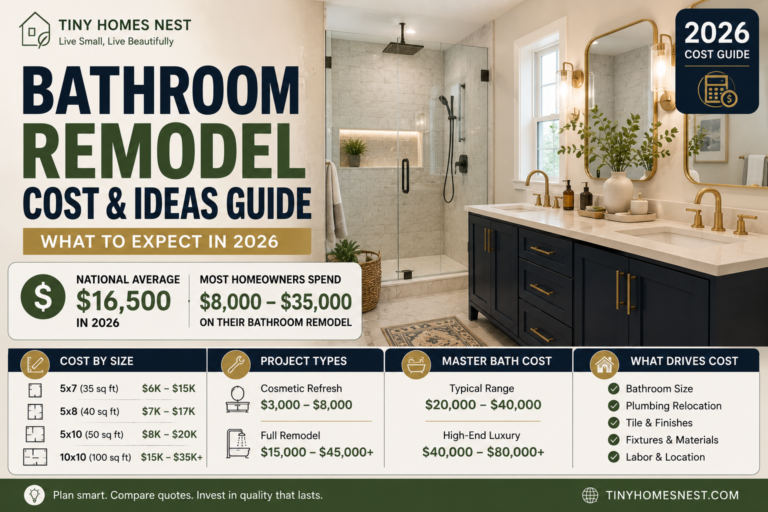
Add up per-room or per-area estimates for each space you intend to renovate, then layer in a 10 to 20 percent contingency for the surprises that show up once demolition starts. Homes built before 1978 carry an additional consideration if the renovation disturbs painted surfaces, since the EPA’s Renovation, Repair and Painting Rule requires any paid contractor working on these older homes to be lead-safe certified. Get itemized bids from at least three contractors that separate demolition, materials, labor and permits into their own line items, since a single lump-sum number makes it nearly impossible to identify where a budget might be padded or where corners might be cut. If your project touches the kitchen, bathroom, flooring or roof specifically, our dedicated cost guides for each of those rooms go into far more room-specific detail than a whole-house overview can. Pairing them with this guide gives you a more accurate combined budget.
Small fixes like a sagging door are worth handling yourself before the bigger budget kicks in, since they cost little more than a screwdriver and an afternoon.
How to Use a Home Renovation Cost Estimator
Online home renovation cost estimators and calculators provide a reasonable starting range, though they cannot account for your home’s specific condition or local permit requirements.
Enter your square footage and intended scope if the calculator asks for them. Treat the resulting number as a planning figure rather than a firm quote, though. Most homeowners underestimate renovation expenses by 20 to 40 percent, which is one of the most common reasons a project runs out of money partway through. Building that margin into your initial budget, rather than discovering it mid-project, keeps a renovation from turning into a financing scramble once the walls are already open. A calculator is genuinely useful for comparing two different scope levels against each other, even when it cannot replace an actual in-person quote for your specific home.
Frequently Asked Questions
How much does it cost to renovate a whole house?
Whole home renovation typically costs $52,275 on average for a 1,250 to 1,600 square foot home, with most projects falling between $19,500 and $88,400 depending on scope and finish level.
How much does a home theater renovation cost?
Home theater renovation averages $20,000 to $25,000, with a typical range of $10,000 to $60,000. Basic media room upgrades can start around $2,000 to $5,000, while fully custom theaters can exceed $100,000.
How much does it cost to build a home gym?
Most homeowners spend $2,150 to $13,750 building a home gym, averaging around $7,750. A simple spare-room conversion costs $2,000 to $8,000, while a full garage or basement conversion runs $6,000 to $30,000.
Is mobile home renovation cheaper than renovating a site-built house?
Generally, yes, on a per-square-foot basis, since mobile homes are typically smaller and often need less structural work. Homes built before the 1976 HUD code may need more extensive updates to meet current standards.
What is the difference between a cosmetic refresh and a gut renovation?
A cosmetic refresh covers paint, flooring and fixtures without changing the layout, typically $15 to $40 per square foot. A gut renovation involves complete demolition and new systems, typically $60 to $200 or more per square foot.
How much contingency should I budget for a home renovation?
Most renovation professionals recommend a 10 to 20 percent contingency on top of your base budget, since most homeowners underestimate total project cost by 20 to 40 percent without one. Older homes with unknown structural or system conditions behind the walls generally warrant a contingency toward the higher end of that range.
Home renovation cost comes down to scope far more than square footage, which is why building your budget from the specific rooms and systems you plan to touch beats anchoring on a single national average. Get multiple itemized bids, build in a real contingency and confirm any older-home requirements before demolition starts. The homeowners who stick closest to their original budget almost always did this legwork before signing anything, not after.
Have a specific room or renovation scope in mind? Drop it in the comments and our team will help you think through a realistic budget. Browse our full Home Improvement collection for more room-by-room and project-by-project cost guides as they go live.
Emily Hartman is the founder and lead editor at Tiny Homes Nest. After downsizing into a 340-square-foot home in 2019, she spent years working through zoning rules, financing options and real renovation costs firsthand. That experience is what she now turns into practical, no-fluff guides for buyers and downsizers.



2 Comments