Garage Insulation: Costs, Best Materials and How to Insulate a Garage
A garage that bakes in summer and freezes in winter is more than an annoyance. It affects the rooms next to it and the comfort of a workshop or home gym and the temperature of the floor above if you have a bedroom over the garage. Good garage insulation fixes all of that and often costs less than people expect when you focus on the right parts first.
This guide covers how to insulate a garage from start to finish. You will see what garage insulation costs and which materials work best for walls and ceilings and the door, how to insulate a garage door yourself and what the fire code says about an attached garage. By the end you will know where to spend money and where to save.
Should You Insulate Your Garage?
It depends on how you use the space and whether the garage is attached to your home.
Insulating makes the most sense when:
- The garage is attached. The shared wall and ceiling affect the temperature and energy use of the house.
- You have a room above the garage. A cold ceiling under a bedroom makes the floor above uncomfortable.
- You use it as a workshop or gym or home office. Comfort matters year round in these cases.
- You store things that dislike extreme temperatures such as paint or tools or electronics.
It makes less sense in a detached garage that you never heat or cool. In that case insulating the walls may do little and can even cause moisture problems. For these garages the garage door and the gaps around it usually matter more than the walls.
How Much Does Garage Insulation Cost?
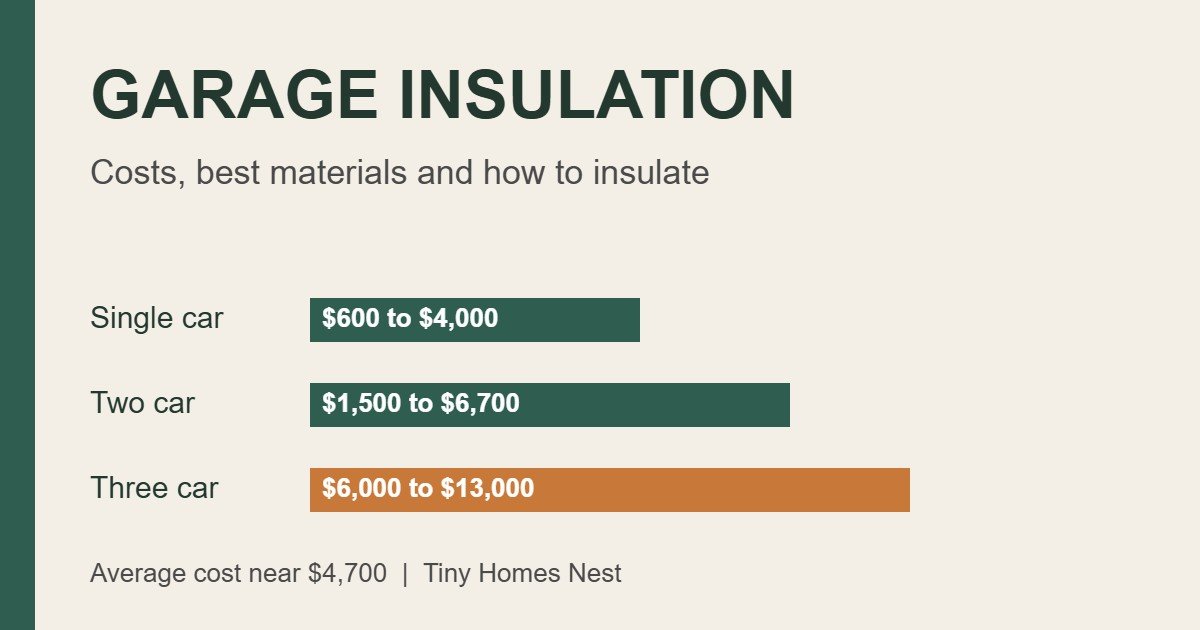
Most homeowners spend somewhere between $1,900 and $7,700 to insulate a garage with a national average near $4,700 according to Angi. That range is wide because garage size and insulation type and the finishing work you choose all change the bill.
Typical costs by garage size:
- Single car garage: about $600 to $4,000
- Two car garage: about $1,500 to $6,700
- Three car garage: about $6,000 to $13,000
A few add on costs that often surprise people:
- Garage door insulation: about $300 to $1,500 to insulate an existing door
- Weatherstripping around doors: about $200 to $600
- Vapor barrier: about $0.50 to $0.70 per square foot
- Ceiling insulation: about $1.11 to $3.20 per square foot
- Permits: about $75 to $700 depending on your area
- Installer labor: about $40 to $80 per hour
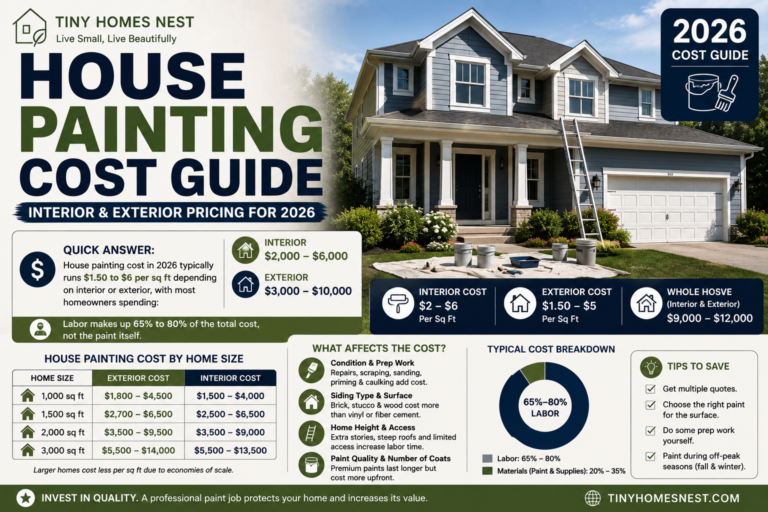
If you plan to cover the insulation with drywall and paint the walls the finishing work can add as much as the insulation itself. Our house painting cost guide helps you budget for the paint stage.
Best Insulation for Garage Walls and Ceilings
Several materials work in a garage. The best insulation for a garage depends on your climate and your budget and whether the walls are open studs or already covered. Here are the common options with their typical R-values per inch and material prices.
- Fiberglass batts: R-3.1 to R-4.3 per inch at about $0.30 to $1.50 per square foot. The most common and most DIY friendly choice for open stud walls.
- Mineral wool batts: R-3.1 to R-3.4 per inch at about $1.40 to $4 per square foot. Better fire resistance and sound control than fiberglass.
- Blown in insulation: R-2.2 to R-4.3 per inch at about $0.60 to $2.30 per square foot depending on material. Good for ceilings and attics.
- Rigid foam board: R-3.8 to R-7.9 per inch at about $2 to $4 per square foot. Fits tight spaces and can mount directly to concrete or block walls.
- Open cell spray foam: R-3.5 to R-3.7 per inch at about $1.60 to $5.50 per square foot.
- Closed cell spray foam: R-6.0 to R-6.5 per inch at about $2.60 to $8 per square foot. The highest R-value per inch and the most expensive.
- Reflective or radiant barrier: R-3.5 to R-5.5 at about $0.60 to $2.50 per square foot. Most useful in hot climates.
For most garages the practical choice is fiberglass or mineral wool in the walls and blown in or batt insulation in the ceiling. Spray foam is very effective especially in cold climates but it is the priciest option and is best left to professionals.
Garage Wall Insulation: How to Insulate Garage Walls
Garage wall insulation is straightforward when the studs are exposed. If drywall or plywood already covers the framing you will have to remove it first or choose a method such as injected foam.
For an attached garage a common target is R-13 to R-21 on the shared wall. One guide suggests R-13 for mild climates and R-21 to R-30 for colder ones with continuous exterior insulation for very cold regions. Always check local code and your climate zone since requirements vary.
Basic steps for insulating garage walls:
- Seal gaps first. Fill cracks and holes in exterior walls and around pipes and wires before adding insulation.
- Fit batts snugly between studs. Do not compress them since squeezing reduces the R-value.
- Add a vapor barrier where needed. In a heated garage in a cold climate the vapor barrier goes on the interior side. In a cooled garage in a hot climate it goes on the exterior side. Check local code.
- Cover the insulation. Drywall or plywood protects it and gives you a finished surface. Fiberglass left exposed can be damaged or can shed fibers.
Garage Ceiling Insulation
Garage ceiling insulation matters most when there is living space above. It slows heat flow between the garage and the room over it and it can also reduce noise passing upward.
If you wonder how to insulate a garage ceiling the method depends on the framing. With exposed joists you can fit fiberglass or mineral wool batts between them. With an attic above you can lay batts or blow in loose fill over the ceiling drywall which is often the easiest route for garage attic insulation. For a garage with a finished roof deck the same rafter bay approach works for garage roof insulation.
R-value targets vary by climate and code. One guide suggests about R-30 in mild climates and higher in colder ones. Whatever you choose do not block soffit vents. Keep airflow open so the attic can breathe.
A fire safety note applies here too. If a room sits above an attached garage building code generally calls for 5/8 inch Type X drywall on the garage ceiling. We cover this in the code section below.
Garage Door Insulation
The garage door is the biggest single opening in the space and usually the weakest link. Garage door insulation can make a real difference in comfort so it is often the best first project.
Garage Door Insulation Kits and Types
Most garage door insulation kits fall into a few types:
- Fiberglass batting with a vinyl facing: Often around R-8. A typical 16 foot wide door needs two kits.
- Expanded polystyrene (EPS) panels: About R-4 per inch. Often enough for moderate climates.
- Foil faced rigid foam panels: Up to roughly R-9.8 for fire rated extruded polystyrene about 1.5 inches thick.
- Reflective foil insulation: A thinner option that helps most in hot climates.
- Insulated door blanket or panel sets: Pre cut sets that fit each door section.
Never use unfaced foam that is not fire rated. Some foam board is highly flammable and can give off toxic fumes when it burns.
Does Garage Door Insulation Work?
Yes. The door is a big thin surface that conducts heat easily. Manufacturer studies of an R-18 insulated door have shown roughly 12 degrees warmer in winter and about 25 degrees cooler in summer than an uninsulated door. A kit will not match that but it still reduces temperature swings and noise.
How to Insulate a Garage Door Yourself
A DIY garage door insulation project takes about four hours and costs a couple of hundred dollars in materials for most kits.
- Measure each panel. Panel sizes can vary so measure them one at a time.
- Cut the insulation. Add about an inch to each measurement for batting or cut rigid foam to fit. Cut on scrap plywood with a sharp utility knife.
- Secure it. Use retainer pins and caps for batting or friction fit foam panels in the door sections. Keep the facing toward the garage interior.
- Add weatherstripping. Install vinyl stops on the top and sides and replace the bottom seal if it is worn.
- Test the balance. Lift the door halfway and let go. It should stay in place. If it drops the added weight has thrown it off.
Added weight can strain your springs and opener. Spring adjustments are dangerous and should be left to a garage door service company. If your door is old you may do better replacing it with a factory insulated door. Premium sectional doors range from about R-6 to R-18.
Garage Insulation and Fire Code for Attached Garages
Fire separation is the part of garage insulation that homeowners most often overlook. The International Residential Code sets rules for the wall and ceiling between an attached garage and the house.
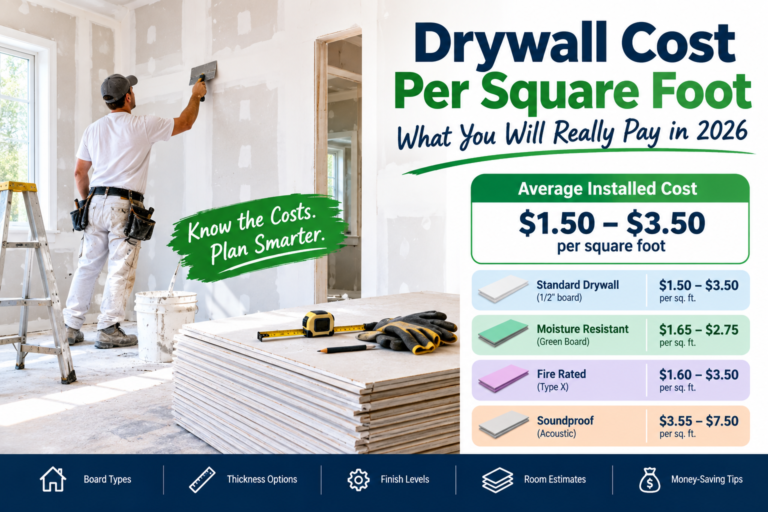
- Garage side of shared walls and ceilings: at least 1/2 inch gypsum board
- Habitable rooms above the garage: 5/8 inch Type X gypsum board
- Door to the house: solid wood or solid or honeycomb steel at least 1 3/8 inches thick or a 20 minute rated door and it must be self closing and self latching
- Doors may not open into a sleeping room
Local codes may add rules so check with your building department before you start. Insulation does not replace these fire barriers. It goes in the framing cavity behind them.
Garage Floor Insulation
Garage floor insulation is the least common upgrade. It matters mostly for workshops and gyms on a concrete slab in cold regions. Options include rigid foam under a new floor system or insulating the slab edge. One guide suggests slab edge insulation of about R-5 to R-10 in mild climates and more in cold ones. If you are updating the floor surface anyway see our flooring installation cost guide for what different surfaces cost.
What Is the Cheapest Way to Insulate a Garage?
You do not have to do everything at once. A smart sequence keeps costs down.
- Seal air leaks first. Caulk and foam small gaps and fix weatherstripping. This is the cheapest and highest return step.
- Insulate the garage door. A kit costs a couple of hundred dollars and often makes the biggest comfort change.
- Insulate the ceiling if there is a room above. Batts or blown in material are low cost per square foot.
- Insulate the walls last. Fiberglass batts in open studs are the most budget friendly wall option.
- Skip spray foam unless you need it. It is excellent but the most expensive route.
DIY Versus Hiring a Pro
Many garage insulation tasks suit a confident DIYer. Fiberglass batts in open walls and a door kit and weatherstripping are all manageable. Spray foam and blown in ceiling insulation and anything involving moisture control or fire rated drywall are better left to professionals. Poor installation can leave gaps and trap moisture and cut efficiency.
For projects like this one our DIY home improvement guide can help you decide which jobs to take on. If garage insulation is part of a larger update see the home renovation cost guide for planning the full budget.
Frequently Asked Questions About Garage Insulation
How much does it cost to insulate a garage?
Most homeowners spend between $1,900 and $7,700 with a national average near $4,700. A single car garage can cost as little as $600 while a three car garage can reach $13,000.
How do you insulate a garage?
Seal air gaps and then install insulation in the walls and ceiling and add a vapor barrier where needed. Insulate the garage door and cover the framing with drywall. In an attached garage follow fire code for the drywall between the garage and the house.
What is the best insulation for a garage?
Fiberglass or mineral wool batts are the best budget choice for walls and ceilings. Spray foam and rigid foam have higher R-values per inch but cost more. The best choice depends on your climate and budget.
How do you insulate a garage door?
Measure each panel and cut insulation to fit and secure it with pins or friction fit and add weatherstripping. Then test the door balance. Kits cost a couple of hundred dollars and take about four hours.
Does garage door insulation work?
Yes. It reduces heat flow through the biggest opening in the garage and helps keep temperatures steadier. Results depend on the R-value and on how well the door is sealed.
Do you need to insulate a detached garage?
Only if you heat or cool it. For an unconditioned detached garage focus on the door and the gaps around it. Insulating the walls of an unconditioned garage may not help and can cause moisture problems.
What drywall do you need in an attached garage?
Building code generally requires at least 1/2 inch gypsum board on the garage side of walls and ceilings shared with the home and 5/8 inch Type X under habitable rooms. Check your local code to confirm.
Final Thoughts on Garage Insulation
Good garage insulation is about sequence and fit more than spending the most. Start by sealing gaps and insulating the door. Then add ceiling and wall insulation where the garage meets living space. Choose materials that match your climate and respect the fire rules for an attached garage.
Plan the budget before you start since costs range from a few hundred dollars for a door kit to several thousand for a full project. Compare quotes and read product labels and check local code. Done in the right order the result is a garage you can actually use all year.