
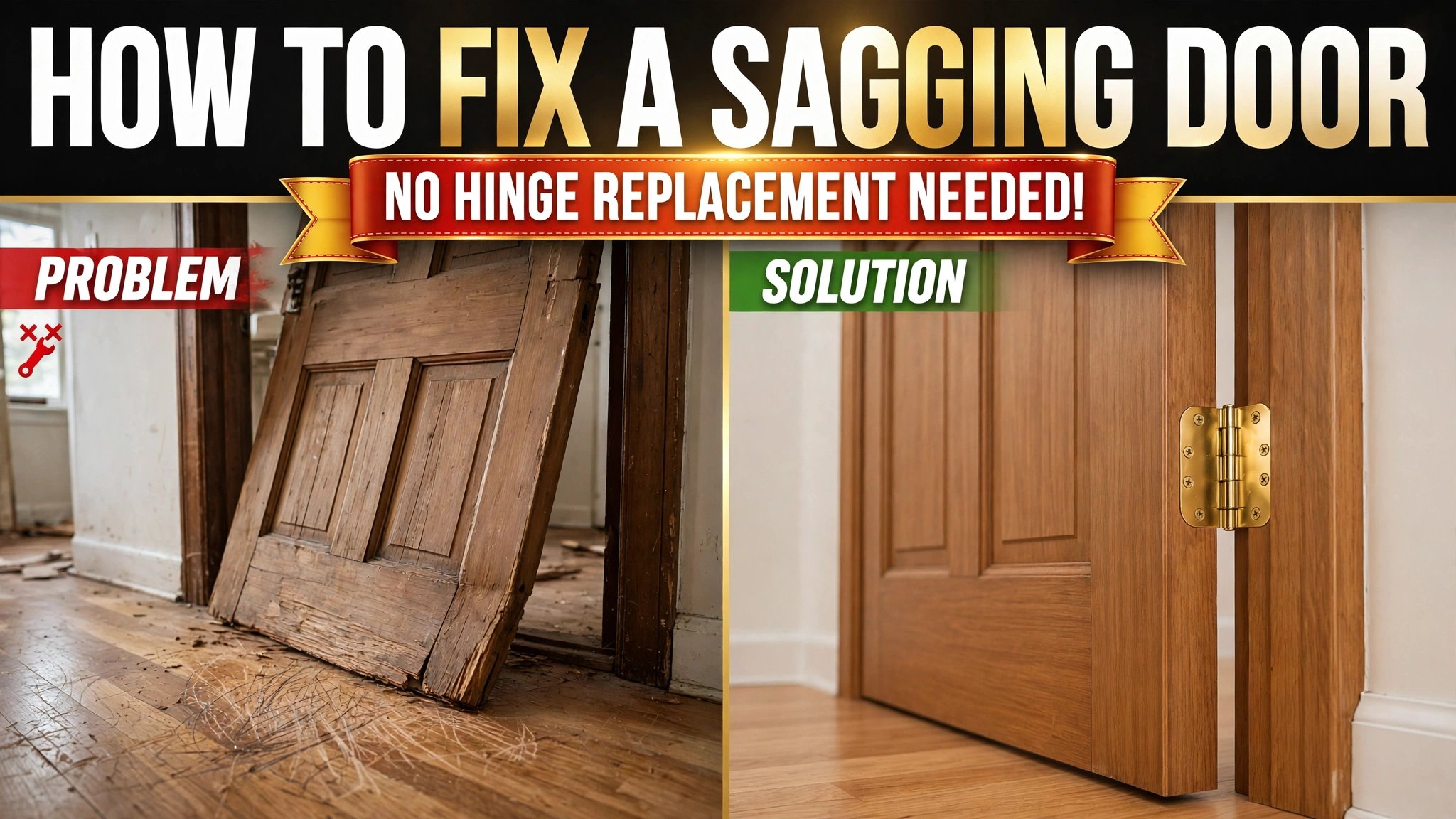
How to Fix a Sagging Door: 7 Easy Steps for a Flawless DIY Repair
Learning how to fix a sagging door is one of the most practical DIY skills any homeowner can master. A door that drags across the floor, sticks against the upper frame, or refuses to latch properly can quickly damage your flooring and drive you crazy. Fortunately, knowing how to fix a sagging door almost never requires rebuilding the entire wall or buying an expensive replacement unit.
In most homes, a sagging door is simply caused by a loose hinge screw that has stripped out over time. In this comprehensive step-by-step tutorial, we will show you exactly how to fix a sagging door that binds or drags, covering interior bedroom doors, heavy exterior doors, storm doors, garage doors, and outdoor gates in under 30 minutes.
Table of Contents
- Why Doors Start to Sag in the First Place
- Essential Tools and Materials You Will Need
- How to Fix a Sagging Door With Loose Hinges
- How to Fix a Sagging Door Frame With Shims
- How to Fix a Sagging Door That Won’t Latch
- How to Fix a Sagging Screen or Storm Door
- How to Fix a Sagging Garage Door
- How to Fix a Sagging Shower Door
- How to Fix a Sagging Gate or Shed Door
- Interior vs. Exterior Doors: Key Differences
- How to Prevent a Door From Sagging Again
- Frequently Asked Questions
Why Doors Start to Sag in the First Place
Before reviewing the steps on how to fix a sagging door, it is crucial to understand why your door dropped out of alignment. Diagnosing the real cause prevents you from repeating the same repair next month.
| Visible Symptom | Underlying Cause | Primary DIY Solution |
|---|---|---|
| Door rubs top latch side | Loose top hinge screws | Install 3-inch framing screws |
| Door drags along entire bottom | Seasonal moisture expansion | Dehumidify or edge planing |
| Uneven margins around jamb | Shifted rough opening / settling | Add shims behind hinge leaf |
| Door will not latch shut | Dropped strike alignment | File strike plate or adjust hinge |
| Corner drops on screen door | Corner joint distortion | Adjust turnbuckle support rod |
1. Stripped Hinge Screws
Every time you swing open a door, gravity exerts mechanical leverage against the top hinge. Standard builders install short 3/4-inch screws that grab only the thin wooden door jamb. Over years of daily friction, those screw threads strip out, causing the door to lean outward and drop. Understanding how to fix a sagging door with stripped screw holes is the fastest way to solve this issue.
2. Humidity and Seasonal Wood Swelling
Wood is a hygroscopic material that continually absorbs and releases airborne moisture. Research by the USDA Forest Products Laboratory shows that interior wood components can expand significantly across the grain during hot, humid summer months. A door that operates smoothly in dry winter air may swell just enough in July to bind against the head jamb.
3. Natural Foundation Settling
Every home settles over time as soil shifts and framing dries out. When your wall studs shift out of plumb, the door frame racks into a parallelogram. If the frame is no longer square, even a brand-new door will begin to sag and stick.
Essential Tools and Materials You Will Need
Before learning how to fix a sagging door, gather these basic household hand tools:
- Screwdrivers: Manual #2 Phillips and flat-head screwdrivers.
- Cordless Drill & Bits: For drilling pilot holes and driving fasteners.
- 3-Inch Wood Screws: Heavy-duty screws designed to anchor into wall studs.
- Wooden Golf Tees or Matchsticks: Ideal for plugging stripped screw holes.
- Wood Glue: High-tack PVA wood glue.
- Utility Knife & Chisel: For trimming wooden plugs and cutting hinge mortises.
- 4-Foot Carpenter’s Level: To verify jamb plumbness.
- Metal Hand File: For enlarging strike plate openings if latching fails.

How to Fix a Sagging Door With Loose Hinges
When researching how to fix a sagging door, this hinge repair resolves more than 80% of all complaints. If your door catches on the floor or drags at the upper strike jamb, follow these four proven steps:
Step 1: Check the Top Hinge for Play
Open the door halfway and grasp the exterior handle. Lift up and pull outward gently while watching the top hinge plate. If you observe the metal leaf pulling away from the jamb casing, your screws are loose or completely stripped.
Step 2: Remove the Stripped Screws
Using your manual screwdriver, test each screw on the jamb side of the top hinge. If a screw spins freely without tightening, back it all the way out and set it aside.
Step 3: Pack the Hole With Wood Glue and Golf Tees
To give replacement screws fresh solid material to grip, use the classic carpenter golf-tee trick:
- Dip the pointed end of a wooden golf tee or two wooden matchsticks into quality wood glue.
- Tap the wooden plug directly into the stripped screw hole until it seats firmly.
- Allow the glue to dry for 20 to 30 minutes.
- Use a sharp utility knife or chisel to slice off the protruding wood flush with the hinge plate.
- Drill a 1/8-inch pilot hole directly through the center of your new wooden plug.
Step 4: Drive a 3-Inch Screw Into the Wall Stud
Standard factory door screws are only 3/4-inch long, anchoring only into the thin door jamb. An essential technique in how to fix a sagging door permanently is replacing at least one middle screw on your top hinge with a heavy-duty 3-inch wood screw. This extra-long fastener drives straight through the jamb and bites deep into the structural 2×4 framing stud behind the drywall, pulling the door securely back into plumb alignment.

How to Fix a Sagging Door Frame With Shims
If you have tightened the top hinge screws and the door still rubs against the frame, mastering how to fix a sagging door frame with shims is your next logical step. You can quickly balance the clearance reveal by shimming behind the lower hinge.
- Support the Door: Place a wedge or folded towel underneath the bottom edge of the door slab so it stays stable while unbolted.
- Unscrew the Bottom Hinge: Remove the screws securing the lower hinge leaf to the jamb side. Swing the hinge leaf away from the mortise pocket.
- Insert a Custom Shim: Cut a small rectangle of cereal box cardboard or thin wood veneer that matches the size of the hinge mortise. Place the shim directly inside the pocket behind the hinge plate.
- Reinstall the Hinge: Re-drive the screws through the hinge leaf and cardboard shim into the jamb.
Shimming the bottom hinge pushes the lower corner of the door outward toward the room. This mechanical leverage pivots the entire slab, demonstrating how to fix a sagging door without having to plane the wood down.
How to Fix a Sagging Door That Won’t Latch
Many homeowners search for how to fix a sagging door that won’t latch because even a tiny 1/8-inch drop prevents the spring latch bolt from entering the strike plate hole cleanly.
Here is how to fix a sagging door when the latch refuses to catch:
- Find the Contact Point: Coat the tip of your door’s latch bolt with a dry-erase marker, lipstick, or chalk. Close the door slowly until the bolt touches the strike plate. The mark transferred onto the metal reveals exactly how far the latch has dropped.
- File the Strike Opening: If the latch is misaligned by 1/8-inch or less, remove the strike plate from the door frame. Clamp it securely and use a flat metal hand file to widen the lower edge of the interior hole. Screw it back in and test the latch action.
- Shift the Strike Plate Downward: If the door has dropped significantly, remove the strike plate screws, use a wood chisel to carve the mortise pocket 1/4-inch lower down the jamb, and remount the plate using fresh pilot holes.

How to Fix a Sagging Screen or Storm Door
If you are wondering how to fix a sagging screen or storm door, the process differs from solid wood doors. Because storm doors are assembled from hollow aluminum extrusions, the corner miter joints tend to loosen under wind pressure, causing the door frame to sag into a diamond shape.
To implement how to fix a sagging storm door, locate the diagonal turnbuckle support rod mounted on the interior face. Use an adjustable wrench to turn the central tension nut clockwise one quarter-turn at a time. This pulls the bottom latch-side corner upward toward the top hinge corner. Check the door swing after each quarter-turn to prevent over-tightening and bowing the frame.
How to Fix a Sagging Garage Door
When considering how to fix a sagging garage door, the problem usually stems from track misalignment or worn rollers rather than standard butt hinges. Because overhead doors operate along a horizontal and vertical track system, loose brackets cause the door panels to drop unevenly.
To handle how to fix a sagging garage door safely, disconnect the automatic opener and inspect both side tracks with a 4-foot level. Loosen the track mounting bolts slightly, tap the track plumb using a rubber mallet, and retighten the hardware. Replace cracked nylon or steel rollers immediately.
Safety Warning: Never attempt to adjust or unbolt garage door bottom brackets, lift cables, or overhead torsion springs yourself. These springs store lethal kinetic tension. Always hire a certified garage door specialist for spring balancing.
How to Fix a Sagging Shower Door
The method for how to fix a sagging shower door focuses on overhead rollers. Glass sliding and frameless shower doors begin to drag when their roller wheels slide out of alignment or accumulate mineral deposits.
- Look at the top roller channel inside the shower enclosure.
- Locate the eccentric adjustment screw located on the body of each roller wheel assembly.
- Loosen the screw slightly and shift the roller wheel along its adjustment channel to raise the dropped side of the glass panel.
- Retighten the screw firmly and test the sliding action. If the roller wheel has flat spots from mineral buildup, install an inexpensive replacement wheel.
How to Fix a Sagging Gate or Shed Door
Learning how to fix a sagging gate or shed door is essential because outdoor structures lack a rigid four-sided frame. Gravity inevitably pulls the outer latch corner down into the dirt.
The most permanent fix is installing a steel anti-sag gate turnbuckle kit. Attach the top bracket to the upper hinge corner and the bottom bracket to the lower latch corner. Thread the cable through the turnbuckle and tighten the center barrel until the gate lifts clear of the ground. Alternatively, nail a rigid 2×4 diagonal brace board running diagonally from the bottom hinge-side corner up to the top latch-side corner to carry the door’s weight in compression.
Interior vs. Exterior Doors: Key Differences
When determining how to fix a sagging door, keep in mind that interior and exterior doors react differently to their environment:
- Interior Doors: Interior hollow-core doors weigh under 30 pounds and are protected from weather. They sag almost exclusively due to stripped hinge screws. The golf-tee method and a single 3-inch stud screw will resolve 99% of interior door issues.
- Exterior Doors: Solid wood, steel, and fiberglass entry doors can weigh over 100 pounds. They suffer from hinge fatigue and intense seasonal humidity swings. If an exterior door rubs only during rainy seasons, seal the bottom wood grain and replace worn weatherstripping before altering hinge mortises.
If you are upgrading multiple doors and fixtures as part of a larger property makeover, explore our home renovation cost guide to estimate costs accurately. Once your exterior doors hang plumb and swing freely, check our detailed house painting cost guide to protect your exterior trim with weather-resistant finishes.
How to Prevent a Door From Sagging Again
After learning how to fix a sagging door, keep your doors operating like new for years by following these simple maintenance habits:
- Perform an Annual Screw Check: Once a year, walk your home with a hand screwdriver and snug down the top hinge screws on your highest-traffic doors.
- Lubricate Hinge Pins: Coat hinge knuckles annually with dry Teflon or silicone spray. Avoid messy WD-40, which attracts dust and grinds down metal knuckles.
- Seal Top and Bottom Edges: Whenever you paint or stain a door, apply two coats of exterior sealer to the hidden top and bottom end grains to block humidity absorption.
Frequently Asked Questions
Why do doors sag over time?
Doors sag primarily because daily opening cycles pull on the top hinge screws, eventually stripping the wood jamb. In addition, seasonal humidity swells the wood slab, and subtle foundation settling distorts the frame out of square.
Can you fix a sagging door without replacing the hinges?
Yes. When searching for how to fix a sagging door without replacing hardware, packing stripped screw holes with wood glue and wooden golf tees or driving a long 3-inch screw into the wall stud completely solves the issue.
How do you fix a sagging door that won’t latch?
First, drive a 3-inch screw through the top hinge into the wall stud to pull the door back into level alignment. If the latch bolt is still hitting slightly below the opening, use a metal hand file to enlarge the lower edge of the strike plate opening.
Do all doors eventually sag?
Most heavily used doors will experience minor hinge loosening over decades of use. However, doors anchored directly into framing studs with 3-inch screws and lubricated annually can remain square and functional for over 30 years without sagging.
Conclusion: Restore Your Doors in Minutes
A dragging door is a daily hassle, but you do not need to spend hundreds of dollars on a contractor to solve it. In almost every home, understanding how to fix a sagging door comes down to tightening loose top hinges, packing stripped screw holes with wooden golf tees, and anchoring fasteners into the wall studs behind the jamb.
Now that you know exactly how to fix a sagging door, start with the simplest fix: inspect the top hinge, drive a 3-inch framing screw into the stud, and watch your door lift effortlessly back into its original, smooth-swinging position.







3 Comments