
Plumbing Repair Cost Guide: Common Problems and Pricing for 2026
By Emily Hartman, Founder & Lead Editor at Tiny Homes Nest. Tiny home owner since 2019.
A dripping faucet and a burst pipe both fall under “plumbing repair,” yet one costs about as much as a nice dinner while the other can total thousands of dollars in an afternoon. This guide breaks down real 2026 plumbing repair cost by problem type, so you know whether a quote is fair before water damage turns a manageable fix into an emergency. Every figure below reflects real 2026 industry pricing data, not a single plumber’s opinion, which is exactly why the ranges are wide enough to cover both a five-minute fix and a genuine emergency. Plumbing is also one of the few home systems where waiting to address a small problem almost always costs more than fixing it immediately, since water damage compounds quickly once it starts.
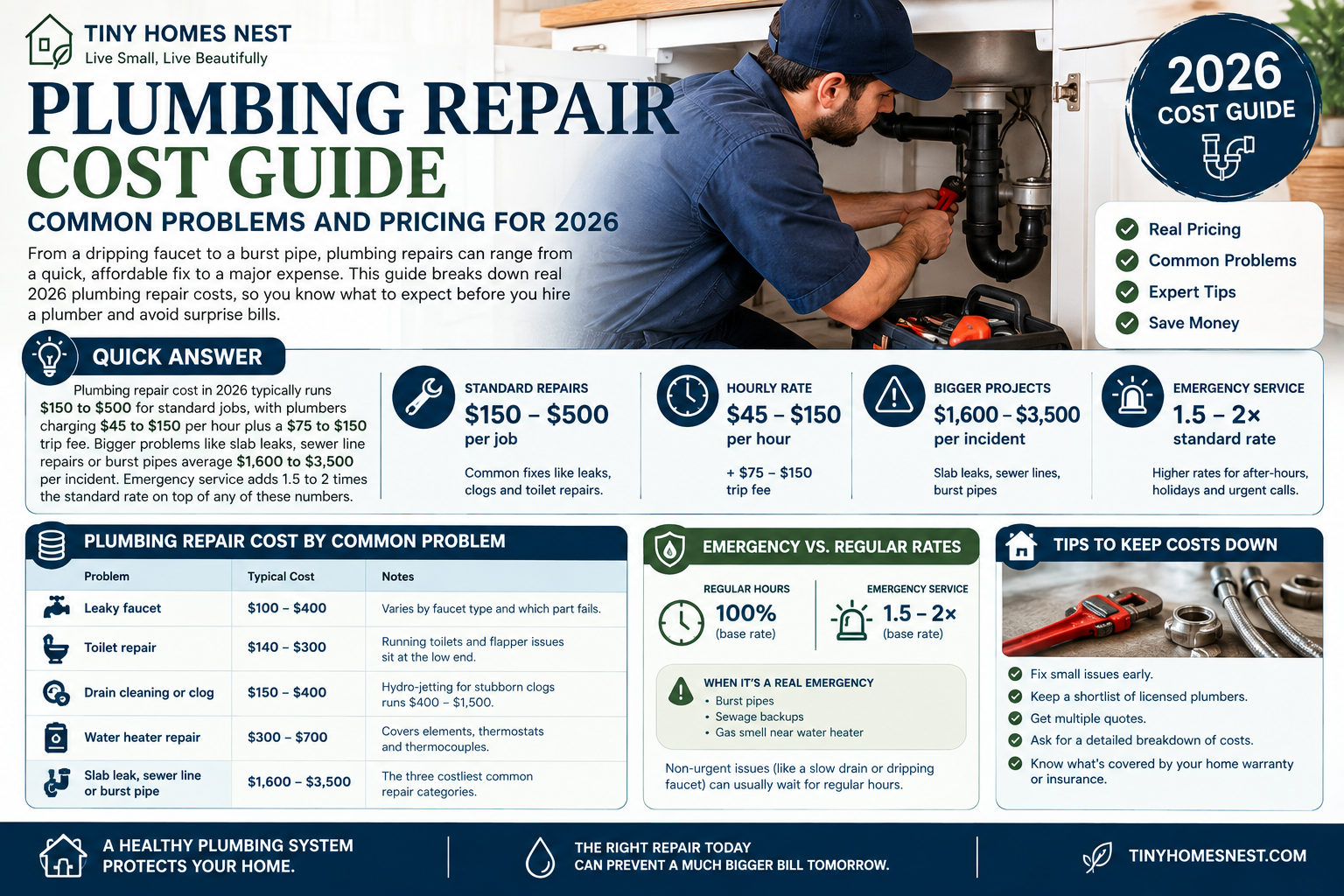
Quick answer: Plumbing repair cost in 2026 typically runs $150 to $500 for standard jobs, with plumbers charging $45 to $150 per hour plus a $75 to $150 trip fee. Bigger problems like slab leaks, sewer line repairs or burst pipes average $1,600 to $3,500 per incident. Emergency service adds 1.5 to 2 times the standard rate on top of any of these numbers.
How Much Does Plumbing Repair Cost in 2026? Quick Answer
Plumbing repair cost depends almost entirely on which specific problem you have, since “plumbing repair” covers everything from a five-minute faucet fix to a multi-day sewer line replacement.
Standard residential repairs typically fall between $150 and $500, covering the most common calls like clogged drains, running toilets and dripping faucets. Plumbers generally charge $45 to $150 per hour, often with a $75 to $150 trip or service fee added on top regardless of how long the job takes. More involved repairs, water heater replacement, pipe rerouting or a slab leak, can push well into the thousands. Getting the specific problem diagnosed correctly before agreeing to a price is the single most useful thing you can do, since two very different repairs can present with nearly identical symptoms. A slow drain, for instance, might mean a simple clog or a much more serious sewer line problem. Only a proper diagnosis tells you which one you are actually facing. Paying for that diagnosis upfront, rather than assuming the cheapest possible explanation, is rarely wasted money once a real problem gets caught early.
Plumbing Repair Cost by Common Problem
Certain repairs come up again and again. Knowing the typical range for each helps you spot an inflated quote before you agree to anything, regardless of which company happens to answer the phone first.
| Problem | Typical Cost | Notes |
|---|---|---|
| Leaky faucet | $100 to $400 | Cost varies by faucet type and which part fails |
| Toilet repair | $140 to $300 | Running toilets and flapper issues sit at the low end |
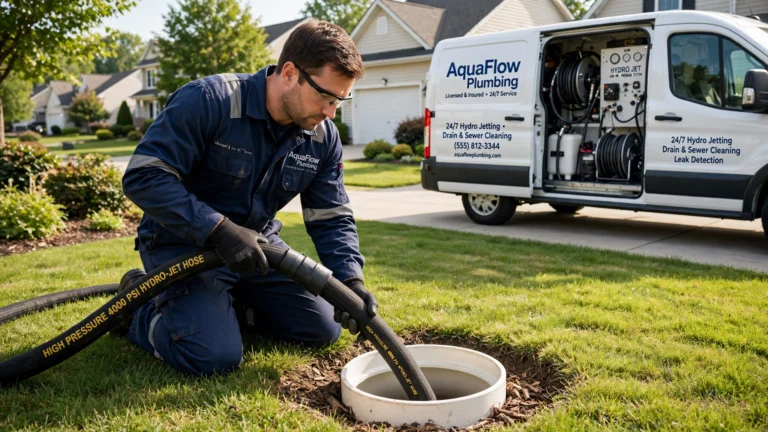
| Drain cleaning or clog | $150 to $400 | Hydro-jetting for stubborn clogs runs $400 to $1,500 |
| Water heater repair | $300 to $700 | Covers elements, thermostats and thermocouples |
| Slab leak, sewer line or burst pipe | $1,600 to $3,500 | The three costliest common repair categories |
Drain cleaning and toilet repair represent the highest-volume, lowest-cost calls plumbers receive. Homeowners often use them to judge whether a company is worth calling back for a bigger job later, which makes these smaller jobs worth paying attention to even when the dollar amount feels minor. The three costliest categories, slab leaks, sewer line issues and burst pipes, also carry the most urgency. Industry data shows 70 to 80 percent of all plumbing service calls get classified as urgent, leaving little time to comparison shop once the problem actually starts. Keeping a shortlist of two or three licensed plumbers before you actually need one is worth doing precisely because that comparison window tends to disappear the moment water starts spreading across the floor.
Emergency Plumbing Repair Cost
Emergency plumbing service costs meaningfully more than the same repair scheduled during normal business hours. Knowing which problems actually qualify as emergencies can save real money.
Emergency rates typically run 1.5 to 2 times standard pricing, with holiday and late-night calls sometimes reaching 1.75 to 2 times the base rate. A $300 repair during business hours can become $450 to $600 after hours. True emergencies, burst pipes, sewage backups or a gas smell near a water heater, genuinely warrant that premium given the water damage or safety risk involved. A running toilet, a slow drain or a dripping faucet can typically wait until regular hours without meaningful risk. Paying emergency rates for these lower-urgency problems is one of the more avoidable plumbing expenses homeowners rack up, often simply out of understandable panic when water first appears. Shutting off the water supply to the affected fixture, rather than the whole house, buys time to make a calmer decision about timing in many situations that feel urgent but are not actually dangerous.
Water Heater Repair and Replacement Cost
Deciding between repairing and replacing a water heater comes down to a fairly simple calculation once you know the unit’s age and the specific problem.
Water heater repairs, addressing a heating element, thermostat or thermocouple, typically cost $300 to $700. Full replacement runs $900 to $2,500 for a standard tank unit or $2,500 to $5,000 or more for a tankless system. A reasonable rule of thumb applies here. If the unit is under 8 years old and the repair costs less than half of replacement, repair it. If it is over 10 years old, leaking from the tank itself or showing multiple simultaneous problems, replacement is usually the better long-term value instead. Tank water heaters typically last 8 to 12 years, while tankless units commonly run 15 to 20 years, so knowing your unit’s actual age matters more than how it currently looks or sounds. The Consumer Product Safety Commission recommends setting any water heater to 120 degrees Fahrenheit, since water at higher temperatures can cause third-degree burns in seconds. This single adjustment also reduces energy costs, making it worth checking regardless of whether you are repairing or replacing.
Under-Slab and Crawl Space Plumbing Repair Cost
Pipes running beneath a concrete slab or through a crawl space present a genuinely different repair challenge than pipes accessible behind a wall or under a sink.
Under-slab plumbing repair typically costs $1,600 to $4,000. It can climb toward $15,000 for extensive cases requiring the pipe to be rerouted overhead rather than repaired in place. Tunneling under the slab to access a single leak point costs less than breaking through the slab itself, so ask directly which method a plumber plans to use before approving a quote. Crawl space plumbing repair costs vary similarly, though tight or difficult access can add meaningfully to labor time regardless of how straightforward the actual pipe repair turns out to be. Both repair types benefit from getting a second opinion before committing, since the access method chosen affects price far more than the pipe repair itself does. If you are already planning a basement remodel, our basement remodeling guide covers how existing plumbing conditions factor into that separate budget as well. Detecting a slab leak early, before it undermines the foundation or triggers mold growth, keeps this already-expensive repair from becoming considerably more expensive.
What Drives Plumbing Labor Cost
Labor makes up the majority of most plumbing bills, which is why the specific plumber’s rate structure matters as much as the problem itself.
Flat-rate pricing tends to work better for small, well-defined jobs, while hourly billing suits larger projects where the scope may shift once work begins. Bundling multiple minor issues into a single service call, a slow drain plus a leaky faucet plus a running toilet, for example, can save 30 to 40 percent compared to booking separate visits for each one. Permits typically apply to water heater installation, sewer line work, repiping and any new fixture requiring supply line modification. Minor repairs like drain cleaning rarely require one, though. Confirming whether a quoted price includes permit costs and confirming whether the plumber holds an active state license and liability insurance prevents surprises once the work is already underway. Both questions take thirty seconds to ask and can save considerable frustration later. A master plumber typically handles complex work like sewer lines and repiping, while a journeyman plumber is entirely appropriate for standard residential repairs.
How to Use a Plumbing Repair Cost Calculator
Online plumbing repair cost calculators and estimators provide a reasonable starting range, though they cannot diagnose the actual cause of your specific problem.
Enter your general problem type and location if the calculator asks for them. Treat the resulting number as a planning figure rather than a firm quote, though. Get a written estimate before any work begins whenever possible. Ask specifically whether the number includes parts, labor and any applicable permit fees. Most plumbers offer free quotes for larger jobs like water heater replacement or repiping, even though a free quote is understandably the last thing on your mind with water actively coming through the ceiling. Scheduling that estimate before a minor issue becomes a genuine emergency is usually the difference between a calm comparison and a panicked, expensive decision. A calculator can also help you sanity-check a quote that seems unusually high, giving you a reasonable talking point when you call for a second opinion.
Frequently Asked Questions
How much does the average plumbing repair cost?
Standard plumbing repairs typically cost $150 to $500, with plumbers charging $45 to $150 per hour plus a $75 to $150 trip fee. Bigger problems like slab leaks or sewer line repairs average $1,600 to $3,500.
How much does it cost to fix a leaky faucet?
Professional faucet repair typically costs $100 to $400 depending on the faucet type and which specific part needs replacement. Bathtub faucets tend to cost more than sink faucets due to additional components.
How much more does emergency plumbing repair cost?
Emergency service typically runs 1.5 to 2 times the standard rate, with holiday and late-night calls sometimes reaching 1.75 to 2 times the base price. True emergencies like burst pipes justify this premium, while minor issues can usually wait for regular hours.
Should I repair or replace my water heater?
If the unit is under 8 years old and repair costs less than half of replacement, repair it. If it is over 10 years old or leaking from the tank itself, replacement typically makes more financial sense over the long run. Tank units generally last 8 to 12 years, while tankless models commonly last 15 to 20.
How much does under-slab plumbing repair cost?
Under-slab plumbing repair typically costs $1,600 to $4,000, climbing toward $15,000 for extensive cases requiring the pipe to be rerouted overhead rather than repaired in its original location.
Do I need a permit for plumbing repairs?
Permits typically apply to water heater installation, sewer line work, repiping and new fixtures involving supply line changes. Minor repairs like drain cleaning or a simple faucet replacement usually do not require one.
Plumbing repair cost comes down to correctly identifying the actual problem before you agree to a price, since two issues with similar symptoms can carry wildly different repair costs. Get the specific diagnosis in writing, ask whether emergency pricing genuinely applies to your situation and bundle minor issues into a single visit whenever possible. None of these steps take long. Together they turn a stressful, unpredictable expense into a budget you can actually plan around.
Have a specific plumbing problem in mind? Drop it in the comments and our team will help you think through a realistic budget. Browse our full Home Improvement collection for more room-by-room and project-by-project cost guides as they go live.






One Comment