Park Model Homes: Cost, Size, Rules and Buying Guide
Park model homes look like small cottages and cost less than most houses. They also come with rules that surprise many buyers. A park model is not quite a tiny house on wheels and not quite a manufactured home. It sits in a category of its own and that category decides where you can put it and how long you can stay and how you pay for it.
This guide explains what a park model home is and what it costs and where it can legally go. You will see how park models compare with tiny houses on wheels and manufactured homes and what financing and insurance look like. You will also get a checklist to use before you sign a purchase agreement.
What Is a Park Model Home?
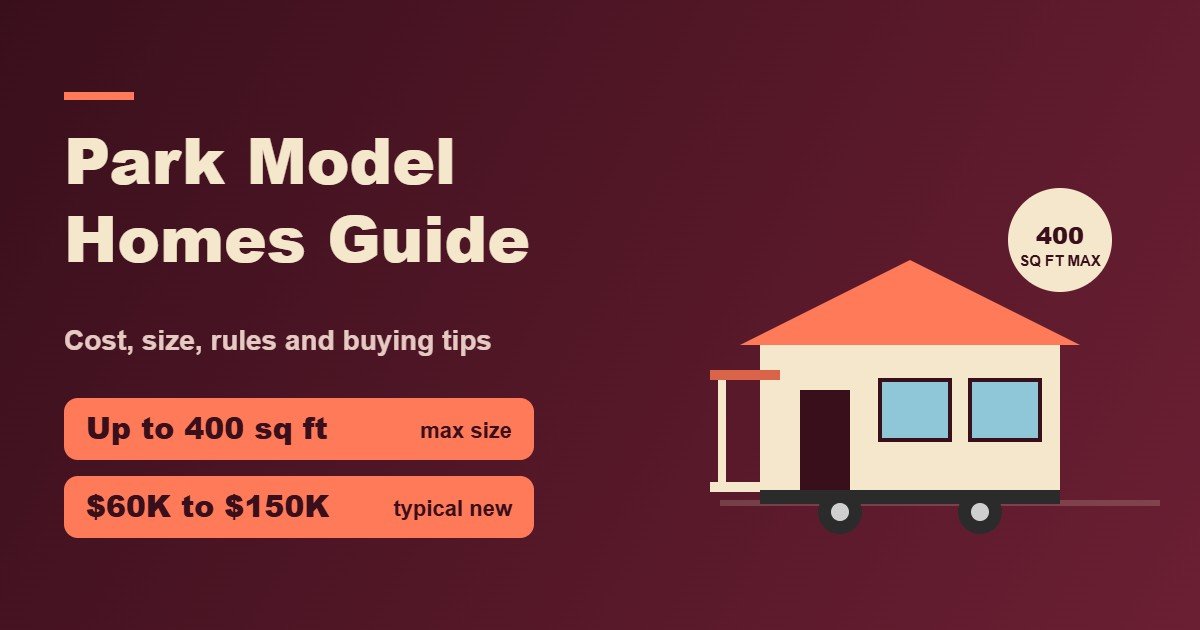
A park model home is a small recreational unit built on a single chassis and designed for seasonal or part-time living. Industry standards define it as a unit of no more than 400 square feet when set up. Most are built in a factory to the ANSI A119.5 standard and carry an RVIA seal that shows they meet recreational vehicle standards.
People use many names for the same thing. You may see park model homes called park model RVs or park model trailers or park model campers. Some people say park model mobile homes but that term causes confusion since a mobile home or manufactured home is a different product built to a different federal code.
Park models look more like houses than campers. Many have full kitchens and bathrooms and vaulted ceilings and porches and lofts. They are designed to be towed to a site once and then stay put. They connect to water and sewer and electric just like a small house.
Park Model vs Tiny House on Wheels vs Manufactured Home
Manufactured homes are built to the federal HUD code. HUD explains the rules on its manufactured housing page. Park models follow a different standard so do not assume the two are treated alike.
These three get mixed up all the time. Here is how they differ.
- Park model home. Built to RV standards and capped at 400 square feet. Meant for recreational or seasonal use. Usually placed in an RV park or campground or resort.
- Tiny house on wheels. Built on a trailer and often built by a custom builder or by the owner. Some builders certify their homes and many do not. They are designed to move more often than a park model.
- Manufactured home. Built to the federal HUD code and meant for permanent living. They are larger and can sit on a foundation and often qualify for home-style financing.
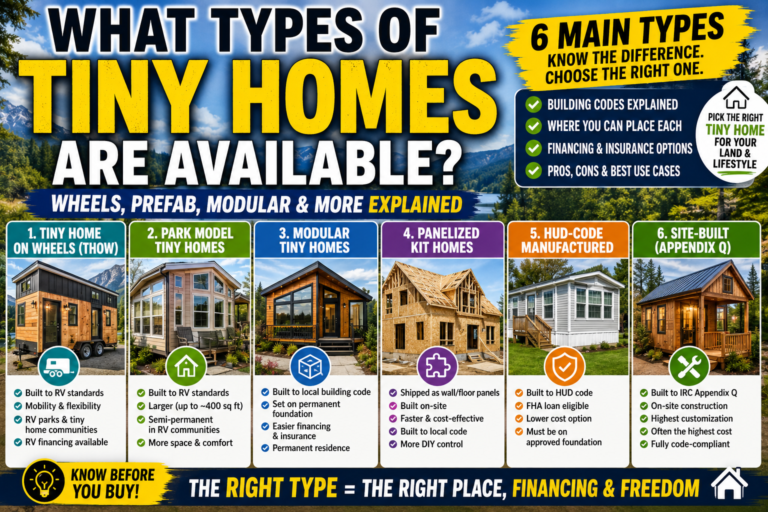
If you plan to live in the home full time on private land a park model may not be the right fit. Our guide to types of tiny homes explains how each category is regulated and what that means for financing and where you can place it.
Park Model Home Size and Layout
Because of the 400 square foot cap most park models fall between about 250 and 400 square feet. Many add a loft for sleeping which gives more usable space without breaking the footprint rule. Common features include:
- A kitchen with full-size or apartment-size appliances
- A bathroom with a shower
- A living area with large windows
- A bedroom or sleeping loft
- A front porch or deck
Some models come with a second bedroom. If you search for a 2 bedroom park model home keep in mind the size limit means each room stays small. Our guide to 2 bedroom tiny homes shows how to make a small footprint feel bigger. You can also compare layouts across other sizes in our tiny house floor plans guide.
How Much Do Park Model Homes Cost?
Park model home prices vary by size and finish and builder. Many new park models fall in a range from about $60,000 to $150,000. Basic models cost less and high-end cottages with custom finishes cost more. These figures line up with the cost range for larger tiny homes and park models in our tiny home cost guide.
What changes the price:
- Size. A 400 square foot park model costs more than a 250 square foot model.
- Finish level. Granite and hardwood cost more than laminate and vinyl.
- Builder and brand. Established brands and custom builders charge more.
- Insulation and windows. Four season packages cost more than basic builds.
- Options. Lofts and porches and upgraded appliances add cost.
New park models often cost less than a conventional home but more than many buyers expect. Used park model homes can save money though condition and age matter.
Costs Beyond the Sticker Price
The home is only part of the budget. Plan for these extras.
- Delivery and setup. Transport and leveling and skirting add to the total.
- Site costs. Utility hookups and a pad or piers are needed.
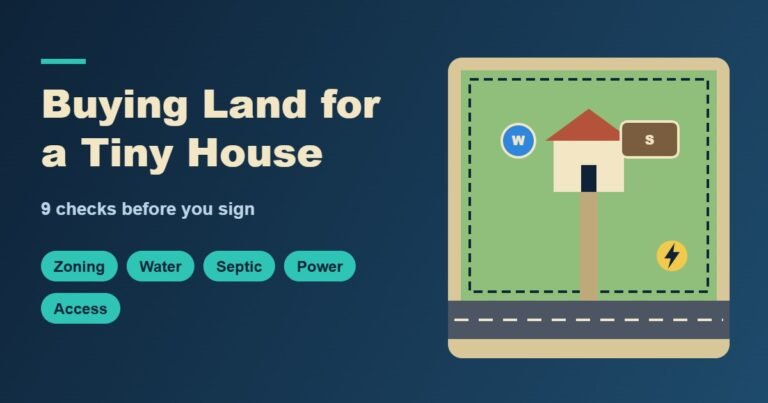
- Lot rent or land. If you place the home in a park you pay lot rent. If you buy land see our guide to buying land for a tiny house.
- Permits and fees. Local rules vary.
- Insurance. Policies often differ from standard homeowners coverage.
- Furniture and decor. Built-ins help but you still need to furnish.
A smart rule is to add 15 to 25 percent to the price of the home for these extras.
Where Can You Put a Park Model Home?
This is the question that matters most. Park models are designed for specific kinds of sites.
- RV parks and campgrounds. The most common choice. Many parks have park model lots with utilities.
- Resorts and recreational communities. Some communities sell or lease lots for park models.
- Private land. Some counties allow a park model on private land as a guest house or recreational cabin. Others treat it like an RV and limit stays or ban it.
- Backyards as an ADU. In some places a park model can serve as an accessory dwelling unit. Rules vary and many require a permanent foundation and a building permit.
Zoning decides everything. Call the planning office before you buy and ask in writing whether a park model is allowed on your site and for how long each year.
Can You Live in a Park Model Home Full Time?
Park models are designed for seasonal and recreational use. Some owners live in them year round and some parks allow full-time residents. Many others limit stays to a number of months a year. Local law and park rules decide.
Before you plan to live in one full time check these points:
- Does the park or the county allow year-round living?
- Is the unit insulated for your climate?
- Does your insurer cover full-time residence?
- Will a lender finance it as a primary home?
Answers vary a lot by state and county. Never assume a seller or a salesperson has the right answer. Check with the local authority.
Financing a Park Model Home
Park models are usually financed like recreational vehicles and not like houses. Common options include:
- RV loans. Often the most common choice. Terms and rates depend on your credit and the unit.
- Personal loans. Useful for lower prices.
- Cash. The simplest option and often the cheapest overall.
- Builder financing. Some builders and dealers offer financing programs.
Because a park model is not usually treated as real estate a standard mortgage is rare. Our tiny home cost guide explains financing paths for tiny homes in more detail.
Insurance and Taxes
Insurance for a park model depends on how you use it. A seasonal unit in an RV park may need an RV or specialty policy. A park model on private land used as a primary home may need a different policy. Get quotes before you commit to a purchase since coverage and cost vary.
Property tax treatment also varies. Some places tax park models as personal property like an RV and others tax them as real property when placed on a permanent foundation. Ask the county assessor.
New vs Used Park Model Homes
Used park models can cost much less but you need to inspect them carefully.
Benefits of buying new:
- You choose the layout and finishes
- Warranty coverage from the builder
- Current building and safety standards
Benefits of buying used:
- Lower price
- Sometimes already set up on a lot
- Faster move-in
What to check on a used unit:
- Roof condition and signs of leaks
- Floor soft spots and moisture damage
- Plumbing and electrical condition
- Age of appliances and HVAC
- Whether the RVIA seal is present
- Whether lot rent or park rules transfer to a new owner
Bring a qualified inspector when you can.
Heating and Winter Use
Not every park model is built for cold weather. Many are designed for mild seasons and basic builds may have thinner walls and standard windows and plumbing that can freeze. If you plan to use the home in winter ask the builder about these points:
- Wall and roof insulation levels
- Whether the plumbing is protected from freezing
- The type of heating system and whether it is sized for your climate
- Window quality and sealing
Some builders offer four season packages with extra insulation and better windows and heated underbelly protection. They cost more but make the home far more comfortable in cold regions. In very hot regions ask about shade and ventilation and a properly sized air conditioner.
Which Is Right for You: Park Model or Tiny House?
Both options are small and both cost far less than a standard house. The right choice depends on how you plan to live.
Choose a park model home if you want a factory-built cottage and you plan to place it in an RV park or resort or on land that allows recreational units. It suits vacation use and seasonal stays and snowbird living.
Choose a tiny house if you want a full-time home and you plan to place it on private land where zoning allows a dwelling. A tiny house on a foundation can meet residential building code and often has a clearer path to financing and permits. Our 400 sq ft tiny house cost guide shows what that route costs.
If you are still deciding start with the question of where the home will sit. The site rules decide what you can place there.
Pros and Cons of Park Model Homes
Pros
- Lower cost than many houses
- Factory built so quality is consistent
- Fast delivery compared with site builds
- Easy to set up in a park with utilities
- Comfortable layouts with real kitchens and baths
Cons
- Limited to 400 square feet
- Designed for seasonal use and not always allowed as a full-time home
- Harder to finance than a house
- Rules vary by park and county
- May not appreciate like land and a house do
Checklist Before You Buy a Park Model Home
- Confirm the site and zoning in writing.
- Ask the park for its rules on stays and age of units and lot rent.
- Get quotes for delivery and setup and utilities.
- Compare financing offers.
- Get insurance quotes.
- Inspect the unit or the builder’s factory.
- Check for the RVIA seal.
- Read the contract for warranty and fees.
- Plan your budget with a 15 to 25 percent cushion.
Frequently Asked Questions
What is a park model home?
A park model home is a small recreational unit built on a single chassis for seasonal or part-time living. It is limited to 400 square feet when set up and is built to RV standards.
How much do park model homes cost?
Many new park model homes cost between $60,000 and $150,000 depending on size and finish. Delivery and site costs and lot rent add to the total.
What is the difference between a park model home and a tiny house?
A park model is built to RV standards and capped at 400 square feet with a focus on seasonal use. A tiny house can be on wheels or a foundation and may be built to different codes and used as a full-time home.
Can you live in a park model home year round?
Sometimes. It depends on local zoning and park rules. Many parks limit stays to a number of months. Check with your county and the park before you buy.
Are park model homes the same as mobile homes?
No. A mobile or manufactured home is built to the federal HUD code and meant for permanent living. A park model is built to RV standards and meant for recreational use.
Can you put a park model home on your own land?
In some places yes. Many counties treat it like an RV or a cabin and limit use. Ask the planning office whether your parcel allows it.
How do you finance a park model home?
Most buyers use an RV loan or a personal loan or pay cash. A standard mortgage is rare since park models are not usually treated as real estate.
Final Thoughts on Park Model Homes
Park model homes can be a smart way to get a small and comfortable place for far less than a traditional house. They work best for seasonal living and vacation use and for owners who have a park or lot with utilities ready.
Before you buy confirm the site and the rules and the financing. A park model that fits your plans can be a great home. One that does not fit your zoning or your lot can become a costly mistake.
Want a number for your own plan? Try our free tiny house cost calculator to get a low and expected and high budget.



6 Comments