How to Buy Land for a Tiny House: 9 Checks Before You Sign
This guide shows how to buy land for a tiny house without ending up with a lot you cannot use. You have picked the tiny home. You have the floor plan and the budget and the dream. Then you start looking at land and find lots that look perfect but cannot legally hold a house of any size. Buying land for a tiny house is where many plans fall apart. The right lot makes the project easy. The wrong one can turn into an expensive piece of empty ground.
Still choosing a layout before you buy land? Start with our tiny house floor plans.
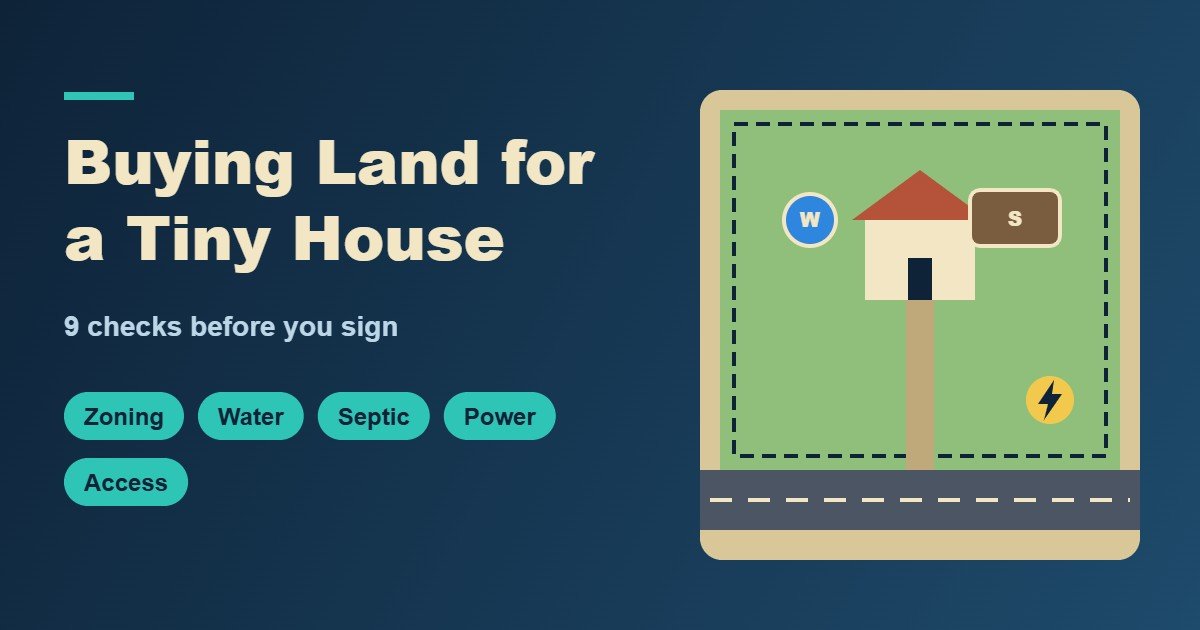
This guide shows you how to buy land for a tiny house step by step. You will learn the nine checks that matter most including zoning and access and water and septic and power. You will also see how financing works for raw land and when a tiny home and land package is the simpler route and the mistakes that cost buyers the most.
Paying with a loan? Our tiny home financing guide explains your options.
Where Tiny Houses Are Usually Allowed
Zoning rules differ but most legal tiny house setups fall into a few categories. Knowing them helps you shop for the right kind of lot.
- Rural and agricultural land. Large rural parcels often have the fewest building rules. Some counties have no minimum home size and light permit requirements. These lots may lack utilities and services.
- Residential lots with an ADU rule. Many cities now allow an accessory dwelling unit in a backyard. If you already own a home this can be the simplest path. If you are buying a lot the ADU rule may require a main house first.
- Tiny home communities. Planned communities rent or sell lots with utilities already in place and clear rules for tiny homes. You give up some freedom but gain certainty.
- RV parks and campgrounds. A tiny house on wheels can sometimes park here but long-term living may be limited.
- Counties with tiny house friendly codes. Some places have adopted rules that explicitly allow small dwellings. Search the county code for terms like tiny house and accessory dwelling and minimum dwelling size.
Decide How You Will Live on the Land First
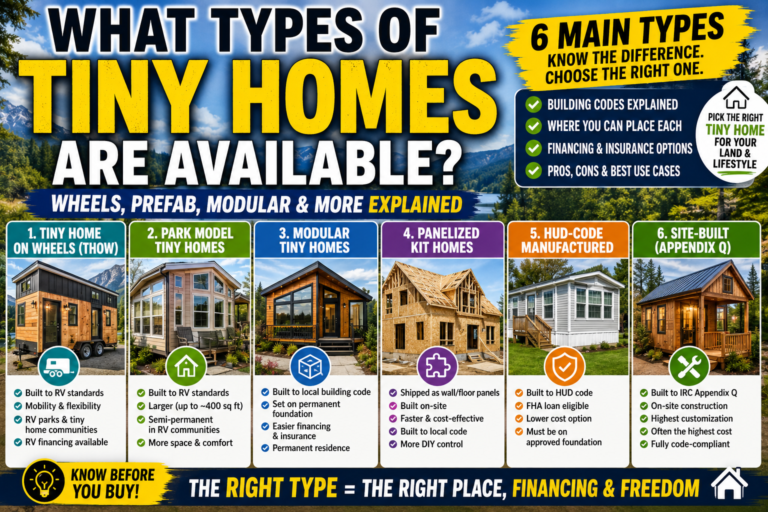
Before you look at a single listing decide what kind of tiny home you plan to put on the lot. The type of home decides which land you can use.
- A tiny house on wheels is often treated like an RV. Many counties limit how long an RV can be lived in on private land or ban it outright.
- A tiny house on a foundation is usually treated like a regular dwelling. It has to meet building code and zoning rules and often a minimum size.
- A modular or prefab home follows residential code and gives you the most legal certainty.
Our guide to types of tiny homes explains how each category is regulated and financed. Settle this before you spend money on land.
Check 1: Zoning
Zoning is the first and biggest check. It tells you what you can build on the lot and how you can use it.
- Call or visit the local planning office and ask whether a dwelling under 400 square feet is allowed.
- Ask whether the lot allows a primary home or an accessory dwelling unit (ADU) only.
- Ask whether living in a tiny house on wheels is allowed and for how long.
- Get answers in writing when you can.
Do not rely on a seller or a listing agent for zoning answers. They may not know the local rules or may have a reason to say yes.
Check 2: Minimum Dwelling Size and Building Code
Some counties and towns set a minimum square footage for a house. A lot can be zoned residential and still bar a home under a certain size. Ask about both the minimum size and the building code the county follows.
Many areas follow the International Residential Code which includes Appendix Q for tiny houses of 400 square feet or less. Not every jurisdiction adopts it. Some rural counties have very few building rules while others enforce strict standards. The code decides what you can build and how you can get it inspected and insured.
Check 3: Legal Access
A lot must have legal access to a public road. Check for these things.
- A recorded easement if the road crosses private land
- A road that a truck or a delivery rig can actually drive on
- Maintenance responsibility for private roads
Landlocked parcels are cheaper for a reason. Without legal access you may not be able to get permits or deliver a home.
Check 4: Water
You need a water source. There are three common options.
- Municipal water. The easiest option if a line runs near the lot. Ask about connection fees.
- A well. Drilling a well costs thousands and varies widely by depth and region. Ask neighbors and the county about typical well depth and water quality.
- Hauled or collected water. Used in some off-grid setups but often limited by local rules.
Ask if the lot already has a well permit or a working well. A working well and a recent water test add real value.
Check 5: Septic and the Perc Test
The EPA answers common questions about septic systems on its septic FAQ page.
If there is no sewer line you need a septic system. A percolation (perc) test measures how quickly water drains through the soil. Poor drainage can make a lot unsuitable for a standard septic system or force an expensive alternative.
- Ask for existing perc test results.
- Make your purchase contingent on a passing perc test when you can.
- Ask the county about septic permit rules and the cost of alternative systems.
A failed perc test is one of the most common reasons buyers walk away from a lot.
Check 6: Power and Internet
Ask how far the nearest power line is. Running electric service to a remote lot can cost thousands. Ask the utility company for a quote before you buy.
Solar with batteries is an option when grid power is too far away. It adds $7,000 to $15,000 or more to the upfront cost. Check internet options too. Many rural lots rely on cellular or satellite service.
Check 7: Deed Restrictions and HOAs
Even if zoning allows a tiny house a deed restriction or a homeowners association can ban it. Read the deed and any covenants before you buy.
- Look for minimum home sizes and exterior material rules.
- Look for bans on RVs or temporary structures.
- Ask about HOA fees and approval processes.
Restrictions in a deed are legally binding and can be hard to change.
Check 8: Terrain and Flood Risk
Walk the land. Look at slope and drainage and tree cover and soil. A steep or rocky lot costs more to build on. Check the flood zone map from FEMA. Building in a flood zone raises your insurance costs and may require a higher foundation.
Site preparation including clearing and grading and gravel and a foundation pad often costs $3,000 to $10,000. A difficult lot costs more.
Check 9: Title Survey and Taxes
Protect yourself with the usual paperwork.
- Title search. Confirm the seller owns the land and that there are no liens.
- Survey. Confirm boundaries and easements and setbacks.
- Property taxes. Ask what the current tax bill is and whether it will change after you build.
A title company or a real estate attorney can help with this. It is a small cost compared with the price of the land.
How to Buy Land for a Tiny House With Financing
Land is harder to finance than a house. Lenders see it as higher risk since there is no building to repossess.
- Cash is the simplest way to buy cheap rural land.
- Land loans from local banks and credit unions often need larger down payments than a home mortgage and carry higher rates.
- Seller financing is common on rural parcels and lets you make payments directly to the owner. Read the contract carefully.
- Construction loans can cover land and building together in some cases.
Our tiny home cost guide explains financing for the home itself. Plan both loans together so you know your full monthly cost.
Questions to Ask Before You Make an Offer
Bring a short list to every call and every showing. Written answers protect you later.
- To the planning office: Is a tiny house allowed on this parcel and under what category and what is the minimum size?
- To the building department: Which building code does the county follow and do you accept Appendix Q?
- To the health department: What are the septic and well requirements and are there existing test results?
- To the utility company: How far is the nearest line and what would a connection cost?
- To the seller: Are there deed restrictions or liens or unpaid taxes and has the land been surveyed?
- To a local builder or neighbor: What do site work and utility hookups usually cost in this area?
If an answer is vague ask for the rule number or the name of the person who can confirm it.
Raw Land vs Land With Utilities
Price is not the only difference between two lots. A cheap raw parcel can cost more than a pricier lot once you add everything it lacks.
Raw land has no water or power or septic or road improvements. You pay less up front and take on the cost and the risk of adding them. Land with utilities already in place or nearby costs more per acre but cuts your site work and your timeline. Add up the real cost of each option before you decide. A lot with a working well and a septic permit and electric service at the road can be the better deal even at a higher price.
Land Alone vs a Tiny Home and Land Package
If the checks above feel like a lot you may prefer a tiny home and land package. In these deals a seller or builder offers a lot with the home or with a home plan and utilities ready. You get a clearer path to permits and a faster move-in. You may pay more but you take on less risk. Our guide to tiny homes for sale with land compares the main ways to buy and what each costs.
Mistakes to Avoid When You Learn How to Buy Land for a Tiny House
- Buying land before checking zoning
- Trusting a verbal answer from the seller
- Skipping the perc test or the utility quote
- Ignoring deed restrictions and HOA rules
- Forgetting site work and permit costs in the budget
- Choosing a lot with no legal access
How to Buy Land for a Tiny House: A Simple Process
- Choose your tiny home type and size.
- Set a total budget that includes land and site work and utilities.
- Shortlist lots in areas that allow your home type.
- Call the planning office and the utility companies for each lot.
- Order a perc test or ask for existing results.
- Make your offer contingent on zoning and the perc test and a clear title.
- Close and then start the permit process.
A One-Page Checklist for Buying Land
Print this list and bring it to every site visit. It condenses the main steps in how to buy land for a tiny house into one page.
- Ask the planning office in writing whether a tiny house is allowed on the parcel
- Confirm legal access with a recorded easement or a public road
- Find out how water will reach the home and what it costs
- Ask about septic approval and the result of a perc test
- Get a quote for power and internet to the build site
- Read the deed restrictions and any HOA rules
- Check the flood map and the slope of the lot
- Order a survey and a title search before you sign
If a seller cannot answer these items walk away or lower your offer. Knowing how to buy land for a tiny house means knowing which questions protect you. A lot with clear answers is worth more than a cheap lot with open questions. Keep your notes for each parcel so you can compare them side by side and decide with a clear head.
Frequently Asked Questions
Can I put a tiny house on any land I buy?
No. Zoning and building code and deed restrictions decide what you can place on a lot. Always confirm with the local planning office before you buy.
How much land do I need for a tiny house?
It depends on local setback and lot size rules. A tiny house is small but the lot still has to meet minimum size and septic and well spacing requirements.
Is it cheaper to buy land or a tiny home and land package?
Raw land is often cheaper up front. A package may cost more but includes utilities and a clearer permit path. Add up land and site work and utilities to compare fairly.
Can I live in a tiny house on wheels on my own land?
It depends on the county. Some areas treat it like an RV and limit how long you can stay. Others allow it as an ADU. Ask the planning office.
Do I need a perc test to buy land for a tiny house?
If the lot has no sewer connection yes in most cases. A perc test shows whether the soil can support a septic system.
How do I finance land for a tiny house?
You can pay cash or use a land loan or seller financing. Land loans usually need a larger down payment than a mortgage.
What are the extra costs of buying land for a tiny house?
Expect site preparation and utility hookups and permits and a survey and title costs. Site prep alone often costs $3,000 to $10,000.
Final Thoughts on How to Buy Land for a Tiny House
The best tiny house land is not always the cheapest lot. It is the lot that allows your home and has water and power and legal access and a clean title. Check zoning first and then work through the other eight checks before you sign anything.
Take your time and get answers in writing. A careful buyer avoids the expensive surprises and ends up with land that is ready for a home.




5 Comments