
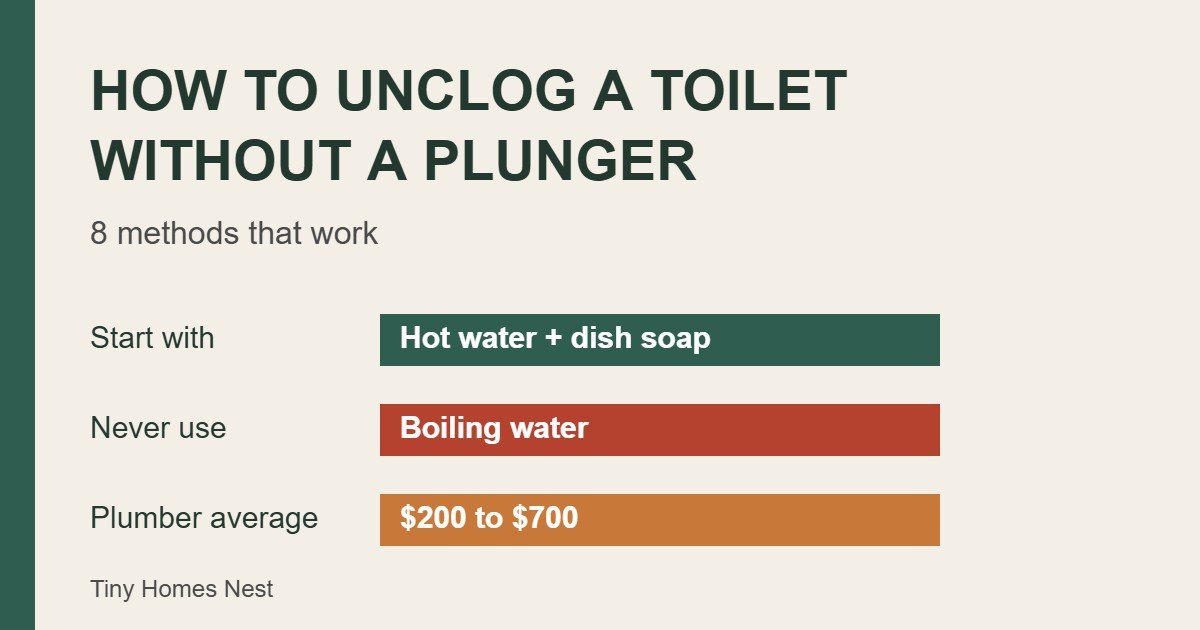
How to Unclog a Toilet Without a Plunger: 8 Methods That Work
The water rises toward the rim and you reach for the plunger and it is not there. Maybe it broke or you lent it to a neighbor or you are staying somewhere that never owned one. A clogged toilet does not care. The good news is that you can usually clear it with things you already have under the sink and in the kitchen. Hot water and dish soap and a wire hanger solve a surprising number of clogs.
If none of these fixes work the blockage may be deeper in the drain line. See our hydro jetting cost guide for what professional line cleaning costs.
This guide shows you how to unclog a toilet without a plunger using eight methods that work. You will learn what to do first so the bowl does not overflow and which method suits which kind of clog. You will also see what never to pour down a toilet and when a stubborn clog means it is time to call a plumber. By the end you will know exactly how to unclog a toilet when the plunger is missing.
What to Do First When a Toilet Is Clogged
Before you try anything take thirty seconds to prevent a bigger mess. These steps apply to every method below.
- Stop flushing. A second flush on a clogged toilet is how bowls overflow. Wait and see whether the water level drops by itself.
- Lift the lid off the tank and look. If the bowl is nearly full lift the flapper (the rubber piece at the bottom of the tank) or close the water supply valve behind the toilet so no more water enters.
- Lower a very full bowl. Scoop some water into a bucket with a cup. A bowl that is too full will spill when you add anything to it.
- Put on rubber gloves. You will be working close to the bowl.
- Lay down towels. Cover the floor around the base so a spill does not spread.
Once the situation is under control pick the method that matches what you have on hand.
Method 1: Hot Water
Hot water is the simplest fix and it works well on clogs made of toilet paper and organic waste. Heat water until it is very hot from the tap or warm it on the stove. Do not boil it. Boiling water can crack the porcelain.
Pour the water into the bowl from about waist height. The force of the stream helps push the clog loose. Use a bucket or a large pitcher and not a small cup since a gallon or so makes a bigger difference than a few cupfuls. Wait a few minutes and then flush once. If the water drains repeat the pour and flush again to be sure the line is clear.
Method 2: Dish Soap
Dish soap acts as a lubricant and helps slide the clog down the drain. Squeeze about a quarter cup of liquid dish soap into the bowl. Wait five to ten minutes so it can work its way down to the blockage. Then pour in hot water (not boiling) and let it sit for another ten minutes before you flush.
This method pairs well with the first. Soap first and hot water second is one of the best answers to the question of how to unclog a toilet with household items.
Method 3: Baking Soda and Vinegar
This is the classic kitchen fix. The fizzing reaction can loosen light clogs and the liquid helps carry them away.
- Pour one cup of baking soda into the bowl.
- Add one cup of vinegar slowly and expect fizzing.
- Wait about thirty minutes.
- Flush with a bucket of hot water. Repeat if the bowl still does not drain.
Do not use this method when the bowl is full. The fizz can push water over the rim. Drain some water out first. This method also works best on mild clogs and not on a solid blockage such as a toy or a thick wad of paper.
Method 4: Toilet Brush
Your own toilet brush can do more than clean. Push the bristle end down into the drain opening at an angle and pump it up and down several times. The motion can break up a soft clog or dislodge a plug of paper. Rinse the brush well afterward and run hot water over it. If you suspect the clog is deep skip to a method that reaches further.
Method 5: Wire Coat Hanger
A wire hanger works as a quick homemade drain snake. It reaches farther than a brush and can hook or break up a clog.
- Straighten a wire coat hanger and keep a small hook at the end.
- Wrap a rag around the hook and tape or tie it so the metal cannot scratch the porcelain.
- Wearing gloves feed the end gently into the drain opening until you feel the clog.
- Push and twist to break it up or hook it and pull it back.
- Once water begins to drain flush a few times to clear the loose material.
Go slowly. Pushing hard can scratch the bowl or shove the clog deeper.
Method 6: Toilet Auger (Toilet Snake)
If you do not have a plunger you may still own a toilet auger or you can buy one cheaply at a hardware store. A toilet auger is a short flexible cable inside a rigid tube with a crank handle. It is built to reach into the curved trap of a toilet without damaging the porcelain.
- Place the curved end of the auger into the bowl and push it into the drain.
- Turn the handle clockwise as you push the cable forward.
- When you feel resistance keep turning to break up the clog or hook it.
- Pull the cable back out slowly and wipe it clean.
- Flush to test.
A toilet auger is often called a toilet snake and it is the best tool for a clog that hot water and soap cannot move. If you plan to keep one on hand it is a handy and inexpensive addition to your home repair kit. For more projects you can handle yourself see our DIY home improvement guide.
Method 7: Wet and Dry Shop Vacuum
A wet and dry shop vacuum can pull a clog out of the trap. Treat this as a last resort and follow the safety steps.
- Remove as much water from the bowl as you can.
- Wrap the end of the hose in an old rag to create a tight seal inside the drain.
- Push the hose a few inches into the opening and turn the vacuum on.
- Wear gloves and keep the bowl area covered with towels.
Use only a wet and dry shop vacuum for this. A regular household vacuum is not made for water and can be damaged or become dangerous. You can rent a wet and dry vacuum from many hardware stores if you do not own one.
Method 8: Homemade Drain Tablets
If you want a hands off option you can make drain tablets at home. Mix two cups of baking soda and a quarter cup of Epsom salt and several tablespoons of dish detergent. Press the mixture into muffin liners and let it harden overnight. Drop one tablet into the bowl and add about four cups of water and let it sit for a few hours before you flush.
This approach is slow and works only on mild clogs. It makes sense when the toilet is draining slowly and you are not in a hurry.
What Not to Do When You Unclog a Toilet
A few shortcuts make the problem worse. Avoid these:
- Do not use boiling water. Sudden extreme heat can crack a cold porcelain bowl.
- Do not pour in chemical drain cleaners. Harsh products can damage the finish and the pipes and they are dangerous if the bowl overflows and splashes you. If you tried one earlier warn a plumber before they work on the toilet.
- Do not keep flushing. Each flush adds more water to a blocked bowl.
- Do not use a regular household vacuum. Only a wet and dry shop vacuum is safe for this.
- Do not force a hanger or auger. Pushing too hard can scratch the porcelain or jam the clog deeper.
- Do not flush objects that do not belong. Wipes and paper towels and cotton swabs and feminine products clog drains even when the label says flushable.
Which Method Should You Try First?
Match the method to the clog:
- Slow drain or a bowl that empties gradually: Start with hot water and dish soap.
- A full bowl that will not move: Lower the water level first and then use a hanger or auger.
- A suspected solid object: Use an auger or a wet and dry vacuum.
- A mild clog caused by too much paper: Baking soda and vinegar or hot water may be enough.
- A clog that keeps coming back: Use an auger and then look for the cause such as low flow or a drain problem.
Most clogs clear in the first two or three attempts. If nothing works after several tries stop and think about calling a professional.
Why Does a Toilet Clog in the First Place?
Knowing the cause helps you prevent the next clog. Common reasons include:
- Too much toilet paper. Heavy or thick paper clumps up in the trap.
- Flushing items that are not toilet paper. Wipes and paper towels and hygiene products do not break down.
- A low flow toilet. Older or water saving models may struggle with large loads.
- A partial blockage deeper in the line. Roots or buildup in the drain can slow every flush.
- Mineral buildup in the trap or under the rim. Hard water can reduce the force of each flush. If your toilet also fails to flush properly see our guide on why a toilet will not flush.
When to Call a Plumber
Some clogs are beyond a home fix. Call a professional if:
- Nothing works after several attempts. A clog that survives an auger usually sits farther down the line.
- Water backs up in other drains. If the sink or shower gurgles or backs up when you flush the main drain line may be blocked.
- The toilet clogs again and again. A repeat clog suggests a deeper problem with the line or the toilet itself.
- You hear gurgling or smell sewage. This can point to a venting problem or a sewer line issue.
- You dropped an object into the toilet. A hard object is hard to remove without pulling the toilet.
Cost varies by the cause and location. One source puts the average cost to unclog a toilet at about $200 to $700 with higher prices for drain line work. For a broader look at what plumbing work typically costs see our plumbing repair cost guide.
If clogs keep returning and you are already planning updates you may want to look at replacing an older toilet as part of a bigger project. Our bathroom remodel cost guide shows what bathroom upgrades cost.
How to Prevent a Clogged Toilet
A few habits keep the bowl flowing:
- Use a reasonable amount of toilet paper. Flush twice if needed instead of once with a huge wad.
- Only flush toilet paper and human waste. Put wipes and other items in the trash.
- Keep a plunger or a toilet auger in the bathroom. Even a cheap one saves you a panic.
- Clean the bowl regularly. This reduces mineral buildup that can slow the flush.
- Teach everyone in the house. Kids are the most common source of surprise objects in toilets.
- Check for slow drains early. A toilet that drains slowly is warning you before a full clog.
Frequently Asked Questions About Unclogging a Toilet Without a Plunger
How do you unclog a toilet without a plunger?
Pour hot water (not boiling) into the bowl from waist height and add about a quarter cup of dish soap. Wait ten minutes and flush. If that fails try a straightened wire hanger wrapped in a rag or a toilet auger.
Does dish soap unclog a toilet?
Yes it can. Dish soap lubricates the clog and helps it slide down the drain. It works best when you add hot water and let the mixture sit for several minutes.
Does baking soda and vinegar unclog a toilet?
It can clear a mild clog. Pour in one cup of baking soda and then one cup of vinegar and wait about thirty minutes before you flush with hot water. Do not use it in a bowl that is already full.
Can you use a wire hanger to unclog a toilet?
Yes. Straighten the hanger and wrap a rag around the hook so it will not scratch the porcelain. Feed it gently into the drain and break up or hook the clog. A toilet auger is a safer and better tool if you have one.
What do you do if a toilet is clogged and you have no plunger?
Stop flushing and lower the water level if the bowl is full. Try hot water and dish soap first and then a hanger or toilet auger. A wet and dry shop vacuum is a last resort.
Is it okay to use boiling water to unclog a toilet?
No. Boiling water can crack the porcelain. Use very hot tap water or water warmed on the stove but not boiled.
How much does it cost to have a plumber unclog a toilet?
One source cites an average of $200 to $700 to unclog a toilet with higher costs when the drain line itself needs work.
Final Thoughts on Unclogging a Toilet Without a Plunger
You do not need a plunger to clear most clogs. Stop flushing and protect the floor and start with hot water and dish soap. Move to a hanger or a toilet auger if the first steps fail. Save the wet and dry vacuum for the last attempt and never reach for boiling water or harsh chemicals.
If the clog keeps returning or other drains start to back up call a plumber before the problem spreads. Keep a plunger and an auger in the bathroom afterward and you will be ready the next time a toilet clogs.





One Comment