How Much Do Tiny Homes Cost in 2026? Real Price Guide by Size and Type
By Emily Hartman, Founder & Lead Editor at Tiny Homes Nest. Tiny home owner since 2019.
You have probably seen headlines promising a home for under $10,000. You have also seen builder websites listing tiny homes for $150,000 or more. Both numbers are real. Neither one tells you what you will actually pay. This guide breaks down how much do tiny homes cost in 2026 by size, build type and the hidden expenses most buyers forget about until the bill arrives.
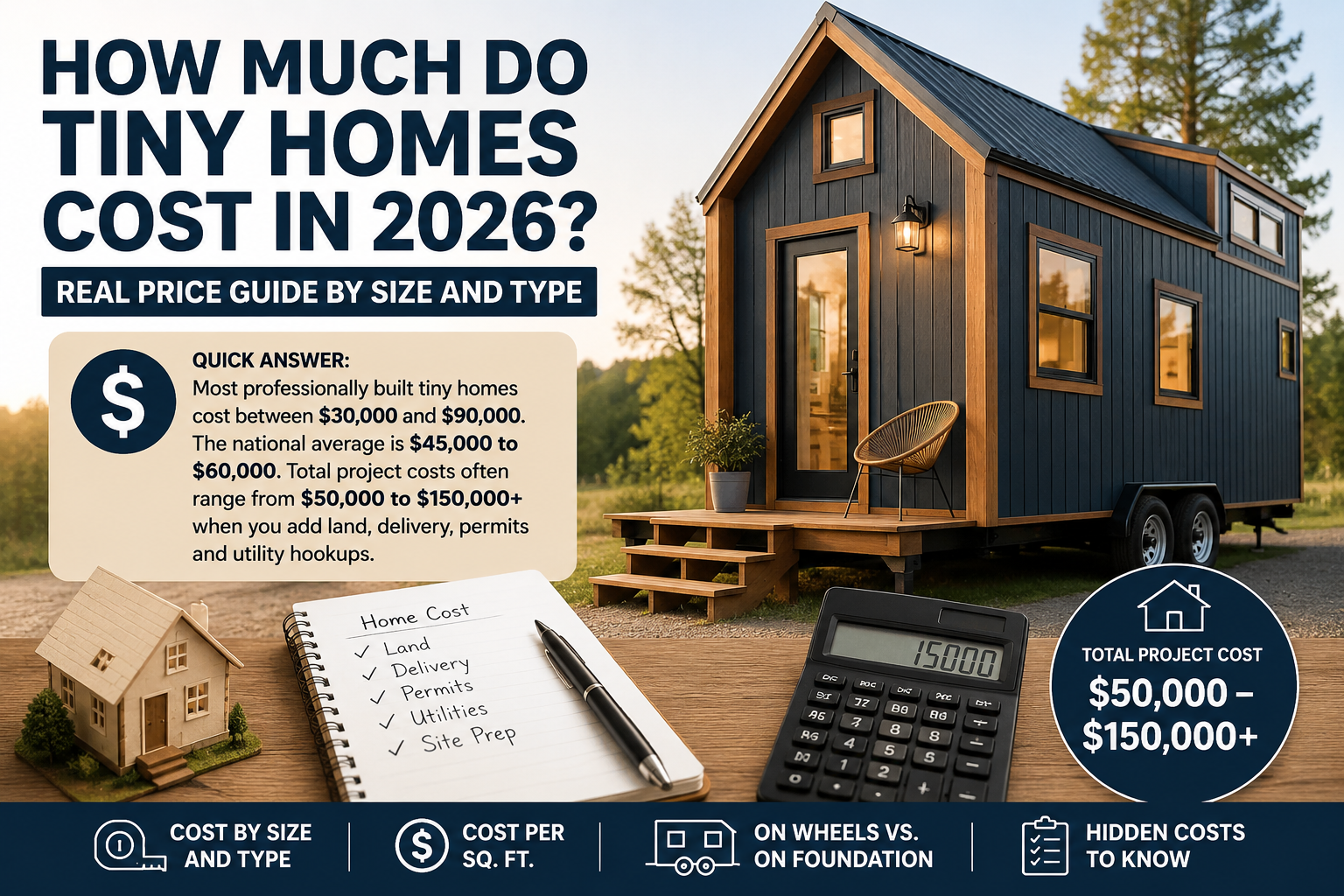
Quick answer: Most professionally built tiny homes cost between $30,000 and $90,000. The national average lands around $45,000 to $60,000. Add land, delivery, permits and utility hookups and the total project cost often runs from $50,000 to $150,000 or more.
How Much Do Tiny Homes Cost in 2026?
The short answer is that tiny home cost depends entirely on what you are comparing. A basic shell kit can start under $20,000. A fully finished, professionally built unit typically lands between $30,000 and $90,000. A custom luxury build with premium finishes can climb past $150,000 before land ever enters the picture.
Cost per square foot is where the real surprise hits most buyers. Tiny homes generally run $150 to $450 per square foot nationally, according to industry cost data. That range climbs to $325 to $650 or more in high cost states like California. That is often higher than the per square foot cost of a standard house. Every tiny home still needs a full kitchen, bathroom, electrical panel and plumbing system, just squeezed into a fraction of the space.
If you are budgeting for the unit alone, plan on somewhere between $45,000 and $52,000 for a mid range, professionally built tiny home. That number does not include land, delivery or setup, which we will cover below.
Tiny Home Cost by Size and Type
Size is the single biggest driver of tiny home cost. It is not the only one, though. Construction method, finish level and whether the home sits on wheels or a permanent foundation all move the number significantly.
| Size | Typical Cost Range | Best For |
|---|---|---|
| Under 100 sq. ft. | $15,000 to $40,000 | Office, cabin or single-purpose space |
| 100 to 200 sq. ft. | $25,000 to $60,000 | One person or a couple |
| 200 to 300 sq. ft. | $35,000 to $80,000 | Comfortable full-time living for one or two |
| 300 to 400 sq. ft. | $45,000 to $100,000 | More complete living space with storage |
| 400+ sq. ft. (small house) | $60,000 to $150,000+ | Small family or added flexibility |
These ranges assume a professionally built, move-in ready unit. A DIY build using a kit can land near the low end of each range. It also demands significant time, skill and tools that many buyers underestimate before they start.
Cost Per Square Foot: Why Tiny Homes Are Not Always the Cheap Option
It feels counterintuitive. Building small rarely means building cheap on a per square foot basis. A 2,000 square foot house spreads its kitchen, bathroom, HVAC system and electrical panel across a large footprint. A 250 square foot tiny home needs nearly all of the same fixed systems, just compressed into a much smaller shell.
That compression drives up labor and material costs per square foot. Custom cabinetry, space saving furniture, compact appliances and specialized insulation all add expense that a standard-size home does not carry at the same rate. Builders also work in smaller batches with less standardization, which keeps labor costs high relative to the square footage delivered.
The takeaway is simple. Do not assume a tiny home will automatically cost less than a modest traditional home once land and site work are included. It usually costs less in total dollars. It rarely costs less per square foot.
Tiny Homes on Wheels vs. Homes on a Foundation
The construction type you choose changes both the price and the way you can legally use the home.
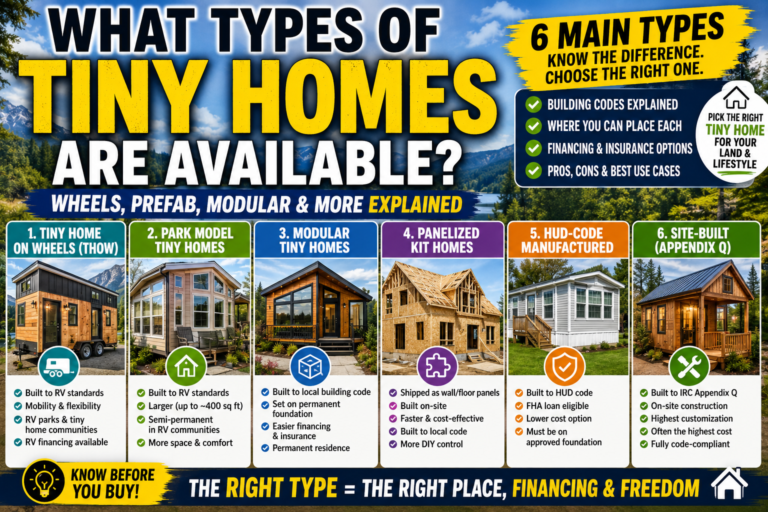
Tiny homes on wheels, often called THOWs, typically cost $70,000 to $150,000 when professionally built. Most buyers land between $80,000 and $130,000. That price usually includes the trailer. Mobility comes with trade-offs. You need a capable tow vehicle, a legal place to park and often RV Industry Association certification too if you want to finance the home like an RV.
Foundation-built tiny homes skip the towing logistics. They add site preparation, foundation work and permanent utility connections to the budget instead. They can also qualify for different financing, including certain FHA-backed loan programs, when the home meets HUD manufactured housing standards and sits on a minimum of 400 square feet with a permanent foundation.
Neither option is universally cheaper. The right choice depends on whether you already own land, how mobile you actually need to be and what your local zoning department allows.
Hidden Costs That Add Up Fast
The advertised price of a tiny home is rarely the number you will actually spend. Buyers consistently underestimate these categories.
- Land: averages roughly $18,657 per acre nationally, though this varies enormously by location
- Permits: typically $1,000 to $2,000, depending on your city or county
- Utility hookups: water, sewer or septic and electrical connections can run as high as $25,000 on undeveloped land
- Delivery: distance and route difficulty both affect the final bill for a THOW
- Foundation or site prep: grading, blocking or a permanent foundation adds a separate line item
- Insurance: rates and availability vary depending on whether the home is classified as an RV, a manufactured home or real property
- Ongoing maintenance: smaller does not always mean cheaper to maintain, especially for custom systems
A realistic total project budget, not just the unit price, is the number that actually matters when you compare a tiny home to any other housing option.
Are Those $2,000 Tiny Homes For Sale Real?
Short answer: rarely as advertised. Listings around $2,000 are almost always a shell, a cabin kit or a structure with no plumbing or electrical system. They are not a complete legal dwelling. Before you get excited about a rock bottom price, always confirm in writing whether it includes a finished, code compliant home or just the frame.
We cover this specific question in more depth, including how to spot a misleading listing, in our full breakdown of Amazon tiny home listings.
How to Finance a Tiny Home in 2026
Traditional 30 year mortgages generally do not work for tiny homes. Most lenders set minimum loan amounts and square footage requirements that a tiny home cannot meet. According to Rocket Mortgage, common alternatives include personal loans, RV loans, chattel loans and builder financing.
Personal loans are unsecured, fund quickly and do not require land. They typically carry higher interest rates and shorter terms than other options, though. RV loans can offer lower rates and longer terms. They generally require RVIA certification and a down payment between 10 and 20 percent. Chattel loans treat the tiny home as personal property rather than real estate, often stretching terms up to 25 years while keeping the home itself as collateral.
If your tiny home meets HUD manufactured housing standards, sits on a permanent foundation and measures at least 400 square feet, an FHA Title I or Title II loan may also be available. Rates across all of these programs shift with your credit profile and the lender. Getting pre-qualified with two or three lenders before you shop is worth the extra hour it takes.
How Tiny Home Costs Vary by State
Location moves the total cost of a tiny home almost as much as size does. Land prices, labor rates and local building codes all shift the final number.
California sits near the top of the range, with construction costs between $325 and $650 or more per square foot once local labor rates and stricter building codes are factored in. States with lower land costs and simpler permitting processes generally land closer to the national average or below it. Midwestern and southern states with more available land and lighter zoning tend to sit at the lower end of the national range, though every county sets its own rules, so a neighboring county can look completely different on paper. Before you fall in love with a floor plan, check your specific county’s zoning rules and permit fees. These can shift your total budget by tens of thousands of dollars.
Tiny Home Cost vs. Traditional Home: What You Are Really Saving
The comparison that matters most to most buyers is not tiny home versus mansion. It is tiny home versus a typical starter home in their area.
| Factor | Tiny Home | Traditional Home |
|---|---|---|
| Typical total cost | $50,000 to $150,000+ | $440,600 median (NAR, June 2026) |
| Cost per square foot | $150 to $450+ | Generally lower per square foot |
| Property taxes | Often lower or none if classified as personal property | Standard local rate |
| Utility bills | Typically lower due to smaller space | Higher, scales with square footage |
| Maintenance | Smaller footprint but specialized systems | Larger footprint, more standard systems |
The median price for a single-family existing home in the United States reached $440,600 in June 2026, according to National Association of Realtors data. Even at the higher end of custom tiny home pricing, most buyers still spend a fraction of that total.
How to Budget for a Tiny Home Without Getting Blindsided
A few habits separate buyers who stay on budget from buyers who do not.
Start with a total project budget, not a unit price. Add land, delivery, permits, utilities and a contingency fund of 10 to 20 percent before you fall in love with a specific model. Confirm zoning and permitting with your local building department before signing anything. A beautiful floor plan is worthless if you cannot legally place it where you planned. Request every quote in writing. Ask exactly what it includes and excludes. Get pre-qualified with a few lenders so you know your real financing terms before you start comparing builders.
None of these steps are complicated. Skipping any one of them is how a $45,000 tiny home turns into an $80,000 surprise.
Frequently Asked Questions
How much does it cost to build a tiny house?
Most professionally built tiny houses cost between $30,000 and $90,000, with a national average near $45,000 to $60,000. The final number depends heavily on size, finish level and whether you hire a builder or do it yourself.
What is the cheapest way to get a tiny home?
A basic DIY shell kit is usually the lowest cost entry point, sometimes starting under $20,000. Just confirm the kit includes what you expect. Some ultra-low-cost listings exclude plumbing, electrical and a finished interior entirely.
Can I finance a tiny home like a regular mortgage?
Typically not through a standard 30 year mortgage, since most lenders have minimum loan amounts and square footage requirements a tiny home cannot meet. Personal loans, RV loans and chattel loans are the common alternatives, along with FHA Title I or Title II loans in some cases.
How much land do I need for a tiny home?
It depends entirely on local zoning. Some buyers do not need to own land at all if they rent a lot in a tiny home community or park. If you plan to own land, check minimum lot size and setback requirements before you budget for a specific property.
Do tiny homes go up in value?
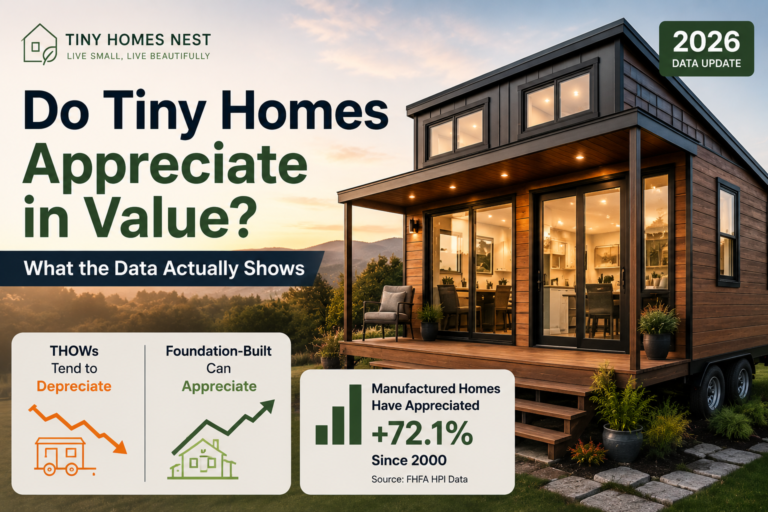
Tiny homes on wheels tend to depreciate similarly to vehicles rather than appreciate like real estate. Foundation-built tiny homes on owned land can behave more like traditional real estate, since the land itself may appreciate even if the structure does not.
Is a tiny home actually cheaper than a traditional house?
In most cases, yes, especially in total upfront cost and ongoing utility bills. The cost per square foot is often higher for a tiny home, though. The savings come from buying less space overall, not from a lower price per square foot.
The real number behind how much do tiny homes cost is never just the price on a builder’s website. Once you add land, permits, utilities and financing costs into the picture, a realistic total project budget usually lands well above the advertised sticker price. That is exactly the number you should be planning around before you sign anything.
If you are still comparing options, start with your total budget and your local zoning rules before you fall in love with a floor plan. New to the idea altogether? Our complete tiny homes guide covers types, buying options and everything else you need to know before you commit.


Для стабильной работы важно подобрать качественные хрумер прокси, обеспечивающие анонимность.