How Long Does It Take for Caulk to Dry? Times by Type
How Long Does It Take for Caulk to Dry? Drying and Curing Times by Type
If you’re wondering how long does it take for caulk to dry, the answer depends mainly on the caulk type, bead thickness, temperature and humidity.
You run a clean bead along the tub or the window trim and then the question hits: how long does it take for caulk to dry before it is safe to touch, paint or get wet? The honest answer is that it depends on the caulk type, the thickness of the bead and the temperature and humidity in the room. Most caulks feel dry to the touch within 30 minutes to a few hours. Fully curing takes much longer.
That gap between dry and cured is where most caulking mistakes happen. People run a shower too soon or paint over a bead that is still soft or cut the job short because the surface looks finished. This guide gives you realistic times for silicone, acrylic latex and polyurethane caulk, explains how long to wait before showering or painting, covers rain and cold weather and shows what to do when caulk refuses to cure.
How Long Does It Take for Caulk to Dry by Type?
Drying Time Versus Curing Time
These two terms get used as if they mean the same thing but they do not.
Caulk drying time varies by product and conditions. For product-specific drying, curing and water-ready times, always check the manufacturer’s instructions. DAP’s caulks and sealants guide provides additional product guidance.
Drying time is how long the surface takes to skin over. At this stage the bead no longer feels wet or sticky when you touch it lightly. Manufacturers often call this the tack free time. For many caulks it is 30 minutes or less.
Curing time is how long the caulk needs to harden all the way through and reach its full strength and water resistance. A bead can feel dry on the outside while the center is still soft. Cure time is measured in hours for thin beads and days for thick ones.
The practical rule is simple. Treat dry to the touch as permission to leave the bead alone. Treat cured as permission to use the space the way you normally would.
Knowing how long does it take for caulk to dry helps you decide when the surface is ready for water, paint or normal use.
How Long Does Caulk Take to Dry by Type?
Different caulks are built from different materials and each behaves differently. Here are typical times under normal room conditions of around 70°F.
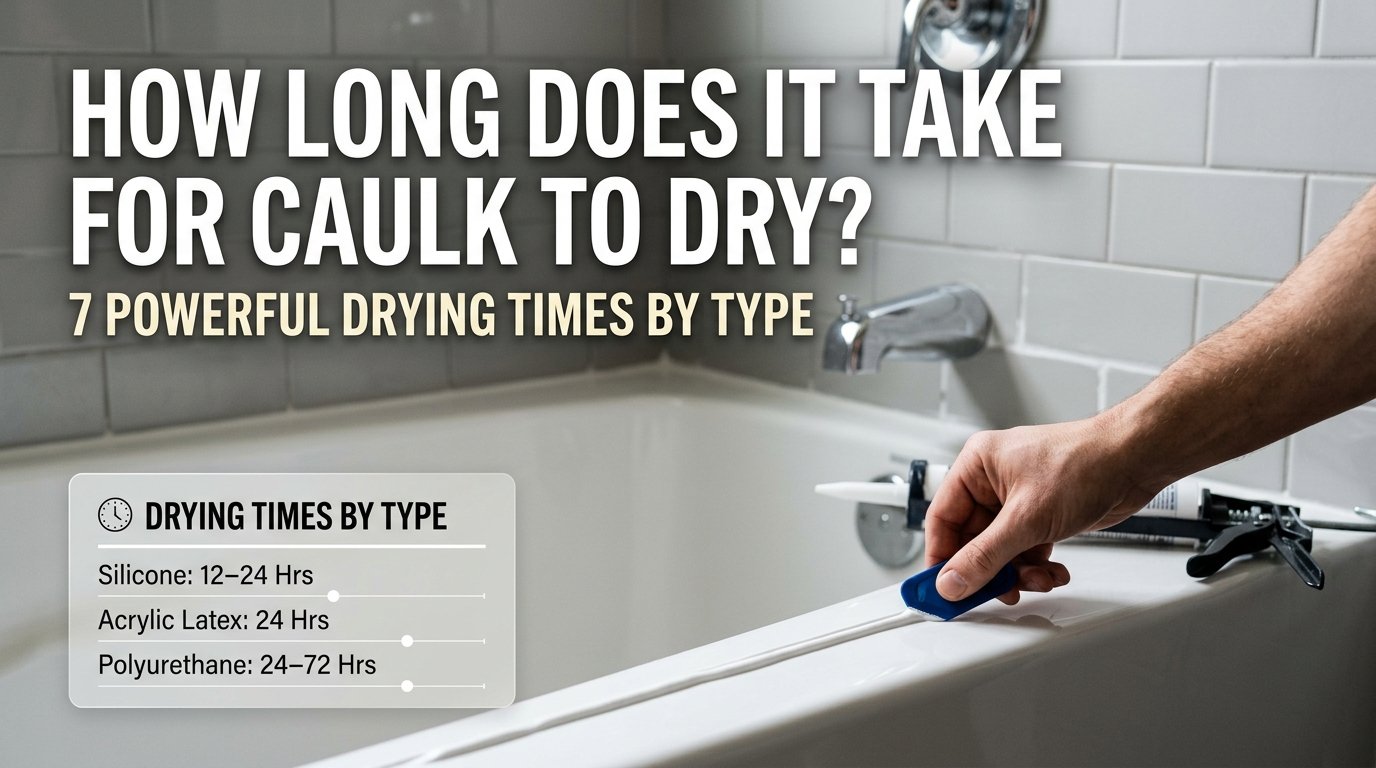
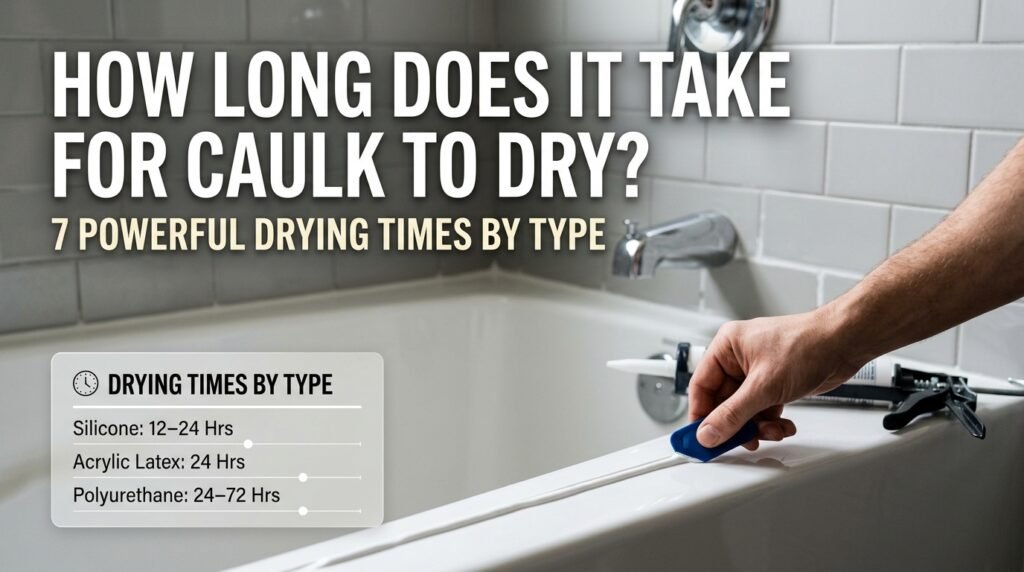
- Silicone caulk: skins over in about 30 minutes and typically cures in about 24 hours. Thick beads take longer.
- Acrylic latex caulk: feels dry to the touch in roughly 30 minutes to a few hours. Full cure can take anywhere from one day to several days depending on the product and the conditions.
- Polyurethane caulk: the slowest of the three. It can take up to 24 hours to feel dry and roughly 7 to 12 days to cure fully.
These are general ranges. Product formulas vary and the label on your tube always wins over a general guide.
For example, DAP notes that drying time varies by product and conditions, while silicone sealants typically need about 24 hours before water exposure is safe. Always follow the specific product label for the exact formula you are using.
How Long Does Silicone Caulk Take to Dry?
Silicone is the go to choice for bathrooms and kitchens because it stays flexible and stands up to constant moisture. It cures by reacting with moisture in the air.
Under standard conditions a typical all purpose silicone skins over in about 30 minutes and cures in about 24 hours. Some kitchen and bath formulas become water resistant in as little as 30 minutes and still take a full day to finish curing. If you wonder how long silicone caulk takes to cure completely the safe answer is 24 hours for a thin bead and longer for a thick one.
Two details change that timeline. Silicone needs humidity to cure so a very dry room slows it down. Thick beads also take longer than thin ones because moisture has to travel deeper into the material.
One more fact worth knowing: silicone cannot be painted. Paint will not stick to it and primer does not fix that. If you plan to paint over the joint use a paintable caulk instead.
How Long Does Acrylic Caulk Take to Dry?
Acrylic latex caulk is the standard for trim, baseboards, crown molding and gaps that will be painted. It cleans up with water and goes on easily. Because it is water based it dries as the water evaporates.
Most acrylic latex caulks skin over very quickly and feel dry to the touch within about 30 minutes to a few hours. Many are paintable in as little as 30 minutes while others call for a full day. Full cure often takes one to several days depending on bead size and room conditions. Unlike silicone this type dries best in dry air so a fan helps and a humidifier does not.
How Long Does Polyurethane Caulk Take to Dry?
Polyurethane caulk is tougher and more durable than the other two. It bonds well to concrete and masonry and wood and it handles movement in exterior joints. It is also the slowest to dry.
Expect up to 24 hours before the surface feels dry and around 7 to 12 days for a full cure. It is rarely the right pick for a bathroom job where you need the shower back quickly. It shines on driveways and siding and foundation joints where speed matters less than durability.
How Long to Let Caulk Dry Before Showering
This is the question behind most searches. The answer depends on the caulk and the conditions.
For a typical silicone bead no thicker than a quarter inch applied at 65°F or warmer with at least 50 percent humidity some manufacturers allow water exposure after about 12 hours. Under cooler or drier conditions the same products call for a full 24 hours. A few fast setting kitchen and bath formulas are water resistant much sooner but still need the full day to reach complete cure.
A sensible rule for most homeowners is to wait 24 hours before running a shower or bath. If the room is cold or the bead is thick give it 48 hours. Water on uncured caulk can cause bubbling and weak adhesion and mold friendly gaps that force you to scrape the whole thing out and start over.
If you are updating a whole bathroom the bathroom remodel cost guide shows how caulking and sealing fit into a larger budget.
How Long Does Bathroom and Shower Caulk Take to Dry?
Bathroom caulk faces the toughest test of any caulk in the house. It sits next to standing water and steam and soap. For that reason use a silicone made for kitchens and baths and give it time.
Here is a simple timeline for a new shower or tub bead:
- First 30 minutes: the surface skins over. Do not touch or smooth it again after this point.
- First 12 hours: keep the area completely dry. Close the door and skip the steam.
- 24 hours: safe for most showers if the bead is thin and the room is warm.
- 48 hours: a safer window for thick beads or cold bathrooms.
Run the exhaust fan once the bead has skinned over so the room does not stay damp. Moisture in the air helps silicone cure but standing water on the surface does not.
How Long for Caulk to Dry Before Painting?
Painting too early is the second most common mistake. The rule is different for each type.
- Acrylic latex caulk: many products can be painted within 30 minutes while others want a few hours or a full day. The tube label gives the real number.
- Paintable silicone: wait at least 24 hours before painting.
- Regular silicone: never paint it. The paint will bead up and peel.
- Polyurethane caulk: wait until it has cured and check the label since many formulas are paintable but only after a longer wait.
When in doubt wait 24 hours. Painting over soft caulk can wrinkle the finish and crack the paint line as the bead cures. For a full plan on prep work and costs see the house painting cost guide.
What Affects Caulk Drying Time?
Several factors push the drying and curing time up or down.
How long does it take for caulk to dry?
- Temperature: most caulks cure best between about 40°F and 80°F. In cold rooms below 50°F the process can take up to twice as long. Never use direct heat to speed things up.
- Humidity: silicone cures by reacting with moisture in the air so humid rooms help. Acrylic latex needs drier air.
- Bead thickness: a thin neat bead cures faster and more evenly than a thick one. Thick beads can stay soft in the center for days.
- Ventilation: airflow helps water based caulk dry but too much airflow across silicone in a very dry room can slow the cure.
- Surface condition: clean dry surfaces help the caulk bond and cure. Damp or dusty surfaces cause problems.
- Age of the tube: expired caulk may never cure properly even if the tube is still sealed.
Can You Caulk in the Rain?
Not if you can avoid it. Caulk needs a clean dry surface to bond and rain can wash uncured caulk out of a joint or leave it weak and streaky. Even a damp surface from morning dew can hurt adhesion on exterior jobs.
Rain resistance times vary a lot by product. Some specialty exterior formulas are rated to withstand rain within a short window while many standard caulks need a dry day or more. Check the label for the rain free window and plan the job around the forecast. A safe default for exterior work is a dry surface at application and at least 24 hours without rain unless the product says otherwise.
How to Make Caulk Dry Faster
There is no real shortcut for the chemistry. You cannot force a full cure in a few minutes but you can avoid slowing it down and in some cases help it along.
- Apply a thin bead. This is the biggest factor you control.
- Warm the room. Aim for around 70°F. Do not use a heat gun or a hair dryer on silicone since high heat can damage it.
- Match the airflow to the caulk. Use a fan for acrylic latex. For silicone a humidifier can help in a very dry space.
- Seal off heater vents. Blowing hot dry air directly on the bead can cause skinning problems.
- Choose a quick dry caulk. Some formulas are designed to skin and set faster. Check the label for the real water ready time instead of trusting the packaging headline.
- Keep the area dry. Keep water off until the cure window is over.
What to Do When Caulk Won’t Dry or Cure
If a bead is still soft or tacky long after the expected time the cause is usually one of a few things.
- Expired caulk. Check the date on the tube. Old caulk may never cure properly.
- Cold conditions. Low temperatures slow cure times a lot.
- Very low humidity. Silicone needs moisture in the air.
- A very thick bead. The center can stay soft for days.
- Incompatible surface or leftover residue. Soap and oil and old sealant interfere with bonding.
If the bead has not set after several days remove it. Cut and lift the soft caulk with a utility knife or scraper then wipe the joint with rubbing alcohol and let it dry completely before reapplying fresh caulk. Starting with a clean joint is always cheaper than living with a bead that fails.
For related fixes around the house such as sealing gaps around frames see our guide on how to reseal windows.
Tips for a Caulk Job That Cures Right the First Time
A little prep makes the waiting period less stressful.
- Remove old caulk first. New caulk does not bond well over old failed material.
- Clean and dry the joint. Wipe it down and let it dry fully.
- Check the weather and room temperature. Aim for a mild dry day for exterior work and a warm room for interior work.
- Cut the nozzle small. A small opening gives you a thinner bead that cures faster.
- Tool the bead once. Smooth it right after applying and leave it alone.
- Mark the cure time. Write the safe water date on painter’s tape near the job so nobody turns on the shower early.
- Read the label. The tube lists the real skin and water ready and paint ready times for that formula.
If you enjoy projects like this you will find more ideas in our DIY home improvement guide.
Frequently Asked Questions About Caulk Drying Time
How long does it take for caulk to dry?
Most caulk feels dry to the touch within 30 minutes to a few hours. Full curing takes longer: about 24 hours for silicone and one to several days for acrylic latex and roughly 7 to 12 days for polyurethane.
How long does silicone caulk take to dry?
Silicone caulk typically skins over in about 30 minutes and cures in about 24 hours under normal conditions. Thick beads and cold or dry rooms take longer.
How long should caulk dry before showering?
Wait at least 12 to 24 hours for most silicone caulk. A full 24 hours is the safe choice and 48 hours is better for thick beads or cold bathrooms.
How long should caulk dry before painting?
It depends on the type. Many acrylic latex caulks can be painted within 30 minutes to a day and paintable silicone needs about 24 hours. Regular silicone cannot be painted.
Can you caulk in the rain?
It is best not to. Caulk needs a dry surface to bond. Wait for dry weather and allow the rain free time listed on the label which is often a full day.
What is the difference between drying and curing?
Drying means the surface has skinned over and no longer feels sticky. Curing means the whole bead has hardened and reached full strength and water resistance.
How do you fix caulk that did not cure?
Remove the soft caulk with a knife or scraper and clean the joint with rubbing alcohol and let it dry. Then reapply fresh caulk from an unexpired tube in a warm room.
Final Thoughts on Caulk Drying Time
So how long does it take for caulk to dry? Most beads skin over within the first hour and cure fully within about a day for silicone or several days for other types. Plan around the cure time instead of the touch dry time and you will avoid the leaks and peeling paint and do over work that come from rushing.
Keep the bead thin and the room warm and the area dry. Read the label on your tube and give the caulk the full waiting period before water or paint. A little patience on day one saves a lot of scraping later.