
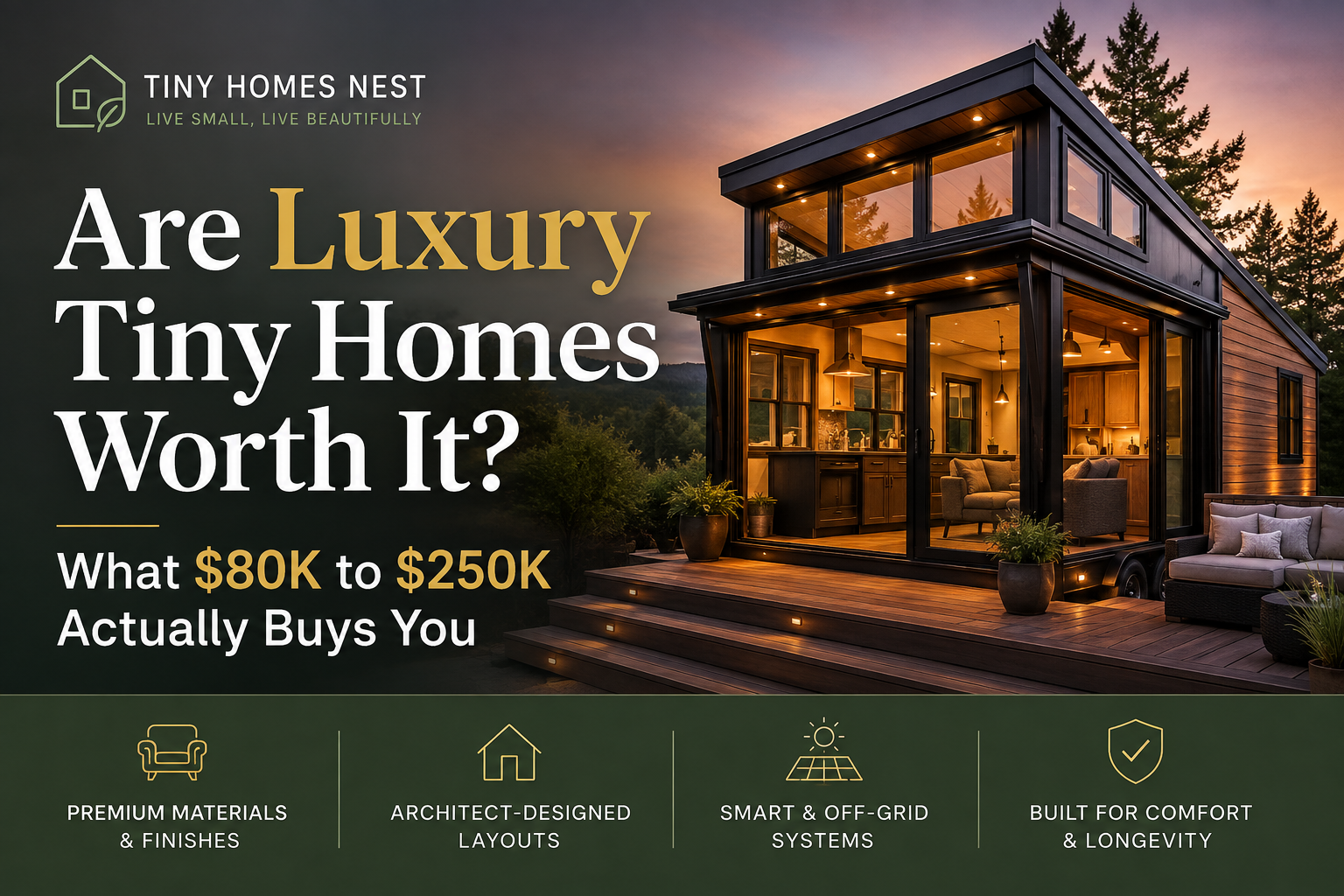
Are Luxury Tiny Homes Worth It? What $80K to $250K Actually Buys You
By Emily Hartman, Founder & Lead Editor at Tiny Homes Nest. Tiny home owner since 2019.
A tiny home and a luxury tiny home can sit on the exact same trailer footprint and cost $150,000 apart. The difference rarely shows up in the square footage. It shows up in materials, systems and design decisions that either justify the premium or simply dress up a standard build with a bigger price tag. This guide breaks down what luxury actually means in this market, what it costs at each tier and whether the premium holds its value. The word “luxury” gets attached to listings with wildly different levels of actual quality behind it, so knowing what to check before you pay for the label matters as much as the price itself.
Quick answer: Luxury tiny homes generally run from about $80,000 for an entry luxury build to $250,000 or more for a fully custom, high-end unit. The premium buys real architectural design, higher-grade materials and integrated systems rather than just a nicer paint color, though not every listing marketed as “luxury” actually delivers that.
Are Luxury Tiny Homes Worth It? Quick Answer
The honest answer depends entirely on what you value and how long you plan to keep the home. A genuinely well-built luxury tiny home can deliver real day-to-day comfort and better durability. On owned land, it can also hold a more defensible resale position than a budget build. A luxury label slapped onto a standard shell with upgraded countertops mostly buys you a bigger invoice instead.
The premium tends to be worth it when three things line up. You plan to live in the home full time rather than rent it out occasionally. You own or plan to own the land it sits on. The builder can show you exactly which materials and systems justify the price rather than just describing the home as “premium” in marketing copy. Miss any one of these three conditions and the math behind paying for luxury gets considerably weaker.
What Actually Makes a Tiny Home “Luxury”
Square footage rarely defines luxury in this category, since most luxury builds still sit under 400 square feet. What changes is everything inside that footprint.
Architect-designed layouts replace generic floor plans, often maximizing headroom and natural light in ways a standard kit never attempts. Materials shift from laminate and vinyl to quartz countertops, hardwood or engineered flooring and solid wood cabinetry. Systems get upgraded too, from standard electrical panels to smart climate control and integrated security. Off-grid builds often add larger battery banks paired with more efficient solar arrays as well. None of this is purely decorative. Each upgrade either improves how the home performs day to day or extends how long it lasts before major systems need replacement.
How Much Do Luxury Tiny Homes Cost?
Luxury pricing breaks into three rough tiers. The jump between them usually reflects real differences in construction quality rather than just brand markup.
| Tier | Typical Price | What Changes |
| Entry luxury | $80,000 to $130,000 | Designer interiors, premium finishes standard rather than upgraded, quality core systems |
| Mid-tier luxury | $130,000 to $200,000 | Larger footprint, full custom design, integrated smart home features |
| Ultra-luxury | $200,000 to $250,000+ | Fully custom architecture, top-tier materials throughout, extensive off-grid capability |
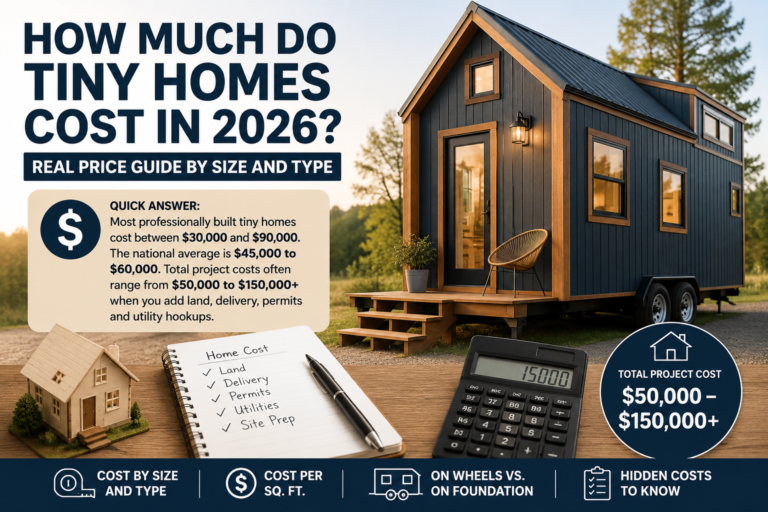
For comparison, our tiny home cost guide covers standard builds running roughly $30,000 to $90,000, which puts even entry luxury pricing well above a typical mid-range unit. The gap is the point. You are paying for consistency and design quality that a standard build simply does not include as a baseline. Location and customization level can push any of these tiers higher still, so treat this table as a starting range rather than a ceiling.
What You Get at Each Price Tier
Entry luxury builds, priced roughly $80,000 to $130,000, typically include designer interiors, quartz or solid surface counters, upgraded plumbing fixtures and a climate control system built in rather than added as an upgrade. This tier competes directly with mid-range standard builds on price while offering meaningfully better finish quality throughout. Buyers moving from a rental into their first tiny home often land here, since the price still sits within reach of standard financing options while delivering a noticeably more polished result.
Mid-tier luxury, running $130,000 to $200,000, usually adds square footage beyond the typical 250 to 300 foot range, full custom floor plans rather than modified stock designs and smart home integration covering lighting, security and climate together rather than as separate add-ons. This is also where builders typically start offering genuine design consultations rather than a fixed catalog of finish options.
Ultra-luxury builds above $200,000 tend to include fully custom architecture from the ground up, premium exterior cladding such as metal or high-grade wood siding and extensive off-grid systems capable of supporting full-time living without utility hookups. At this tier you are essentially commissioning a small custom home rather than buying a model off a builder’s lot. The timeline usually reflects that, often running close to a year from deposit to delivery.
Luxury Tiny Home Builders Worth Knowing
A handful of builders have built reputations specifically around the luxury tier rather than treating it as an upsell on a standard model.
Clever Tiny Homes positions its flagship studio starting around $79,995, with a larger model near $129,995, marketing the approach as including features other builders itemize as separate upgrades. Tumbleweed Tiny House Company, one of the longest-running names in the industry, offers both standard and higher-end models with an emphasis on craftsmanship and green certifications. Wheelhaus builds premium park model cabins, including designs priced from roughly $100,000 to $150,000 or more, aimed at buyers who want a rustic luxury aesthetic on a larger RV-classified footprint. Other design-forward builders occupy the same tier with a more architectural, gallery-style aesthetic, often at similar price points to Wheelhaus once options are factored in.
Builder reputation matters more at this price point than at the budget end of the market, since a $150,000 mistake is a far bigger problem than a $30,000 one. Ask any luxury builder for photos of completed projects from the last year, not just their best-ever showcase build. Request references you can actually contact directly. Follow up with them before you sign anything. Ask specifically how the delivered home compared to what was promised at the deposit stage.
Off-Grid and Smart Systems: Worth the Upcharge?
Off-grid capability and smart home systems show up constantly in luxury tiny home marketing. Their value depends heavily on how you actually plan to use the home.
A larger solar array and battery bank make genuine sense if you plan to place the home somewhere without reliable utility access, whether that is remote land or a location where hookup costs would otherwise run into the thousands. If you are placing the home in a serviced community or on land with standard utilities already available, a full off-grid system mostly adds cost without adding comparable day-to-day benefit. Smart home features follow a similar logic. Integrated climate and lighting control genuinely improves daily comfort in a small space. Some smart features, on the other hand, amount to a marketing checkbox that rarely gets used after the first few months of ownership. Ask a builder to walk through exactly which systems you would actually control day to day before paying extra for a full smart home package.
Does Luxury Actually Hold Its Resale Value?
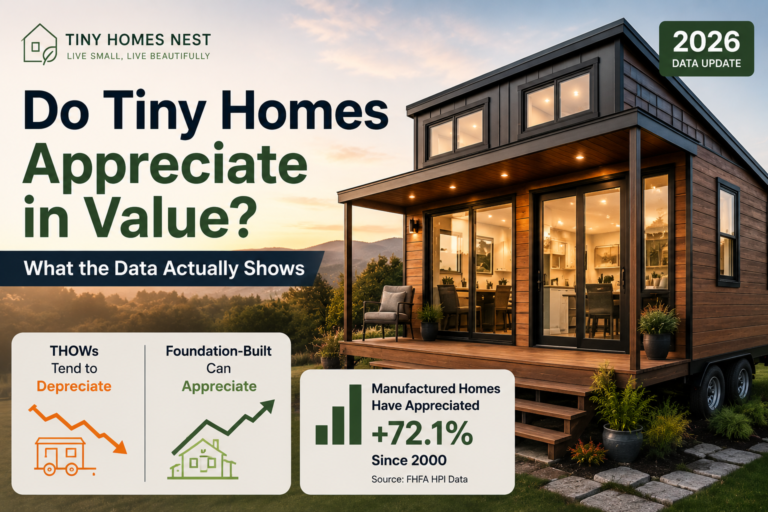
This is where classification matters more than finish quality. FHFA’s manufactured housing price data shows that manufactured homes classified as real property on owned land have appreciated at rates close to site-built homes over the past two decades. Homes classified as personal property on leased land or without a permanent foundation behave more like a depreciating vehicle instead.
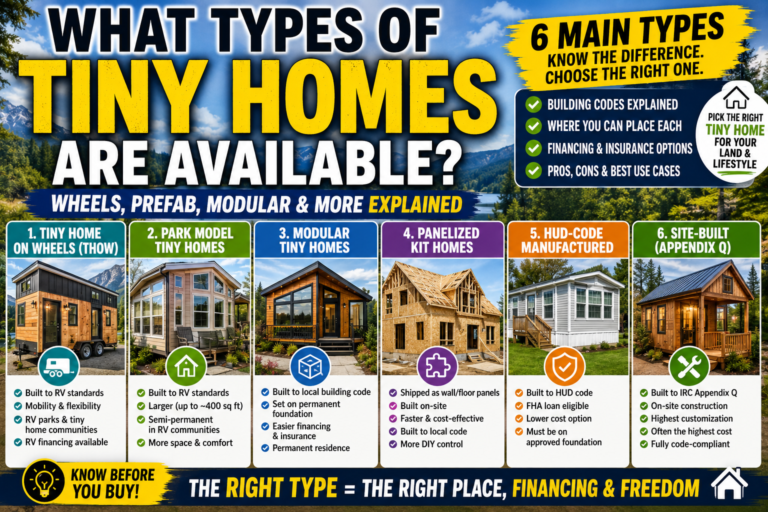
A luxury tiny home follows the same rule regardless of how nice the interior is. Ultra-premium finishes on a THOW parked in a rented community lot are still, legally and financially, closer to a high-end RV than a house. The same finishes on a foundation-built or HUD-code home on owned land have a real shot at holding or gaining value alongside the land underneath them. Our guide to types of tiny homes breaks down exactly which construction categories qualify for which classification. That classification matters more to resale than any single upgrade you choose inside the home. A full breakdown of appreciation and depreciation across the entire tiny home market, luxury and standard alike, deserves its own dedicated look rather than a section here.
Luxury Tiny Home vs. Standard Build: Is the Premium Worth It?
Run the numbers before you assume luxury automatically pays for itself. A $50,000 gap between a standard and a luxury build needs to translate into something concrete, whether that is genuinely better daily comfort, meaningfully lower long-term maintenance or a real resale advantage tied to land ownership and construction classification.
For buyers planning full-time, long-term residence on owned land, the premium often earns its keep through durability and design quality you experience every single day. For buyers who mainly want a weekend property, a rental unit or a short-term living solution, a standard build with a few targeted upgrades usually delivers better value than a fully luxury unit. Somewhere between those two scenarios sits a large group of buyers for whom the honest answer is genuinely case by case, which is exactly why the next section matters.
Questions to Ask Before You Pay for “Luxury”
A handful of direct questions separate a genuinely premium build from a standard home with a luxury price tag attached.
- What specific materials and brands are used, not just general descriptions like “premium” or “designer”
- Which systems are actually upgraded versus which ones are standard across every model the builder sells
- What is the builder’s track record on homes delivered in the last twelve months specifically
- How does the home’s construction type affect financing, insurance and eventual resale
- What would the same floor plan cost with standard rather than luxury finishes, so you can see exactly what the premium buys
A builder confident in their pricing will answer every one of these directly. Vague answers or a refusal to break down what the premium actually includes is itself useful information about what you are really paying for. Treat hesitation on any of these five questions as a reason to keep shopping rather than a minor inconvenience worth overlooking.
Frequently Asked Questions
How much does a luxury tiny home cost?
Luxury tiny homes typically range from about $80,000 for an entry-level luxury build to $250,000 or more for a fully custom ultra-luxury unit. Pricing depends heavily on square footage, materials and how much of the design is fully custom.
What makes a tiny home count as luxury?
Real architectural design, premium materials like quartz and hardwood and upgraded integrated systems such as smart climate control or larger off-grid capacity define the category. Square footage alone does not, since most luxury builds still stay under 400 square feet.
Do luxury tiny homes hold their value better than standard ones?
Value depends far more on legal classification and land ownership than on finish quality. A luxury build on owned land with a permanent foundation has a real chance at appreciation, while the same finishes on a rented lot behave more like a depreciating vehicle.
Is Clever Tiny Homes actually a luxury builder?
Yes, Clever Tiny Homes markets itself specifically in the luxury tier, with a flagship studio starting around $79,995 and a larger model near $129,995, positioning premium features as standard rather than optional upgrades.
Are off-grid systems worth the extra cost in a luxury tiny home?
It depends on placement. Off-grid systems earn their cost on remote land without reliable utilities. They add mostly unused expense if you are placing the home somewhere with standard utility access already available.
Is a luxury tiny home a good investment?
It can be, specifically when it sits on owned land with a permanent foundation and a construction type that supports real property classification. Without those conditions, luxury finishes mostly improve daily living rather than building long-term equity.
Luxury in this market is not about square footage or a marketing label. It comes down to real materials, real systems and real land ownership and construction classification when resale matters to you. Ask specific questions before you pay a specific premium. You will know exactly what you are buying instead of taking a builder’s word for it.
Curious how a luxury build compares across the board? Our complete tiny homes guide covers cost, types and buying channels for every tier, not just the premium end. Considering a specific luxury builder or model? Drop it in the comments and we will help you evaluate what you are actually getting for the price.
Emily Hartman is the founder and lead editor at Tiny Homes Nest. After downsizing into a 340-square-foot home in 2019, she spent years working through zoning rules, financing options and real renovation costs firsthand. That experience is what she now turns into practical, no-fluff guides for buyers and downsizers.



One Comment