Tiny Home Communities: How to Find One and What to Check Before You Move In
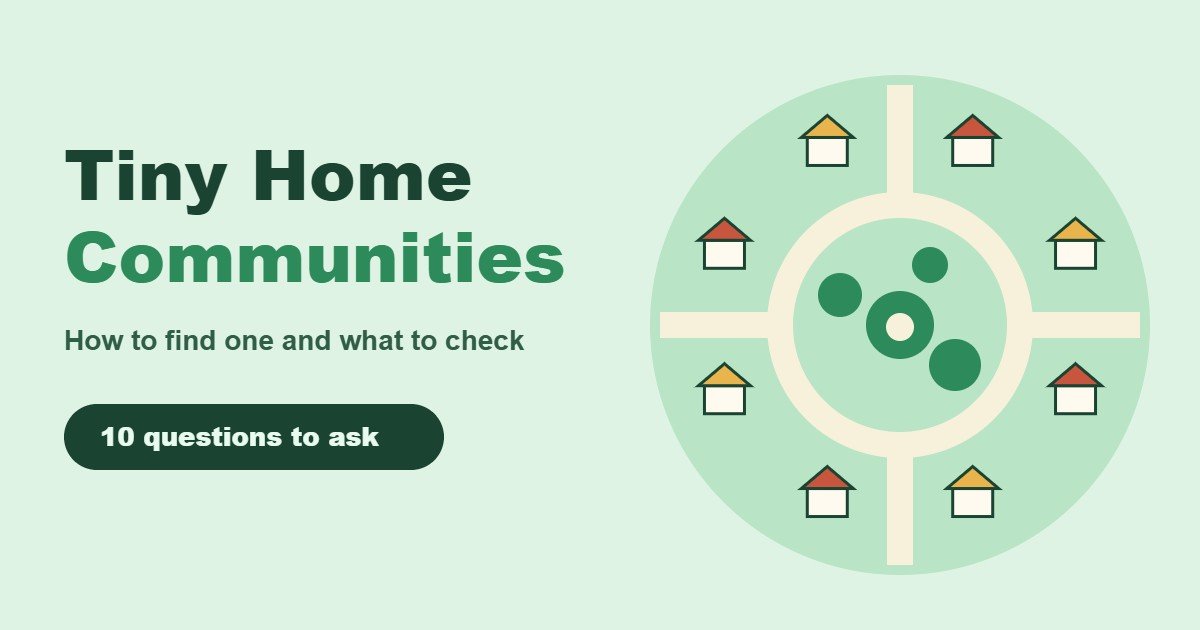
Tiny home communities exist for people who fall for tiny living and then hit the same wall. They find the house and the budget and the plan and then they cannot find a place to put it. A tiny home community solves that. It gives you a lot and rules you can read and neighbors who already live the way you want to.
It is not a perfect answer. Communities come with fees and house rules and in some cases a waiting list. This guide explains how the different kinds of communities work and what living in one costs. It also shows how to find one and how to spot the red flags before you sign anything.
What Is a Tiny Home Community?
A tiny home community is a group of tiny homes on shared land. Residents may own their homes and rent the lot or rent both or own both. The land often has shared utilities and shared spaces such as a garden or a laundry or a gathering area.
You may also see the names tiny home village or tiny house community or tiny home park. The words mean much the same thing. What differs is the legal setup and that is what decides your costs and your rights.
The Main Types of Tiny Home Communities
1. Tiny Home Parks for Homes on Wheels
These work like small RV parks. You bring a tiny house on wheels and rent a pad with water and sewer and power. Many require that the home carries an RV certification or meets a build standard. Stays can be short or long depending on the park and the local rules.
2. Lot Rental Communities
You own the tiny home and rent the land under it. The community sets the rules for size and appearance and upkeep. This is the most common model and the one with the lowest entry cost.
3. Ownership Communities
You buy a lot or a share of the land along with your home. These feel more like a small neighborhood or a condo. Prices are higher and the legal paperwork matters more. Our guide to tiny homes for sale with land explains the main ways to buy a home and a lot together.
4. Eco Villages and Intentional Communities
These are built around a shared mission such as sustainability or shared food growing. Residents often share work and tools and decisions. Costs may be lower but you give up some privacy and control.
5. Transitional and Affordable Housing Villages
Some cities and nonprofits run tiny home villages to provide low-cost housing for people who need a stable place. Rules and eligibility differ and these communities are usually not open to the general market.
6. Resort and Vacation Villages
Some communities rent tiny homes by the night or the season. Our rent a tiny home guide covers how to try tiny living before you commit.
How Much Does It Cost to Live in a Tiny Home Community?
Costs differ by region and by the services you get. Plan for these items.
- Lot rent. Often a few hundred dollars to over a thousand dollars a month depending on the area and the amenities.
- Utilities. Some lots include water and sewer. Others bill you separately.
- Fees. There may be a one-time application or setup fee.
- Home cost. If you are buying a home to place in the community our tiny homes cost guide shows the price ranges.
- Hookups and site work. A lot with utilities already in place costs less to prepare than raw land.
- Insurance. Get quotes before you move in since the home type affects the policy.
Always ask for the full monthly cost in writing and what can change over time.
Community Rules You May Face
Rules are the price you pay for certainty. Read them before you commit.
- Minimum and maximum home size
- Required certification such as an RV standard or a code standard
- Age limits on the home
- Exterior look and color and landscaping rules
- Pet and vehicle limits
- Rules on short term renting or guests
- Quiet hours and shared space use
- Rules on adding decks or storage sheds
A community can also refuse to accept a home that does not fit its standards. Ask about this before you buy a home. Many parks look for a HUD code label or an RV certification so ask which one they accept.
How to Find Tiny Home Communities
- Directories and listing sites. Several websites list tiny home communities and tiny home friendly parks. Treat these as a starting point and verify every detail.
- Builder and dealer networks. Many builders know communities that welcome their homes.
- Social media groups. Local groups share open lots and warnings about problem sites.
- County planning offices. Ask which zones allow tiny home parks and whether any have been approved.
- Visit in person. Photos hide a lot. Walk the site and talk to residents.
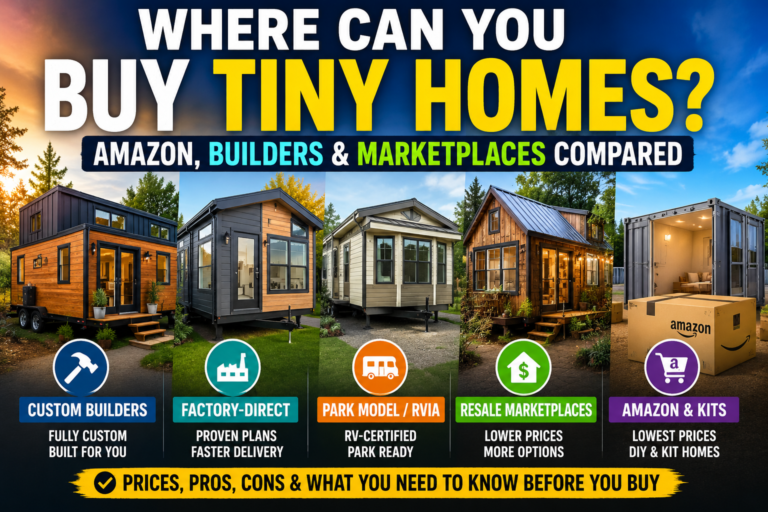
If you are not sure where to shop for a home first see our guide on where to buy tiny homes.
Questions to Ask Before You Join
Bring this list to every visit.
- Who owns the land and who runs the community?
- How long is the lease and how can it be ended?
- What can the rent increase to and how much notice is given?
- What does the lot rent cover?
- Are there occupancy limits or a minimum stay?
- Does my home meet the community’s standards?
- Is the community zoned for tiny homes and does it have the permits?
- What happens if the community sells or closes?
- How are disputes handled?
- Can I speak with current residents?
Green Flags and Red Flags
Green flags
- Clear written lease and rules
- Proper permits and zoning
- Utilities that are safe and well maintained
- Residents who are happy to talk
- A track record of several years
Red flags
- No written agreement or one that changes often
- Pressure to pay a large deposit fast
- Unclear land ownership
- Utilities that look makeshift or unsafe
- No permits or a manager who dodges questions about zoning
- Reviews that mention sudden rent hikes or evictions
If a community has several red flags walk away. A lot that costs less is not a good deal if you may lose it.
What Daily Life Looks Like
Life in a community depends on its type. In a tiny home park you may rarely see your neighbors beyond a wave from the driveway. In an eco village you may share meals and chores and a weekly meeting. Visit at different times of day and ask residents how much of their week involves the community.
Think about the practical side too. Ask where you park a second vehicle and where guests can stay and how mail and deliveries work. Ask what happens when a storm hits or a pipe freezes and who you call. These small details shape your day more than the size of the house.
How Location Changes the Picture
Tiny home communities look different from one region to the next.
- Cold climates. Ask about freeze protection for water lines and about snow removal. Winter hookups can be a hidden cost.
- Hot and dry regions. Ask about shade and water supply and cooling costs.
- Coastal and high-cost areas. Lot rent is higher and spaces are scarce. Waiting lists are common.
- Rural areas. Lots are cheaper and rules are looser but services may be far away.
- Areas prone to storms or fire. Check the flood zone and the wildfire risk and the insurance cost before you commit.
Whatever the region always check the local rules. A community that is legal in one county may not be legal in the next.
Pros and Cons of Living in a Tiny Home Community
Pros
- A legal place to park or build without searching for land
- Shared utilities and amenities
- Neighbors who understand the lifestyle
- Lower upfront cost than buying land
- Clear rules and often a ready-made infrastructure
Cons
- Monthly lot rent and fees
- Rules on how you live and what your home looks like
- Less privacy than a rural lot
- Risk that the community changes or closes
- Fewer options near some cities
Community or Your Own Land?
Both paths work. A community is faster and simpler and often cheaper to start. Your own land gives you control and long-term value but needs zoning checks and site work. Our guide on how to buy land for a tiny house walks through that route. If your home will be a seasonal cottage in a resort setting read about park model homes too.
Thinking of Starting Your Own Community?
A few people dream of building a community from scratch. It is a big project. You need land and zoning approval and utilities and a legal structure and money for the infrastructure. Many places have no rules for tiny home parks at all so you may need a variance or a rezoning. Talk to the planning office early and hire a local attorney who knows land use law. Many areas follow the International Residential Code and its Appendix Q for tiny houses so read it before you plan the buildings. Start by visiting several existing communities and learning what works.
A Sample Monthly Budget in a Tiny Home Community
Numbers help you decide. This is an illustration and not a quote. Your costs will differ by region and by community.
- Lot rent: $600
- Water and sewer and trash if not included: $80
- Electricity: $90
- Internet: $60
- Insurance for the home: $40
- Propane or other heat: $30
That adds up to about $900 a month. Compare the total with the rent for a small apartment in the same area. In a high-cost city a tiny home community can come out well ahead. In a cheap rural market it may not. Also ask whether the lot rent can rise each year and by how much.
A Step-by-Step Plan to Join a Tiny Home Community
- Set a monthly budget and a limit for lot rent.
- Decide whether you need a place for a home on wheels or a home on a foundation.
- Make a short list of three to five communities in your target area.
- Call each one and ask about openings and the waiting list and the fees.
- Visit in person and talk to at least two residents.
- Read the lease and the rules with care and ask an attorney to review them.
- Confirm that your home meets the standards before you buy or move it.
This plan takes a few weeks and keeps you from paying a deposit on a place that does not fit. If a tiny home community will not answer simple questions about rent and zoning and utilities that tells you what you need to know.
Frequently Asked Questions
What is a tiny home community?
It is a group of tiny homes on shared land with common rules and often shared utilities. Residents may own their homes and rent the lot or buy both.
How much does it cost to live in a tiny home community?
Lot rent often runs from a few hundred dollars to more than a thousand dollars a month depending on the region and services. Utilities and fees may be extra.
Can I put my tiny house on wheels in a tiny home community?
Often yes but many communities require that the home meets a standard such as an RV certification. Ask the community before you buy or build.
Are tiny home communities legal?
They are legal where zoning and building rules allow them. Rules differ by county and city so check that a community has the proper permits.
How do I find a tiny home community near me?
Use listing directories and local social media groups and builder networks. Then call the county planning office and visit in person.
Can you buy land in a tiny home community?
Some communities sell lots or shares of land. Others only rent lots. Check the legal setup and read the contract with an attorney.
What are the downsides of a tiny home community?
You pay lot rent and follow community rules and may have less privacy. There is also a risk that the community changes owners or closes.
Final Thoughts on Tiny Home Communities
A tiny home community can be the easiest way to start living small. It gives you a legal home site and shared services and neighbors who understand why you chose this life.
Read the lease and the rules and ask hard questions about zoning and rent. Visit in person and talk to residents before you commit. A good community feels like a neighborhood. A bad one feels like a trap. A little research tells you which is which.
Looking for places close to you? See tiny home communities near me.


2 Comments