
Carbon Monoxide Detector Beeping: What Each Beep Means and What to Do
A carbon monoxide detector beeping is an emergency until you know otherwise. Start here before anything else. If your carbon monoxide detector is sounding a loud alarm in a repeating burst and anyone in the home has a headache or dizziness or nausea or confusion, go outside into fresh air right now. Take everyone and every pet with you. Call 911 from outside. Do not go back in to look for the cause.
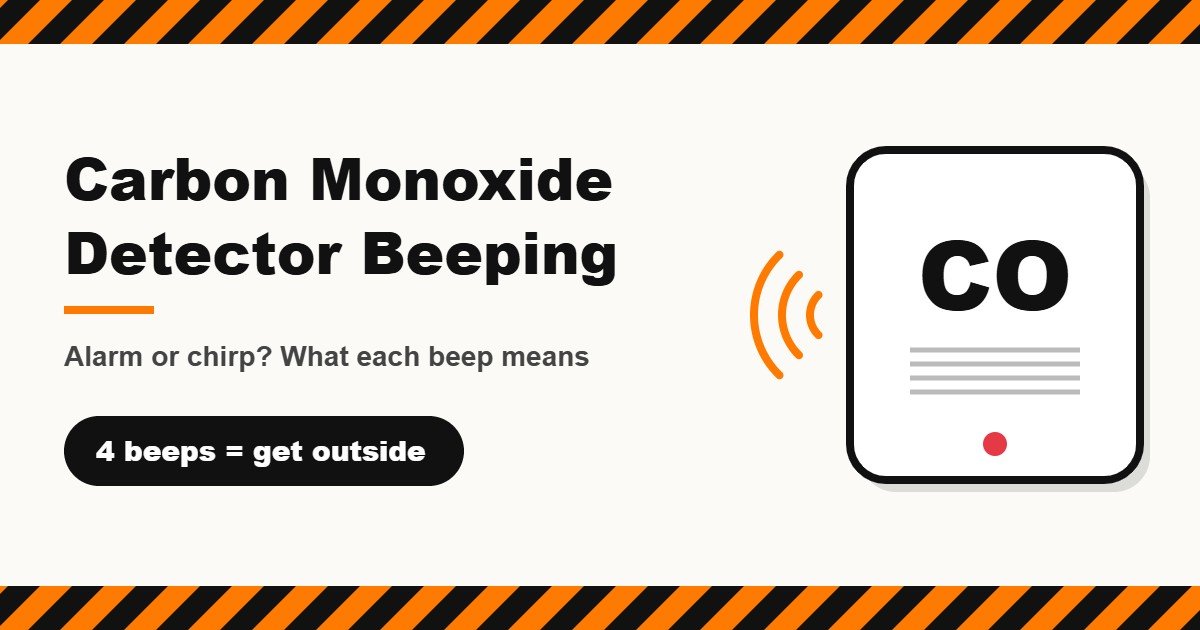
If the sound is a single short chirp with a pause of about a minute you are probably dealing with a low battery and not a gas leak. This guide helps you tell the two apart and then fix the common problems safely.
Is It an Alarm or a Chirp?
A carbon monoxide detector beeping can mean two very different things. Getting this right matters more than anything else in this guide.
- An alarm. A loud pattern that repeats such as four beeps then a pause. This means the detector senses carbon monoxide. It is an emergency.
- A chirp. A short sound that comes once every 30 to 60 seconds. This is a warning from the device itself. It usually means a low battery.
- A repeated set of chirps. Several chirps in a row and then a long pause. On many models this means the detector has reached the end of its life or has a fault.
Brands use different patterns for a carbon monoxide detector beeping so your manual and the label on the back of the unit have the final word. If you are not sure which sound you are hearing treat it as an alarm until you know otherwise.
If the Alarm Is Sounding: Do This in Order
- Get everyone out of the building at once. Open the door and leave. Do not stop to open windows.
- Call 911 or your local emergency number from outside.
- Count heads. Make sure everyone including pets is out.
- Stay outside until firefighters tell you the home is safe.
- Get medical care if anyone feels sick. Carbon monoxide poisoning needs a doctor even if symptoms fade in fresh air.
- Do not restart the appliance that you think caused it. Have a licensed technician inspect it first.
Do not silence the alarm and carry on. Carbon monoxide has no smell or color and you cannot judge the danger by sense alone. The CDC explains carbon monoxide poisoning and its warning signs in plain terms.
Signs of Carbon Monoxide Poisoning
The symptoms look a lot like the flu so they are easy to miss. Watch for:
- Headache
- Dizziness
- Nausea or vomiting
- Weakness or unusual tiredness
- Confusion
- Shortness of breath
Pay attention to patterns. If several people in the home feel ill at the same time or symptoms ease when you leave the house that is a warning sign.
If It Is Only Chirping: The Common Causes
A carbon monoxide detector beeping with a chirp is not an emergency but it is not something to ignore either. Work through these causes in order.
1. Low Battery
This is the most common cause. Replace the battery with the type the unit calls for. Close the battery door fully. Press the test button to check that the alarm sounds and then let it stop. Many units chirp until you reset them so hold the button for a few seconds if the manual says to.
2. End of Life
Carbon monoxide sensors wear out. Most detectors are designed to last somewhere between 5 and 10 years depending on the model. Many warn you with a set of chirps when the time is up. Look at the back of the unit for a manufacture date or a replace by date. If it has expired replace the whole detector. A new battery will not fix it.
3. A Fault or Error Code
Some models use different chirp counts to show a sensor fault or a power problem. Check the table in your manual. If the unit keeps showing a fault after a reset replace it.
4. Power Problems on a Plug-In or Hardwired Unit
A plug-in model needs a firm connection to the outlet. A hardwired model depends on house power and a backup battery. After a power cut either type may chirp for a while. Turn off the breaker and take the unit down and hold the test button for 15 to 30 seconds. Then reconnect it. If the chirp comes back call an electrician.
5. Dirt or Dust
Dust can affect the sensor. Vacuum the vents gently with a soft brush. Do not spray water or cleaning products into the unit.
6. Temperature and Humidity
Heat and humidity can trigger false readings in some units. Placing an alarm in a steamy bathroom or right next to a cooking area is a common mistake. Move it to a better spot but never leave a room without protection.
Why Is My Carbon Monoxide Detector Beeping With No Cause?
People often write this off as a false alarm. Be careful. A detector that sounds a true alarm pattern may be reacting to a real but short burst of carbon monoxide. If you get an alarm pattern and then it stops do not assume it was a glitch. Ventilate the home and leave it and have the appliances checked by a professional.
Real causes include:
- A furnace or boiler with a cracked heat exchanger or a blocked vent
- A gas water heater that is not venting properly
- A gas stove or oven used for heating
- A fireplace or wood stove with a blocked chimney
- A car or generator running in an attached garage
- A portable generator placed too close to the house
Carbon Monoxide Detector Beeping Patterns People Search For
Many homeowners search for the number of beeps. These are common patterns but your own manual rules.
- Four beeps then a pause: carbon monoxide is detected on many models. Leave the home and call for help.
- One chirp about every minute: low battery on many models.
- Five chirps about every minute: end of life on many models.
- Two or three chirps: often a fault or a warning that varies by brand.
When in doubt look for the model number printed on the back and search for the manual.
What Happens After You Call 911
Knowing what to expect makes the call less scary. Firefighters bring a meter that reads carbon monoxide levels in the air. They will check the home and find the likely source and tell you when it is safe to go back in. If a fuel burning appliance is the cause they may shut it off. Do not use that appliance again until a licensed technician has repaired it.
If the carbon monoxide detector beeping turns out to come from a failing unit the crew will tell you. Replace it the same day.
Where to Place Carbon Monoxide Detectors
Good placement makes the alarm more useful and cuts false alarms.
- Place one on every level of the home
- Place one outside each sleeping area and consider one in each bedroom
- Keep them away from the stove and the bathroom
- Do not put them directly beside a fuel burning appliance since a short burst at start up can cause nuisance alarms
- Follow the height guidance in the manual since some models are for walls and some for plug-in outlets
Test each unit monthly by pressing the test button. The US Consumer Product Safety Commission has more on CO alarms and where to put them.
Keep the Risk Low All Year
- Have your furnace and water heater and any gas appliances checked once a year by a licensed technician
- Keep chimneys and vents clear
- Never run a generator or a car in a garage even with the door open
- Never use a gas oven or a grill indoors to heat a room
- Replace detectors by the date on the label
- Replace batteries once a year unless the unit has a sealed battery
If your heating system is old or has been giving trouble read our HVAC replacement cost guide so you know what a repair or replacement might cost.
Smoke Alarm or Carbon Monoxide Alarm?
Many homes have both and some have combination units. The sounds are different and so are the right responses.
- If you are not sure which alarm is sounding look at the label or the light on each unit.
- A smoke alarm that chirps is covered in our guide to a smoke detector beeping.
- If the light is the part that confuses you read why a smoke detector is blinking red.
A combination alarm may use a voice to say which hazard it has found. Listen to the message and follow it.
Smart Detectors
Smart carbon monoxide alarms send a message to your phone and sometimes explain the sound with a spoken message. They can alert you when you are away from home. They still need a working battery and a replace by date. Our smart homes guide explains what connected safety devices do and what they add to a budget.
When to Call a Professional
- Call 911 for any real alarm pattern
- Call a licensed heating technician if an appliance may be the cause
- Call an electrician if a hardwired carbon monoxide detector beeping continues after a reset
- Call the fire department’s non-emergency line for advice on placement
If you are working through other upkeep jobs our DIY home improvement guide helps you decide what to do yourself and what to leave to a professional. Carbon monoxide safety belongs in the second group.
How to Test and Reset a Carbon Monoxide Detector Beeping Every Minute
Use this only when your carbon monoxide detector beeping is a single chirp and nobody feels ill. If you hear the alarm pattern go outside first.
- Take the unit off its wall plate or its outlet.
- Remove the battery if the unit has one that you can reach.
- Hold the test button for 15 seconds to drain any leftover charge.
- Install a fresh battery of the type the unit calls for.
- Put the unit back and press the test button.
- Listen for the full test tone and then let it stop.
- Check the replace by date on the back.
If the chirp returns within a day the unit is probably faulty or expired. Replace it and do not wait for the weekend. Until the new one is up make sure you have another working detector on the same level.
Carbon Monoxide Safety in a Tiny House or Small Space
Small homes hold less air than large ones. That means a fuel burning appliance can raise carbon monoxide faster in a tiny house or a camper or a small cabin. Many of these homes use a propane heater or a gas range or a wood stove. Each one needs a clear vent and regular checks.
- Put a detector near the sleeping area and another on the main living level
- Use only heaters rated for indoor use and vented as the maker directs
- Never run a generator inside or near an open window
- Keep a spare battery on hand so a chirp never stays unfixed for long
If you are planning a small home read our tiny homes cost guide and add the price of safety equipment to your budget. It is a small line item that protects everyone who lives there.
Frequently Asked Questions
Why is my carbon monoxide detector beeping?
It may be an alarm and that is an emergency. Or it may be a chirp for a low battery or a fault or the end of life of the unit. Check the pattern and the manual. If you are unsure treat it as an alarm and leave the home.
What do I do if my carbon monoxide detector goes off?
Get everyone out into fresh air and call 911 from outside. Do not go back in until professionals say it is safe. See a doctor if anyone feels ill.
Why is my carbon monoxide detector chirping every minute?
A single chirp about once a minute is common for a low battery. Replace the battery and test the unit. If it keeps chirping check the manufacture date.
How long do carbon monoxide detectors last?
Most last between 5 and 10 years depending on the model. Check the back of the unit for a replace by date.
Why is my carbon monoxide detector beeping 5 times?
On many models five chirps mean the detector has reached the end of its life. Check your manual and replace the unit.
Can a carbon monoxide detector go off for no reason?
Sometimes a unit gives a false alarm from dust or humidity or a fault. Do not assume that is the case. Ventilate and leave the home and have it checked if you get a real alarm pattern.
Where should I put a carbon monoxide detector?
Put one on every level and outside each sleeping area. Keep it away from the stove and the bathroom and do not place it right beside a fuel burning appliance.
Final Thoughts on a Carbon Monoxide Detector Beeping
A beeping carbon monoxide detector deserves a quick decision. If the sound is an alarm then leave and call for help. If it is a chirp replace the battery or the unit and test it.
Keep working detectors on every level and have your fuel burning appliances checked each year. A few small habits keep a silent hazard from becoming a real emergency.





One Comment