Interior Design Styles: 17 Popular Looks and How to Choose Yours
By Emily Hartman, Founder & Lead Editor at Tiny Homes Nest. Tiny home owner since 2019.
Choosing a look for your home sounds easy until every saved room belongs to a different aesthetic. One image feels calm. Another feels warm. A third has the color and character you want. Without a clear direction, furniture and finishes can start fighting each other. This guide explains the most useful interior design styles in plain language so you can recognize what you like and build a home that actually works for daily life.
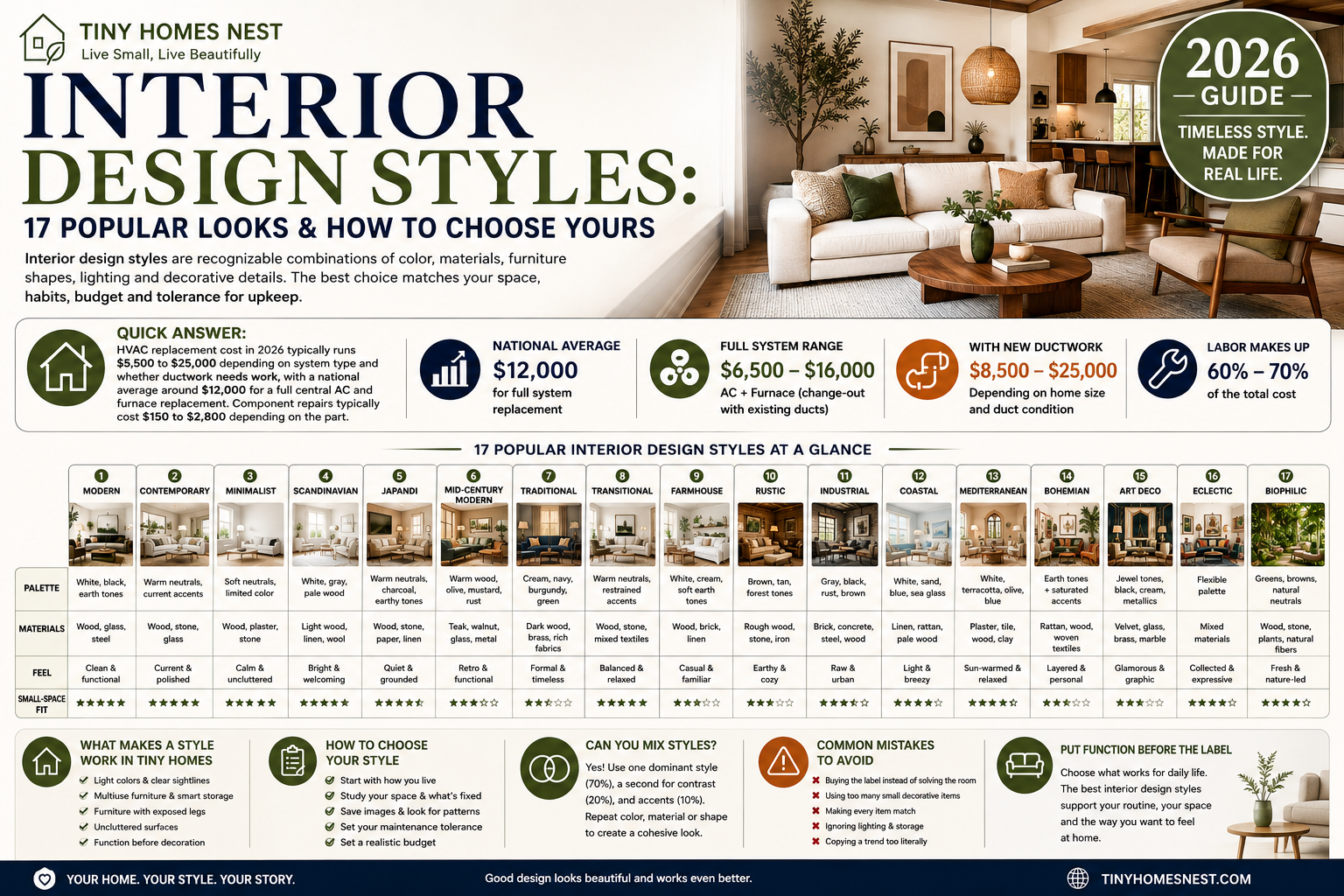
| Quick answer: Interior design styles are recognizable combinations of color, materials, furniture shapes, lighting and decorative details. Popular choices include modern, contemporary, minimalist, Scandinavian, Japandi, mid-century modern, traditional, transitional, farmhouse, rustic, industrial, coastal, Mediterranean, bohemian, Art Deco, eclectic and biophilic design. The best choice matches your space, habits, budget and tolerance for upkeep. |
What Are Interior Design Styles?
Interior design style is the visual language that makes a room feel intentional. It connects decisions that might otherwise seem separate. Wall color, flooring, furniture scale, lighting, textiles and storage all contribute to the same overall impression.
Therefore, a style label is useful because it gives you a filter. It helps you decide whether a sofa belongs with a rug or whether a light fixture supports the mood you want. Still, a label should guide choices rather than control them.
Also, many homes sit between several interior design styles. That is normal. A room can use Scandinavian simplicity with mid-century furniture. Another can combine traditional architecture with contemporary lighting.
One distinction causes frequent confusion. Modern design refers to a historical design movement with clean forms and functional thinking. Contemporary design means what feels current now. Those two looks can overlap yet they are not identical.
Interior Design Styles at a Glance
Use this table to compare the main visual cues before reading the detailed descriptions. Focus on palette, materials, mood and small-space fit.
| Style | Typical Palette | Common Materials | Overall Feel | Small-Space Fit |
| Modern | White, black, earth tones | Wood, glass, steel | Clean and functional | Excellent |
| Contemporary | Warm neutrals, current accents | Wood, stone, glass | Current and polished | Excellent |
| Minimalist | Soft neutrals, limited color | Wood, plaster, stone | Calm and uncluttered | Excellent |
| Scandinavian | White, gray, pale wood tones | Light wood, linen, wool | Bright and welcoming | Excellent |
| Japandi | Warm neutrals, charcoal, earthy tones | Wood, stone, paper, linen | Quiet and grounded | Excellent |
| Mid-century modern | Warm wood, olive, mustard, rust | Teak, walnut, glass, metal | Retro and functional | Very good |
| Traditional | Cream, navy, burgundy, green | Dark wood, brass, rich fabrics | Formal and timeless | Fair |
| Transitional | Warm neutrals with restrained accents | Wood, stone, mixed textiles | Balanced and relaxed | Very good |
| Farmhouse | White, cream, soft earth tones | Wood, brick, linen | Casual and familiar | Good |
| Rustic | Brown, tan, forest tones | Rough wood, stone, iron | Earthy and cozy | Fair |
| Industrial | Gray, black, rust, brown | Brick, concrete, steel, wood | Raw and urban | Good |
| Coastal | White, sand, blue, sea glass tones | Linen, rattan, pale wood | Light and breezy | Very good |
| Mediterranean | White, terracotta, olive, blue | Plaster, tile, wood, clay | Sun-warmed and relaxed | Good |
| Bohemian | Earth tones plus saturated accents | Rattan, wood, woven textiles | Layered and personal | Fair |
| Art Deco | Jewel tones, black, cream, metallics | Velvet, glass, brass, marble | Glamorous and graphic | Fair |
| Eclectic | Flexible but controlled | Mixed materials | Collected and expressive | Good |
| Biophilic | Greens, browns, natural neutrals | Wood, stone, plants, natural fibers | Fresh and nature-led | Very good |
17 Popular Interior Design Styles Explained
1. Modern
Modern interiors favor function, simple geometry and limited ornament. Look for straight lines, open sightlines and furniture that feels purposeful. Wood, glass and metal often share the same room.
MoMA’s Bauhaus collection shows how Bauhaus design connected geometry with functional thinking. As a result, this is one of the easiest interior design styles to adapt to a small home. Choose pieces with slim profiles. Keep walking paths clear. Then use one or two warm materials so the room does not feel cold.
2. Contemporary
Contemporary style reflects current design rather than one historic period. Today that often means softened curves, warm neutrals, natural materials and clean architectural details.
So, use it when you want a polished home without committing to strict rules. However, avoid buying every current trend at once. A few lasting pieces help the room age better.
3. Minimalist
Minimalism focuses on editing rather than emptiness. Each visible object needs a reason to stay. Storage matters because clutter can quickly weaken the calm effect.
In a tiny home, this approach can be especially practical. Multiuse furniture and concealed storage support the look while improving function. Also, texture is important. Linen, wood grain and plaster can keep a neutral room from feeling flat.
4. Scandinavian
Scandinavian design combines simplicity with comfort. Pale woods, light walls, useful furniture and soft textiles are common. Natural light usually plays a major role.
As a result, the look works well in compact rooms because it avoids visual heaviness. Choose furniture with exposed legs to show more floor. Add wool, cotton or linen for warmth instead of filling the room with decorative objects.
5. Japandi
Japandi combines Japanese restraint with Scandinavian warmth. Low-profile furniture, natural materials, quiet colors and careful craftsmanship define the look.
Still, this style rewards patience. Buy fewer pieces and pay attention to shape, texture and placement. It also suits tiny living because empty visual space becomes part of the design. The result feels calm without becoming sterile.
6. Mid-Century Modern
Mid-century modern draws heavily from the middle decades of the twentieth century. Clean lines, tapered legs, organic shapes and warm wood are common signs.
For example, the style is useful in smaller rooms because many pieces appear visually light. A raised sofa or sideboard lets the eye continue underneath. Its broader modern roots also explain the strong emphasis on function.
7. Traditional
Traditional interiors use classic furniture forms, symmetry and richer materials. Dark woods, patterned rugs, framed art and substantial upholstery often appear together.
Still, the style can feel elegant in a large home. In a small room, use a lighter version. Keep one classic focal piece and reduce the number of heavy furnishings. That preserves character without crowding the space.
8. Transitional
Transitional design blends traditional comfort with cleaner contemporary lines. It is a useful middle ground for people who dislike both ornate rooms and stark minimalism.
For example, warm neutral colors make the mix easier. Start with simple upholstered furniture. Then add traditional details through lighting, millwork or a vintage table. Because the contrast stays controlled, the room can feel current for longer.
9. Farmhouse
Farmhouse style centers on practical comfort. Wood, simple fabrics, vintage-inspired pieces and familiar forms create a relaxed look. Modern farmhouse usually removes some of the rustic heaviness.
For tiny spaces, skip oversized signs and bulky furniture. Use Shaker-like cabinetry, a restrained palette and one weathered wood element. That keeps the style readable without turning the room into a theme.
10. Rustic
Rustic design celebrates natural texture. Rough timber, stone, aged surfaces and earthy colors make the room feel grounded.
Still, this style works best when the materials have room to breathe. A tiny home can use rustic design through one strong material choice such as a wood ceiling or stone-look hearth. Too many rough surfaces can make a small room feel visually dense.
11. Industrial
Industrial rooms borrow from factories, warehouses and loft conversions. Exposed brick, metal, concrete and visible structure are common features.
Therefore, the strongest versions balance hard materials with comfort. Use a leather chair, textured rug or warm wood to soften the room. In a tiny home, one black metal detail or exposed beam can be enough to establish the idea.
12. Coastal
Coastal design takes cues from light, water and natural shoreline materials. It usually uses sandy neutrals, layered blues, woven textures and pale wood.
However, coastal is not the same as nautical. You do not need anchors or shell decorations. Instead, focus on daylight, breathable fabrics and an airy palette. This makes coastal one of the more forgiving interior design styles for small rooms.
13. Mediterranean
Mediterranean interiors often combine warm plaster, terracotta, natural wood, handmade tile and sun-faded colors. The look feels relaxed yet tactile.
So, use fewer materials in a compact home. For example, white walls with terracotta flooring and olive accents can communicate the style clearly. Curved forms or a single patterned tile area can add character without making the room busy.
14. Bohemian
Bohemian design is expressive and collected. It mixes vintage furniture, woven materials, plants, art and patterns from different sources.
However, the challenge is editing. Small homes cannot absorb endless layers without losing function. Choose a repeated color family or material to connect the mix. Also, leave some surfaces clear so the room feels lived in rather than overloaded.
15. Art Deco
Art Deco favors strong geometry, symmetry and luxurious surfaces. Jewel tones, mirrors, brass, velvet and graphic patterns are common cues.
The Metropolitan Museum of Art’s Art Deco resources highlight the period’s strong geometry and decorative craftsmanship. Still, you do not need a full period room. One statement light, a fluted cabinet or a geometric mirror can create the effect. This lighter approach works better in limited square footage.
16. Eclectic
Eclectic interiors combine periods and influences on purpose. The goal is not randomness. Successful rooms repeat color, shape, material or scale so the mix feels connected.
First, pick one dominant style. Then bring in a smaller secondary influence. A modern room with vintage art feels deliberate. A room with six unrelated themes usually feels confused.
17. Biophilic
Biophilic design strengthens the connection between indoor space and nature. Natural light, plants, wood, stone, outdoor views and nature-inspired forms can all contribute.
Research from the Harvard Healthy Buildings Program has examined how indoor environmental features can support occupant health and well-being. For a small home, start with daylight, a view, a few healthy plants and natural materials. You do not need a wall covered in greenery.
Which Interior Design Styles Work Best in Tiny Homes and Small Spaces?
A small floor plan changes the design equation. Every chair affects circulation. Every finish occupies visual attention. As a result, the best interior design styles for tiny homes usually support light, clear sightlines and useful furniture.
Color, storage, circulation and functional zones are especially important in limited space. Those principles matter more than any style label.
| Style | Why It Works in a Tiny Home | Main Caution |
| Minimalist | Reduces visible clutter and supports multiuse furniture | Can feel cold without texture |
| Scandinavian | Uses light colors and visually light furniture | Too much white can feel flat |
| Japandi | Prioritizes calm, function and careful editing | Low furniture may not suit everyone |
| Modern | Keeps forms simple and circulation clear | Hard finishes can feel impersonal |
| Mid-century modern | Raised furniture shows more floor | Large vintage pieces can overwhelm |
| Coastal | Bright palette supports an airy feeling | Themed decor can look kitschy |
| Transitional | Flexible mix works with existing pieces | Needs restraint to stay cohesive |
Put Function Before the Label
Clever tiny homes use built-in storage, fold-down work surfaces, convertible furniture and large windows. Those practical choices should come before decoration. Style should support the floor plan instead of competing with it.
A useful rule is to test every major item against three questions. It keeps style tied to function:
- Does it serve a daily function?
- Does its scale leave comfortable movement space?
- Does it strengthen the chosen visual direction?
If the answer is no twice, the item probably does not belong. That simple filter can prevent expensive clutter.
How to Choose the Right Interior Design Style for Your Home
The best style is not the one receiving the most attention online. It is the one that makes your normal routine easier.
Start With How You Live
Think about pets, children, entertaining, remote work and cleaning habits. A white bouclé sofa may look perfect in a photo. It may be a poor choice for a muddy dog and two young children.
Study What Is Already Fixed
Your floor plan, ceiling height, windows, flooring and architectural details create a starting point. You can contrast those features. Still, working with them is often cheaper and more convincing.
Save Images Then Look for Repetition
Collect ten to twenty rooms you genuinely like. Ignore the labels at first. Then note recurring colors, wood tones, furniture shapes and lighting.
You may find that your saved images come from several interior design styles but share the same mood. That mood is more useful than a rigid label.
Set a Maintenance Tolerance
Some rooms look effortless because someone spends real time maintaining them. Open shelving needs regular editing. Pale upholstery shows marks. Brass changes with age. Plants need light and care.
Choose a style you can maintain after the first photo-ready week. Long-term comfort matters more than a perfect reveal.
Set a Real Budget
Also, style can change cost. Custom millwork, natural stone and vintage designer furniture can raise it quickly. Paint, textiles and lighting can shift a room for much less.
Before replacing major surfaces, compare the value of changing color first. Tiny Homes Nest’s house painting cost guide can help you compare a lower-cost visual update with bigger renovation decisions. If flooring is the bigger issue, compare material choices and installation costs before buying.
Can You Mix Interior Design Styles Without Making a Room Look Random?
Yes. Mixed rooms often feel more personal than spaces copied from a single showroom. The key is hierarchy.
Use one style as the dominant language. Let a second style add contrast. Then keep accent pieces limited.
A practical 70/20/10 split can help you think through the balance. Treat it as a planning tool rather than a fixed design law.
For example, a room might be 70 percent Scandinavian through its light wood and simple forms. Mid-century furniture could provide 20 percent. Art Deco lighting could supply the final 10 percent.
Also, repeat at least two elements across the room. Color is the easiest. Material, shape and finish work too.
Good combinations include:
- Scandinavian plus mid-century modern
- Japandi plus minimalist
- Traditional plus contemporary
- Farmhouse plus industrial
- Coastal plus Mediterranean
- Modern plus Art Deco accents
- Rustic plus contemporary
Avoid blending styles only because each item looks attractive alone. A beautiful chair can still be wrong for the room.
Common Interior Design Style Mistakes to Avoid
Buying the Label Instead of Solving the Room
A style name cannot fix poor furniture scale or awkward circulation. Measure first. Then decorate.
Using Too Many Small Decorative Objects
Small items create visual noise quickly. This is especially true in tiny homes. Fewer larger objects often look calmer than many tiny accessories.
Making Every Item Match
Matching furniture sets can remove depth. Cohesion comes from relationships between pieces rather than identical finishes.
Ignoring Lighting
A room can have the right furniture and still feel wrong at night. Use ambient, task and accent lighting where space allows. Warm light can soften industrial or minimalist rooms. Focused lighting can make traditional rooms feel less heavy.
Copying a Trend Too Literally
Trend-heavy rooms date faster. Choose the parts that solve a real problem or match your taste. Skip the rest.
Forgetting Storage
Visible clutter changes how a style reads. This matters most with minimalist, Japandi, modern and Scandinavian rooms. Plan storage before buying decorative pieces.
How to Build a Cohesive Interior on a Realistic Budget
Start with the surfaces that occupy the most visual space. Walls and floors influence almost every other decision. A new paint color can shift the room before you replace furniture.
Next, choose one anchor piece. It might be a sofa, dining table, bed or large rug. Let that piece establish scale and part of the palette.
Then add function before decoration. Side tables, task lighting, window coverings and storage usually affect daily comfort more than accessories.
After that, add texture. Wood grain, linen, wool, woven fiber, metal or ceramics can create depth without filling the room with objects.
Finally, edit. Remove anything that weakens the direction. The strongest interior design styles are recognizable because the choices repeat with purpose.
For a tiny home, spending priorities may look different. In addition, integrated storage and durable finishes can matter more than decorative upgrades.
Frequently Asked Questions About Interior Design Styles
What Are the Most Popular Interior Design Styles?
Popular interior design styles include modern, contemporary, minimalist, Scandinavian, Japandi, mid-century modern, traditional, transitional, farmhouse, industrial, coastal and bohemian. Art Deco, Mediterranean, eclectic and biophilic design also remain useful reference points. Popularity changes over time. Choose based on your home and lifestyle rather than a temporary ranking.
How Do I Know What My Interior Design Style Is?
Save rooms you like and identify the features that repeat. Look for common colors, materials, furniture profiles, lighting and overall mood. Your taste may sit between two or three interior design styles rather than inside one category. That is often easier to work with than forcing a single label.
What Is the Difference Between Modern and Contemporary Interior Design?
Modern design refers to design ideas rooted in the twentieth-century modern movement. Contemporary design reflects what feels current now. Modern interiors tend to use clean forms and functional simplicity. Contemporary rooms can borrow from several current influences.
Which Interior Design Style Is Best for a Small Home?
Minimalist, Scandinavian, Japandi and modern styles are usually strong choices for small homes. They favor clear lines, edited possessions and practical furniture. Still, almost any style can work if furniture scale, storage and circulation receive priority.
Can I Mix Two Interior Design Styles in One Room?
Yes. Choose one dominant style and use the second as a controlled layer. Repeat color, material or shape so the room has a visual connection. Avoid adding a third or fourth strong theme unless you have a clear plan.
Which Interior Design Styles Are Timeless?
Traditional, modern, Scandinavian, mid-century modern and transitional design have shown lasting influence. Yet no room is completely trend-proof. Durable materials, useful furniture and a palette you genuinely like usually age better than a room built around short-lived novelty.
Final Thoughts on Choosing Interior Design Styles
The right room does not need a perfect label. It needs a clear point of view and a layout that supports real life.
Use interior design styles as a vocabulary. Start with the one that best matches your habits and the architecture of your home. Then adjust it for your budget, storage needs and available space.
For tiny homes, function should lead. Choose furniture scale carefully. Protect circulation. Use storage deliberately. Then bring in color, texture and personality.
If you are planning a tiny home or updating a compact room, save this guide before you shop. Then compare every major purchase against your chosen style and the way you actually live.
Internal & External Linking Notes
Recommended internal links to place naturally in the article:
- House Painting Cost Guide
- Flooring Installation Cost Guide
- Luxury Tiny Homes Guide
- Kitchen Remodel Cost Guide
Recommended authoritative external references:
- MoMA: Bauhaus and modern design context
- The Metropolitan Museum of Art: Art Deco context
- Harvard Healthy Buildings Program: nature and indoor environments
Future Topical Cluster Ideas
- Best Interior Design Styles for Tiny Homes
- How to Make a Tiny Home Look Bigger
- Japandi Tiny Home Interior Ideas
- Small Living Room Layout Ideas
- Modern vs Contemporary Interior Design for Small Homes