How Much Does a Tiny House Cost? Complete Breakdown & Hidden Expenses
Table of Contents
Downsizing into a small, intentional space has captured the attention of millions looking for financial freedom, minimalist living, and lower monthly overheads. However, before ordering blueprints or browsing custom builder catalogs, there is one fundamental question every prospective homeowner asks: what is the actual tiny house cost?
While marketing ads often promise functional mobile retreats for under $20,000, real-world prices vary significantly. Your final tiny house cost depends heavily on whether you build it yourself from scratch, purchase an engineered prefab kit, or hire a master builder for a fully turnkey luxury design.
In this comprehensive guide, we will break down exact market pricing, compare DIY versus manufactured models, highlight the critical hidden fees that surprise beginners, and show you exactly how to budget for your tiny lifestyle journey.

What Is the Average Tiny House Cost?
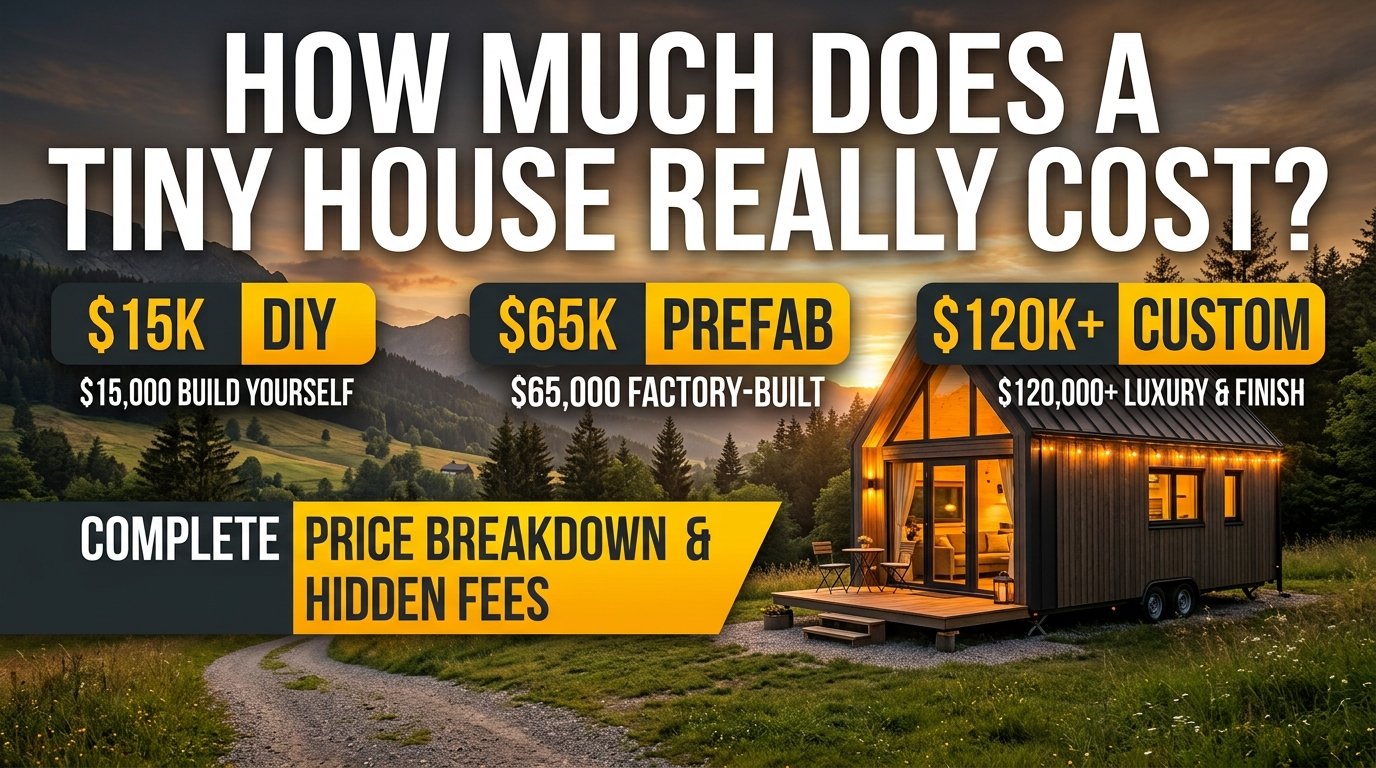
On average, the realistic tiny house cost ranges between $35,000 and $85,000 for a standard fully livable unit. Entry-level DIY builds can start as low as $15,000 to $25,000, while high-end architectural builds with top-tier finishes and solar hookups frequently reach $120,000 to $160,000+.
According to construction data verified by the U.S. Census Bureau, traditional single-family home prices regularly exceed $400,000. By comparison, tiny living provides substantial savings, but knowing how square footage directly dictates your bottom line is crucial:
- Compact Mobile Models (100–200 sq. ft.): $25,000 – $55,000
- Mid-Size THOWs (200–350 sq. ft.): $50,000 – $85,000
- Large Park Models or Foundation Homes (350–450+ sq. ft.): $85,000 – $150,000+
DIY vs. Prefab vs. Custom Tiny Home Costs
The construction route you select serves as the single biggest factor influencing your ultimate tiny house cost. Below is a comparative price overview illustrating the budget distribution across different build methods.
| Build Type | Average Cost Range | Timeline | Best Suited For |
|---|---|---|---|
| DIY (Sweat Equity) | $15,000 – $35,000 | 8 – 18 Months | Handy builders seeking zero labor costs |
| Shell Only (Builder Dried-In) | $25,000 – $45,000 | 2 – 4 Months | Buyers wanting a secure shell to finish inside |
| Turnkey Prefab / Modular | $60,000 – $95,000 | 2 – 6 Months | Move-in ready reliability & certified standards |
| Custom High-End Architectural | $100,000 – $160,000+ | 6 – 10 Months | Luxury appliances, off-grid tech & bespoke layout |
For more details on modular designs versus mobile options, consult our thorough guide on types of tiny homes and architectural variants.
Key Factors That Influence Tiny House Cost
Estimating your exact expense means looking past simple material costs. The total investment revolves around four structural pillars:
1. Foundation vs. Trailer Chassis
If you choose a Tiny House on Wheels (THOW), you must invest in a heavy-duty, purpose-built trailer. An engineered steel trailer certified to carry 10,000 to 20,000 lbs costs between $4,500 and $10,000 alone. A permanent foundation (slab, piers, or crawlspace) incurs site excavation, concrete pouring, and local permit costs ranging between $5,000 and $12,000.
2. Insulation and Thermal Envelope
Because tiny houses have compact air volumes, thermal performance matters immensely. Closed-cell spray foam insulation yields the highest R-value per inch, preventing condensation and lowering temperature fluctuations. Expect to spend $1,800 to $4,500 for professional spray foam, compared to $800 for basic fiberglass batts.
3. Utilities and Off-Grid Capability
Are you plugging into a conventional RV hookup, or seeking true off-grid independence? Integrating a complete solar array with LiFePO4 lithium batteries and an inverter adds $7,000 to $15,000 to your upfront tiny house cost. Composting toilets (such as Nature’s Head or Separett) cost between $900 and $2,200, whereas standard gravity flush toilets are far cheaper but demand direct septic plumbing.
4. Appliances and Space-Saving Joinery
Downsized specialized appliances—like propane tankless water heaters, combination washer-dryers, and 24-inch induction cooktops—often cost slightly more than standard full-size units due to engineering constraints. Custom cabinetry with soft-close hardware and hidden under-stair storage also commands higher specialist labor fees.

6 Hidden Tiny House Costs Most Buyers Overlook
Most budget overruns do not happen because of framing lumber or paint; they happen because buyers forget site-specific and administrative costs. When drafting your spreadsheets, always reserve an extra 15% to 20% contingency fund for these six overlooked expenditures:
- Land and Site Preparation: Clearing trees, grading soil, adding gravel driveways, and laying foundation pads often costs between $3,000 and $10,000.
- Zoning and Building Permits: Ensuring compliance with local zoning ordinances and safety codes (such as International Residential Code Appendix Q) involves engineering review fees and permit charges typically running from $500 to $3,000.
- Utility Connections: Hooking into municipal electric lines, digging a fresh water well, or installing a small drainfield septic tank can add anywhere from $4,000 to $20,000 depending on location.
- Delivery and Transport: Moving an oversized tiny home across state borders requires commercial transport haulers and wide-load pilot cars, costing roughly $2.50 to $4.50 per mile.
- Tiny Home Insurance: Because traditional homeowners policies seldom cover uncertified structures, specialized THOW insurance through carriers like Foremost or American Modern averages $600 to $1,500 annually.
- Towing Vehicle Requirements: If you plan to relocate your home independently, a 1-ton pickup truck (e.g., Ford F-350 or Ram 3500) with proper towing capacity is required, creating another significant asset consideration.
Monthly Living Costs in a Tiny House
The real payoff of navigating the upfront tiny house cost is the dramatic reduction in month-to-month living expenses. Here is what typical ongoing costs look like once settled:
- Land Rent / RV Park Fee: $400 – $900 / month (often includes water, trash, and sewer access).
- Electricity & Propane: $30 – $80 / month (energy-efficient envelopes minimize heating and cooling). Learn more about seasonal insulation efficiency at Energy.gov.
- Maintenance and Upkeep: $50 – $100 / month (smaller roofs and exteriors mean faster, cheaper repair work).
- Insurance: $50 – $120 / month.
Compared to average urban apartment rents that routinely surpass $1,800 to $2,400 monthly, living tiny enables individuals and couples to save up to 60% of their take-home income.
How to Finance Your Tiny House
Securing a standard 30-year fixed mortgage on a tiny house can be challenging unless the home is permanently affixed to real estate and meets local square-footage minimums. Fortunately, several financing routes exist:
- RV Loans: If your builder holds NOAH (National Organization of Alternative Housing) or RVIA (Recreation Vehicle Industry Association) certification, lenders often provide 10 to 15-year RV loans with competitive interest rates.
- Personal Unsecured Loans: Top-rated online lenders offer personal loans up to $50,000 to $100,000 for borrowers with strong credit ratings, requiring zero property collateral.
- In-House Builder Financing: Established prefab builders frequently partner with specialized financial brokers to offer monthly installment arrangements.
- Home Equity Line of Credit (HELOC): If you already own land or another property, a HELOC allows you to borrow against existing equity at lower interest rates.
Frequently Asked Questions About Tiny House Cost
Can you really build a tiny house for under $20,000?
Yes, but it requires significant personal labor (sweat equity), using salvaged or upcycled materials, building on a modest 16-to-20-foot trailer, and doing all plumbing and electrical tasks yourself under proper safety guidelines.
Do tiny houses hold their resale value?
Tiny houses on foundations typically appreciate along with the land value. Tiny homes on wheels act similarly to RVs or motor vehicles; their rate of depreciation depends on build quality, regular upkeep, builder certification (RVIA/NOAH), and brand reputation.
Is it cheaper to buy or build a tiny house?
Building yourself is typically 40% to 50% cheaper upfront because labor constitutes nearly half of professional builder quotes. However, buying a turnkey prefab prevents costly amateur mistakes, ensures warranty protection, and delivers immediate move-in readiness.
What is the most expensive part of building a tiny house?
For mobile builds, the trailer platform and mechanical systems (solar batteries, HVAC mini-split, tankless water heater, electrical rough-in) represent the highest single line-item costs, often accounting for 35% of total materials spending.
Final Thoughts on Budgeting for Tiny Living
Determining your realistic tiny house cost is the primary step toward turning your downsized dream into an affordable reality. By balancing DIY labor with professional manufacturing and accounting for site preparation, zoning, and utilities, you avoid surprise expenses and ensure a seamless transition.
Ready to take the next step? Explore our detailed resources at Tiny Homes Nest to compare floor plans, verify local zoning rules, and discover builder discounts today.